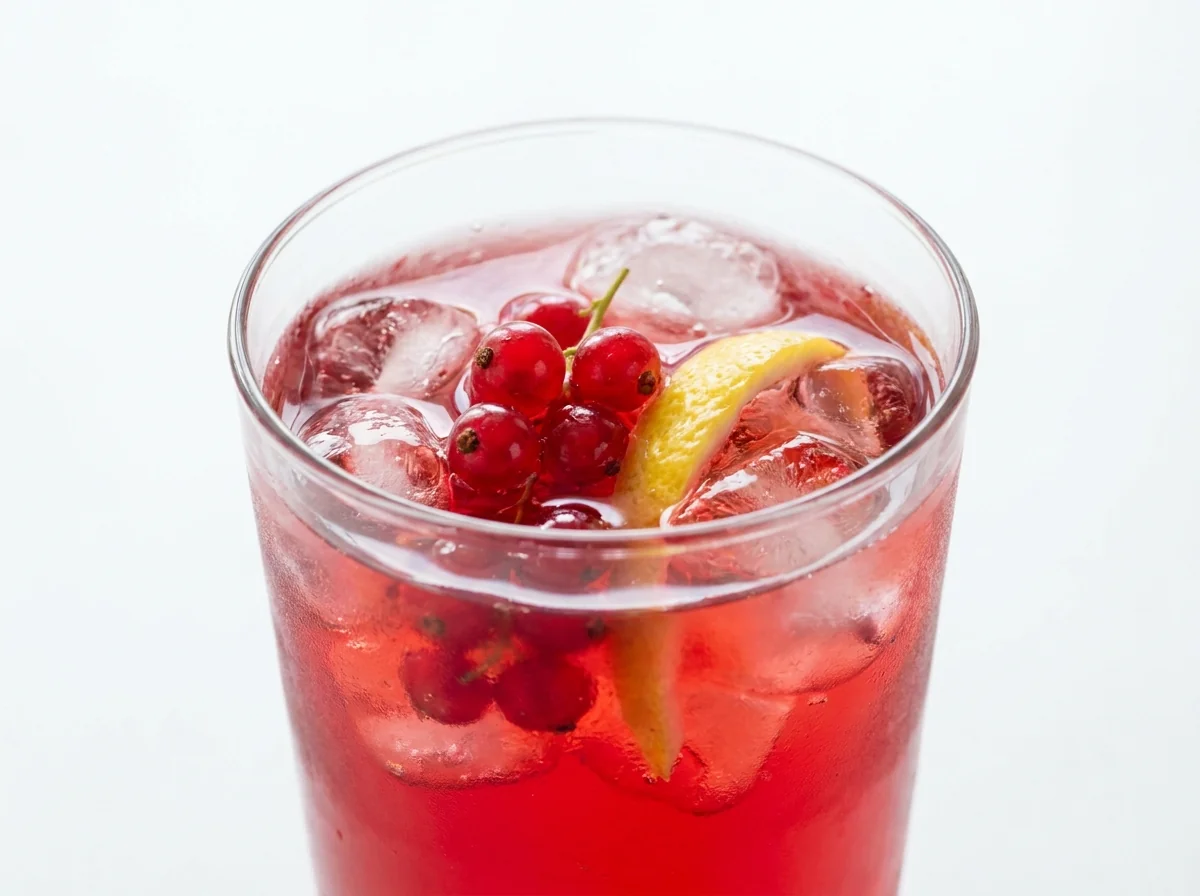
The red currant is a small sweet-tart berry cluster common in European kitchens; we cook it slowly until it softens, then strain it in a jelly bag to get a clear ruby-colored syrup.
We dilute it in still or sparkling water with a slice of lemon and it becomes a refreshing summer drink.
Preparation Steps
Cook the currants
Put the red currants with the water and a pinch of salt in a large pot and bring to a boil, then lower the heat and let it simmer gently for about forty-five minutes, mashing occasionally, because long cooking softens the berries and draws out their tart juice.
Strain without pressing
Pour the cooked currants into a jelly bag over a bowl and let it drip without pressing for about half an hour, because pressing the bag pushes the pulp through so the syrup becomes cloudy.
Adjust the liquid
Measure the strained liquid and top it up with water until it reaches about one liter, because a fixed amount ensures the balance of sugar and color in the syrup.
Dissolve the sugar
Return the liquid to the pot and add the sugar and lemon juice over low heat until it fully dissolves, then let it boil for five minutes, because a short boil thickens the syrup without losing its fresh flavor.
Dilute and serve
Mix one part of the syrup with about four parts cold still or sparkling water over ice with a slice of lemon, because the syrup is concentrated and needs diluting to become a refreshing sweet-tart drink.
Blood Sugar Impact
The glycemic index (GI) measures how quickly a food raises blood sugar, while the glycemic load (GL) measures how much a full serving raises it. Together they give the complete picture.
Glycemic Index
GI
65Medium
Low0–55Medium56–69High70+
A low value (≤55) means a gradual rise in blood sugar — the most suitable range for diabetes and insulin resistance.
Glycemic Load
GL
30High
Low0–10Medium11–19High20+
Glycemic load reflects the impact of the full serving. To lower it: take half a serving, or pair the recipe with a source of protein and fiber.
Nutritional Information
Per ServingMakes 16 servings · one serving is about 325 g of raw ingredients
Calories180 kcal9%of Daily Value*
Protein0 g0%of Daily Value*
Carbohydrates47 g17%of Daily Value*
Fat0 g0%of Daily Value*
Fiber1 g4%of Daily Value*
Sodium26 mg1%of Daily Value*
Potassium148 mg3%of Daily Value*
Phosphorus18 mg1%of Daily Value*
* Percent Daily Values are based on a 2,000-calorie diet per FDA food-label reference values — your daily needs may be higher or lower. Values are derived from the recipe's ingredients via the USDA database.
Troubleshooting
The most common problems when preparing Red Currant Syrup Concentrate (Red Currant), and how to fix them:
The syrup is cloudy
We pressed the jelly bag while straining; next time let it drip on its own even if it takes longer.
The syrup is too thin
We did not boil it enough after the sugar; return it to the heat and boil a few more minutes until it thickens slightly.
The flavor is flat
We diluted it with too much water; reduce the dilution water or add a few drops of lemon to bring out the currant's tartness.
Storage and Make-Ahead
Refrigerator
The concentrated syrup keeps in a clean airtight bottle for about a month, and we discard it at any change in smell or color.
Freezing
It is poured into ice cube trays and frozen for months, and we thaw what we need at serving time.
Tested Ingredient Substitutions
Original Ingredient
Tested Substitute
Ratio
Flavor Difference
fresh currants
frozen red currants
same weight, 250 g
Works directly without thawing when fresh is unavailable.
cane sugar
white sugar
same weight, 550 g
A common alternative producing a lighter-colored syrup with a purer taste.
sparkling water
cold still water
same amount
For those who prefer a calm drink without bubbles.
red currants
white currants
same weight, 250 g
A milder, less tart alternative, producing a lighter-colored syrup.
How Much Does It Make? Scaling Guide
Ingredient
1/2 quantity
Base quantity
Double quantity
Red currants
125 g
250 g
500 g
Cane sugar
275 g
550 g
1100 g
Water for cooking
500 ml
1000 ml
2000 ml
Lemon juice
7 ml
15 ml
30 ml
Water for dilution
1520 ml
3040 ml
6080 ml
EEINA Nutrition Tip
We do not press the jelly bag no matter how long the wait, because pressing pushes the trapped pulp through so the syrup loses its clarity and becomes cloudy.
Add This Recipe to Your Plan
The EEINA app saves your favorite recipes, calculates them from their real ingredients, and shows your daily numbers toward your goal. Try it free now.