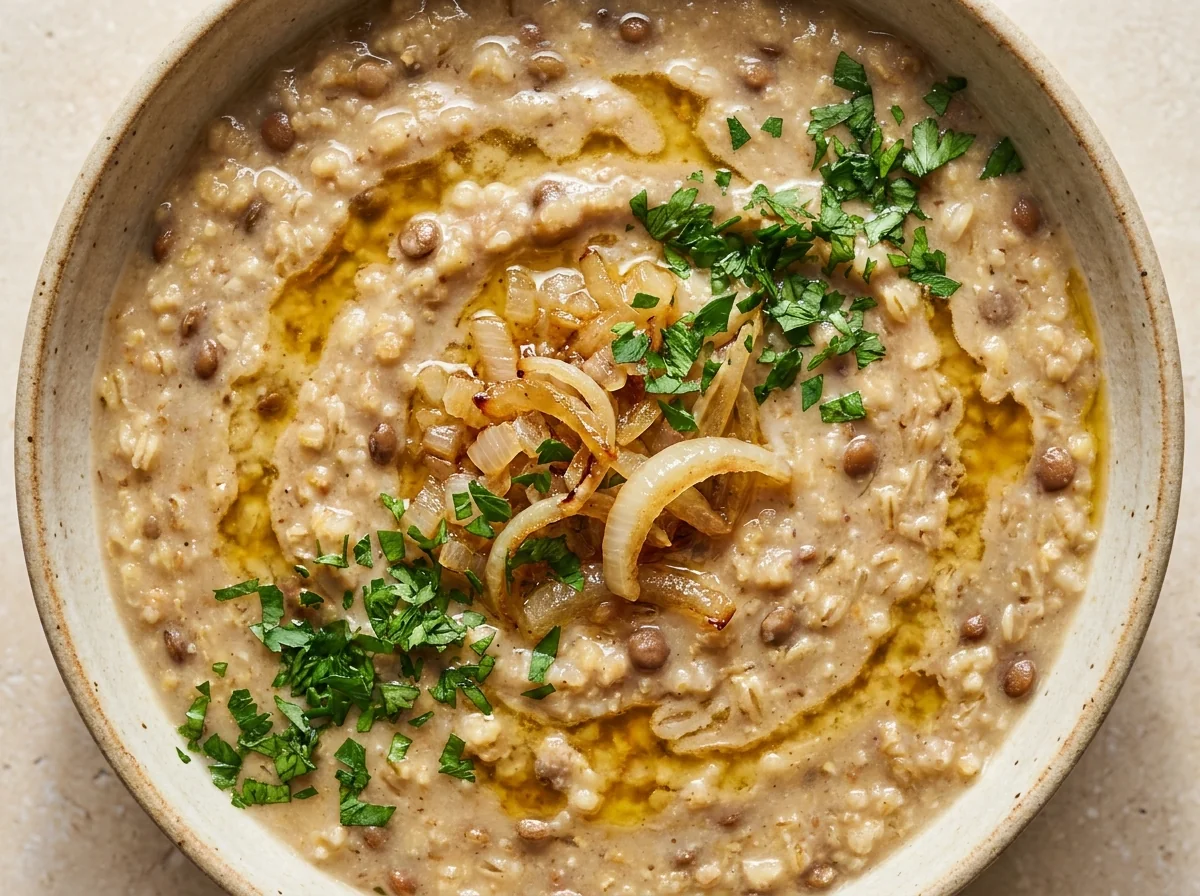
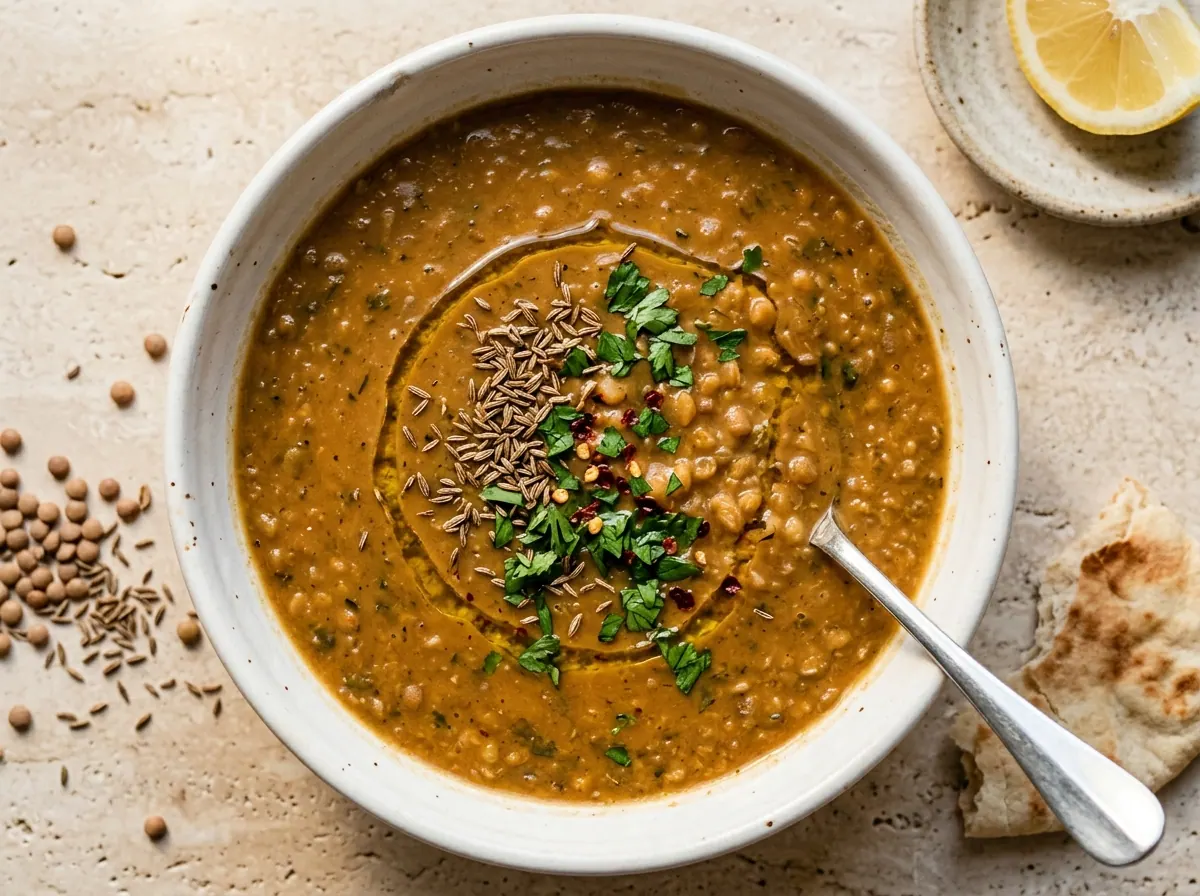
Rashoof is a venerable winter dish in Najd and the Levant that combines cracked wheat and lentils with dried jameed yogurt, giving a dense, sour, warming soup that was cooked on cold nights and garnished with browned onion and clarified butter.
Preparation Steps
Soak the jareesh and boil the lentils
Soak the cracked wheat in water to cover for about 30 minutes, and meanwhile boil the brown lentils in plenty of water until fully cooked and soft, as soaking softens the jareesh grain and shortens its cooking, while boiling prepares the lentils for combining.
Fry the onion in ghee
Melt half the ghee in a pot over medium heat and fry the minced onion until it wilts and turns translucent, because the softened onion builds the flavor base before adding the grains.
Combine the jareesh and lentils
Drain the lentils and add them to the onion along with the drained soaked jareesh, and stir until the grains are coated with the ghee, as stirring distributes the fat and flavor evenly.
Add the jameed and cook
Dissolve the jameed in a little warm water and add it to the pot, adjust with the salt and spices, then leave the mixture over low heat for about 15 minutes with frequent stirring until the texture thickens, because the jameed gives the distinctive acidity and dense texture.
Adjust the consistency
Watch the thickness at the end of cooking, and if it thickens more than needed, add hot water gradually until you reach a dense, cohesive soup consistency.
Brown the garnish onion
Melt the remaining ghee in a pan and fry the onion slices until they brown and turn dark golden, as the browned onion adds sweetness and a layer of flavor over the dish.
Garnish and serve
Pour the rashoof into serving bowls and distribute the browned onion and minced parsley over it, and serve it hot, because the fresh garnish balances the heaviness of the jareesh and jameed.
Blood Sugar Impact
The glycemic index (GI) measures how quickly a food raises blood sugar, while the glycemic load (GL) measures how much a full serving raises it. Together they give the complete picture.
Glycemic Index
GI
14Low
Low0–55Medium56–69High70+
A low value (≤55) means a gradual rise in blood sugar — the most suitable range for diabetes and insulin resistance.
Glycemic Load
GL
9Low
Low0–10Medium11–19High20+
Glycemic load reflects the impact of the full serving. To lower it: take half a serving, or pair the recipe with a source of protein and fiber.
Nutritional Information
Per ServingMakes 4 servings · one serving is about 545 g of raw ingredients
Calories498 kcal25%of Daily Value*
Protein24 g48%of Daily Value*
Carbohydrates75 g27%of Daily Value*
Fat12 g15%of Daily Value*
Fiber13 g46%of Daily Value*
Sodium528 mg23%of Daily Value*
* Percent Daily Values are based on a 2,000-calorie diet per FDA food-label reference values — your daily needs may be higher or lower. Values are derived from the recipe's ingredients via the USDA database.
Troubleshooting
The most common problems when preparing Rashoof (Cracked Wheat, Lentil and Jameed Soup), and how to fix them:
The texture is more runny than needed
Leave it over low heat for a few extra minutes while stirring, as the jareesh continues to absorb the liquid and thickening needs time
The jameed did not dissolve and lumped
Dissolve it in warm water and strain it before adding, because adding it solid directly leaves lumps
The jareesh grains are still hard
Extend the cooking with extra hot water, as coarse jareesh needs a longer soak or longer cooking to soften
Storage and Make-Ahead
Refrigerator
Keep it in an airtight container for up to 3 days, and reheat it with a splash of water as the texture thickens when chilled
Freezing
Freeze it for up to two months, and thaw it in the refrigerator then heat it over low heat with constant stirring
Tested Ingredient Substitutions
Original Ingredient
Tested Substitute
Ratio
Flavor Difference
jameed yogurt
strained sour yogurt (thinned labneh)
replace 250 g jameed with about 250 g labneh dissolved in a little water
When ready jameed is unavailable while keeping the acidity and texture
clarified butter (ghee)
butter
same amount, 30 g
For a close taste with a fat available in every kitchen
cracked wheat (jareesh)
coarse bulgur
same amount, 200 g
For a close grainy texture when jareesh is unavailable
brown lentils
green lentils
same amount, 200 g
Because they are close in texture and boiling time
How Much Does It Make? Scaling Guide
Ingredient
Half (2 servings)
Base (4 servings)
Double (8 servings)
Cracked wheat (jareesh)
100 g
200 g
400 g
Brown lentils
100 g
200 g
400 g
Ready jameed
125 g
250 g
500 g
Local ghee
15 g
30 g
60 g
Chopped onion
75 g
150 g
300 g
Sliced onion
60 g
120 g
240 g
Salt
2 g
4 g
8 g
EEINA Nutrition Tip
Dissolve the jameed in warm water before adding it so it dissolves without lumping, and add it at the end of cooking so its acidity does not stay long over the heat and thin its texture.
Add This Recipe to Your Plan
The EEINA app saves your favorite recipes, calculates them from their real ingredients, and shows your daily numbers toward your goal. Try it free now.
What is the difference between jareesh and rashoof?
Jareesh is a dish based on cracked grain with yogurt and has a cohesive texture, while rashoof combines the jareesh with lentils and jameed, becoming a dense, sour soup
Can it be made without jameed?
The jameed is the source of the distinctive acidity and texture, and when it is unavailable we use dissolved labneh as a close alternative
Why does the dish thicken after chilling?
The jareesh and lentils keep absorbing the liquid, so we reheat it with a splash of water to restore the soup consistency