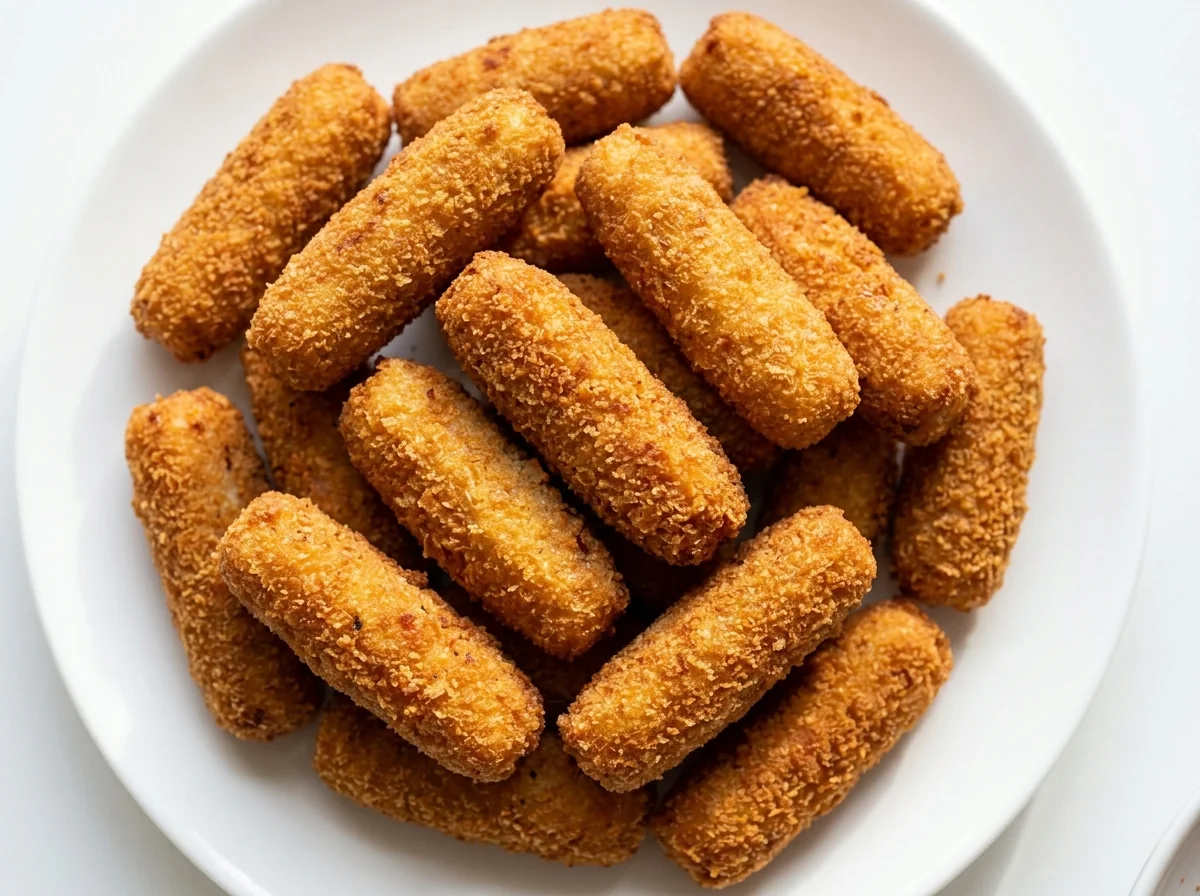
Boiled potatoes mashed in a food processor with butter, salt, and black pepper, piped into fingers with a piping bag and frozen until firm, then coated in flour, egg, and breadcrumbs and fried until golden.
An appetizer built on one trick that makes all the difference: freezing the potato fingers before coating them.
Soft mash cannot survive frying, but once firmed in the freezer it holds its shape, and the triple coat of flour, egg, and breadcrumbs builds the shell that crisps while the heart stays a smooth, buttery mash. The piping bag turns out fingers so even they look like they came from a restaurant.
Preparation Steps
Mash the potatoes
Put the boiled potatoes in a food processor, add the butter, salt, and black pepper, and blend until the mash is smooth.
Pipe the fingers and freeze
Put the mixture in a piping bag, pipe it into fingers, then place them in the freezer until frozen firm.
Coat
Coat the fingers in the flour, then the beaten egg, then the breadcrumbs.
Fry
Fry the fingers in hot oil until golden, and serve them hot.
Blood Sugar Impact
The glycemic index (GI) measures how quickly a food raises blood sugar, while the glycemic load (GL) measures how much a full serving raises it. Together they give the complete picture.
Glycemic Index
GI
77High
Low0–55Medium56–69High70+
A low value (≤55) means a gradual rise in blood sugar — the most suitable range for diabetes and insulin resistance.
Glycemic Load
GL
24High
Low0–10Medium11–19High20+
Glycemic load reflects the impact of the full serving. To lower it: take half a serving, or pair the recipe with a source of protein and fiber.
Nutritional Information
Per ServingMakes 6 servings · one serving is about 215 g of raw ingredients
Calories412 kcal21%of Daily Value*
Protein5 g10%of Daily Value*
Carbohydrates34 g12%of Daily Value*
Fat29 g37%of Daily Value*
Fiber3 g11%of Daily Value*
Sodium331 mg14%of Daily Value*
* Percent Daily Values are based on a 2,000-calorie diet per FDA food-label reference values — your daily needs may be higher or lower. Values are derived from the recipe's ingredients via the USDA database.
Troubleshooting
The most common problems when preparing Crispy Potato Kofta Fingers, and how to fix them:
The fingers fell apart in the oil
They were not frozen firm enough, or the oil was not hot. Leave them in the freezer until completely firm, and heat the oil until it bubbles around the tip of a finger the moment it goes in.
The crust separated from the mash
The coating went onto a wet surface, or in the wrong order. Follow the source's order: flour first so the egg grips, then breadcrumbs that cling to the egg.
The fingers soaked up too much oil
They were fried half-thawed, or the oil was lukewarm. Fry them straight from frozen in hot oil, in small batches, and drain on paper towels.
They came out salty
The tablespoon of salt is the source's measure for a full kilo. If that is too much for you, taste the mash before shaping and adjust; salt cannot be fixed after frying.
Storage and Make-Ahead
Freezing raw
Arrange the coated fingers spaced apart in a container and freeze for up to a month; fry straight from frozen without thawing.
Refrigerator (4°C)
Fried fingers keep in a sealed container for up to 3 days.
Reheating
In the oven or air fryer until crisp again, not in the microwave, which softens the crust.
Make ahead
Shape, coat, and keep in the freezer, then fry in minutes when guests arrive.
Tested Ingredient Substitutions
Original Ingredient
Tested Substitute
Ratio
Flavor Difference
Frying in oil
Air fryer with a spray of oil
Same coating
Far less absorbed fat; the crust comes out lighter in color.
Butter
Olive oil
45 ml
Higher in monounsaturated fat, with a lighter-tasting mash.
Breadcrumbs
Finely ground oats
Same amount for coating
More fiber, with a softer crunch than breadcrumbs.
The full tablespoon of salt
Half a tablespoon
9 g
For anyone watching sodium: half is enough to bring out the flavor while cutting the salt in half.
How Much Does It Make? Scaling Guide
Servings
Potatoes
Butter
Eggs
3 servings (half amount)
500 g
28 g
50 g (1 egg)
6 servings (base)
1000 g
57 g
100 g (2 eggs)
12 servings (double)
2000 g
114 g
200 g (4 eggs)
EEINA Nutrition Tip
Do not skip or rush the freezing: soft fingers fall apart in the oil no matter how well they are coated. And boil the potatoes in their skins, then peel, so they do not drink up the boiling water; a watery mash needs flour that weighs it down.
Add This Recipe to Your Plan
The EEINA app saves your favorite recipes, calculates them from their real ingredients, and shows your daily numbers toward your goal. Try it free now.
Because mashed potato is too soft to hold its shape in hot oil. Freezing firms it so the finger stays intact, and that is what the source's method calls for.
Why are the flour and breadcrumbs listed without amounts?
They appear in the source's method without quantities because they are for coating: use as much as it takes to cover all the fingers.
Do the eggs go into the mash?
No. The source's mash is only potatoes, butter, salt, and pepper; the beaten egg is the middle coating layer between the flour and the breadcrumbs.
What are they served with?
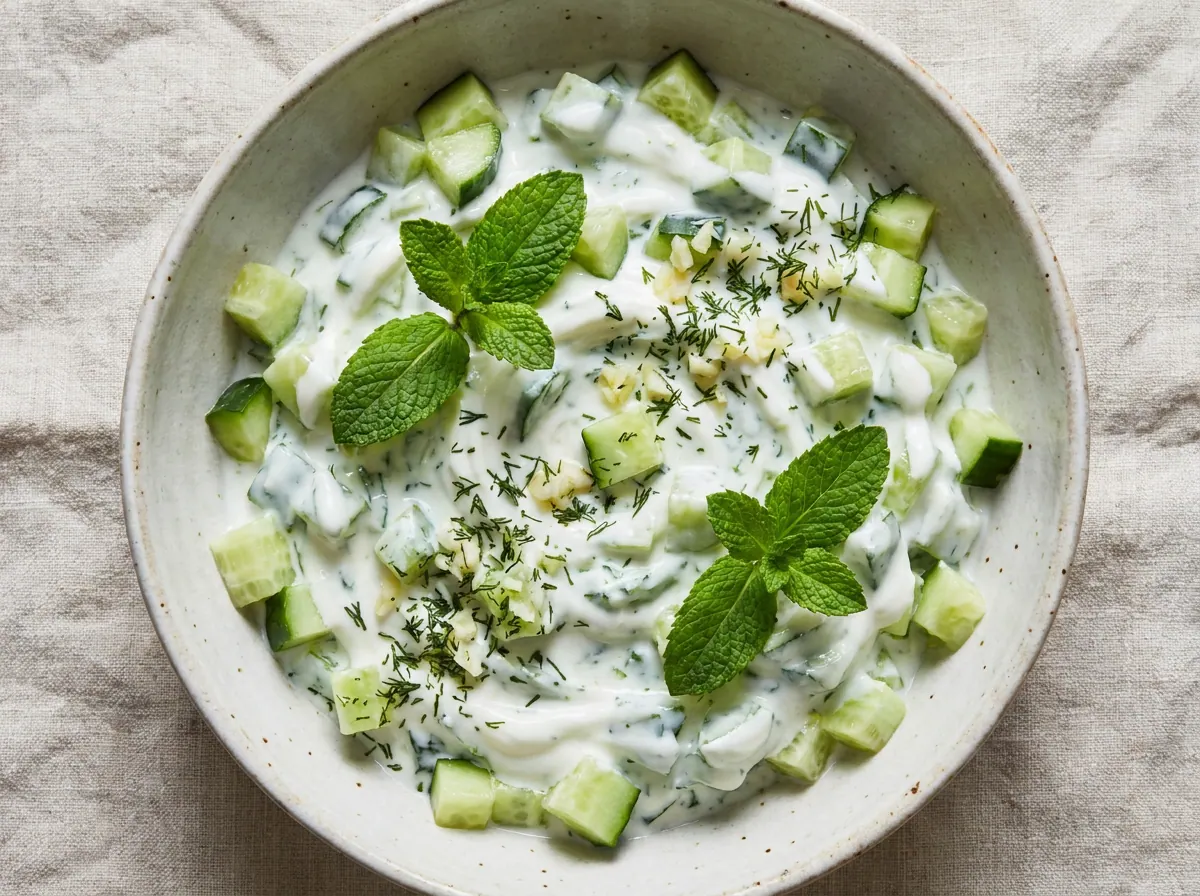
As a hot appetizer on the Ramadan table or with dinner; garlic-yogurt dip suits them, or ketchup for the kids.
Sources: USDA · University of Sydney · Our methodology · Updated on