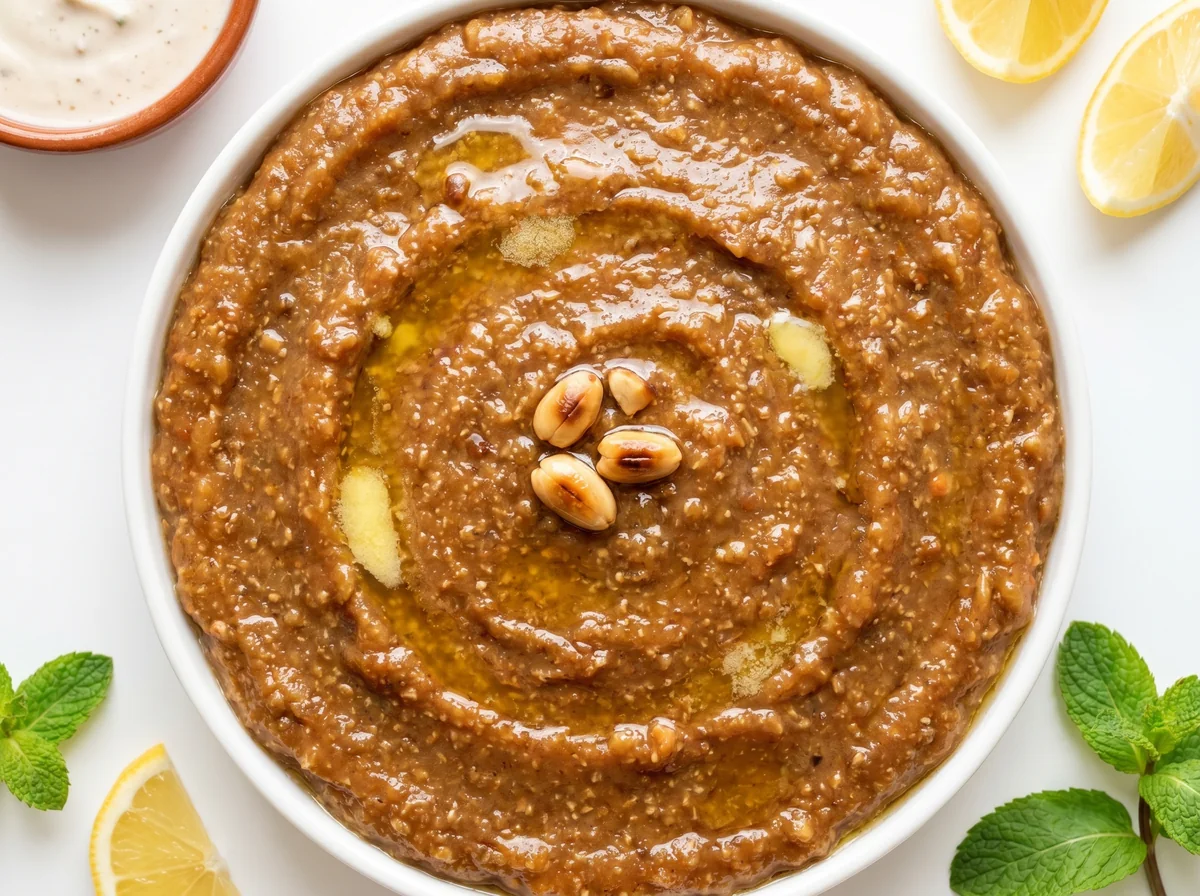
A traditional Najdi heritage dessert — dates and whole-wheat bread (or toasted flour) kneaded together with ghee and cardamom into a warm, sweet dough. A beloved date confection with a moderate glycaemic load; contains gluten and dairy.
Hanini is a treasured Najdi Saudi heritage dessert from the family of date confections — like Rinjina and Maasoub (banana-bread mash dessert) — made by mashing dates with whole-wheat bread or toasted flour and kneading the mixture with ghee and cardamom into a warm, sweet dough. It holds a place of honour at hospitality gatherings, breakfasts and celebrations in Najd, and is served alongside Arabic coffee.
Hanini reflects the importance of dates and wheat (barr) in the Najdi table and the wisdom of combining bread and dates into a nourishing, energy-giving confection. Dates, bread and ghee — all cherished in the culture — come together in Hanini, a dish with deep emotional resonance as a symbol of Najdi hospitality and authentic Saudi culinary heritage.
Preparation Steps
Soften the dates
Pit the dates. If they are dry, warm them briefly to soften them. Soft dates are the foundation of Hanini and its natural sweetness. High-quality Saudi dates such as Sukkari or Khlas give the best flavour.
Prepare the bread or flour
Crumble the whole-wheat bread to a fine texture, or toast the whole-wheat flour in a dry pan until its colour deepens and its aroma rises (for the toasted-flour version). The bread or toasted flour is what gives Hanini its body and balances the sweetness of the dates.
Mash the dates with the bread
Mash the dates together with the crumbled bread (or toasted flour) vigorously — by hand or with a pestle — while sprinkling in warm water or warm milk, until they meld into a cohesive brown dough. Thorough mashing integrates the dates and bread into a uniform texture.
Add the ghee and cardamom
Add the melted ghee and ground cardamom to the dough and knead until the ghee is fully absorbed and gives the dough a rich flavour and glossy finish. ghee and cardamom are the essential flavour of Hanini — the same aromatic backbone found in other date confections such as Rinjina and Areeka.
Shape the Hanini
Spread the Hanini in a serving dish, roll it into balls, or leave it as a single layer. You can create a well in the centre to fill with ghee and honey, as with Areeka. The ideal texture is a soft, cohesive date dough.
Serve
Drizzle melted ghee and honey over the Hanini if desired (the dates provide plenty of sweetness on their own) and serve warm alongside Arabic coffee. This is a treasured Najdi Saudi heritage dessert from the family of date confections; it is offered at hospitality gatherings, breakfasts and celebrations, and reflects the importance of dates and wheat in Najd.
Blood Sugar Impact
The glycemic index (GI) measures how quickly a food raises blood sugar, while the glycemic load (GL) measures how much a full serving raises it. Together they give the complete picture.
Glycemic Index
GI
62Medium
Low0–55Medium56–69High70+
A low value (≤55) means a gradual rise in blood sugar — the most suitable range for diabetes and insulin resistance.
Glycemic Load
GL
55High
Low0–10Medium11–19High20+
Glycemic load reflects the impact of the full serving. To lower it: take half a serving, or pair the recipe with a source of protein and fiber.
Nutritional Information
Per ServingMakes 5 servings · one serving is about 180 g of raw ingredients
Calories643 kcal32%of Daily Value*
Protein10 g20%of Daily Value*
Carbohydrates95 g35%of Daily Value*
Fat27 g35%of Daily Value*
Fiber7 g25%of Daily Value*
Sodium461 mg20%of Daily Value*
Potassium570 mg12%of Daily Value*
Phosphorus157 mg13%of Daily Value*
* Percent Daily Values are based on a 2,000-calorie diet per FDA food-label reference values — your daily needs may be higher or lower. Values are derived from the recipe's ingredients via the USDA database.
Troubleshooting
The most common problems when preparing Najdi Hanini (Date and Wheat Bread Dessert), and how to fix them:
Hanini is dry and crumbles apart
The ghee or moisture is insufficient, or the dates are too dry. Use soft fresh dates, add warm water or warm milk while mashing, and use enough ghee — these bind and hydrate the dough. Soft dates and ghee give a supple, cohesive texture.
The dates and bread did not come together
Insufficient mashing. Mash the dates and bread together vigorously — by hand or with a pestle — adding moisture until they fully merge into a uniform brown dough. Thorough mashing is the heart of Hanini; do not rush it.
It is far too sweet
Too many dates or too much honey. Dates are very sweet, so go easy on added honey (the dates suffice). Balance with slightly more bread. Serve honey on the side so each person can adjust to taste.
It feels heavy and greasy
Too much ghee. Use a moderate amount — enough for flavour and texture — because excess makes it oily and heavy. The right balance of dates, bread and ghee produces a delicious Hanini without being overly rich.
It is cold and hard
It cooled down and set firm. Hanini is best eaten warm (tastier and softer), so warm it gently with a splash of ghee or milk to restore its softness. Dates and bread set with cold, so warmth brings back the tender texture.
Storage and Make-Ahead
Refrigerator (4 °C)
Store Hanini in an airtight container in the fridge for 3 days (dates act as a natural preservative). It firms up when cold, so warm it with a splash of ghee or milk before eating. Always serve it warm.
Freezer
Freeze Hanini (without any honey topping) for 2 to 3 months in an airtight container — both dates and bread handle freezing well. Thaw, reheat and add fresh ghee and honey at serving time. Practical for making a batch in advance.
Advance preparation
Prepare the Hanini dough ahead of time, refrigerate it, then reheat it and add ghee and honey just before serving. Convenient for a quick warm breakfast or hospitality.
Food safety
Hanini is a date-and-bread confection; store it refrigerated (it contains ghee), and do not give honey to infants under one year of age. Use clean utensils and serve it warm and freshly prepared.
Tested Ingredient Substitutions
Original Ingredient
Tested Substitute
Ratio
Flavor Difference
Whole-wheat bread
Toasted whole-wheat flour (authentic version) or brown bread
Same quantity
Toasted flour is the traditional version; brown bread raises the fibre. Both are mashed with the dates — choose whichever is available.
ghee
Butter, oil, or a reduced amount of ghee
To taste
Butter is a dairy substitute; oil makes it lighter; reducing the ghee lowers the fat while keeping Hanini delicious thanks to the dates.
Honey
date molasses or none at all
To taste
date molasses keeps it in the dates family; or omit the honey entirely (dates provide enough sweetness — the healthier choice). Honey is a traditional optional addition.
How Much Does It Make? Scaling Guide
Servings
Dates
Bread
ghee
3 (half batch)
1 cup
1 cup
1/4 cup
5 (base recipe)
2 cups
2 cups
1/2 cup
10 (gathering)
4 cups
4 cups
1 cup
EEINA Nutrition Tip
Hanini is a relatively nourishing energy food. Dates are a natural sugar with fibre and minerals (potassium, magnesium and iron); whole-wheat bread adds fibre if it is wholegrain; and ghee contributes fat. Its glycaemic load is low to moderate because the dates and fibre temper it. Its challenges are calorie density (dates, ghee and bread combined) and the ghee (saturated fat). To lighten it: use wholegrain brown bread, reduce the ghee, go easy on added honey (the dates are sweet enough), and keep the portion modest. A sensible energy treat for breakfast or hospitality.
Add This Recipe to Your Plan
The EEINA app saves your favorite recipes, calculates them from their real ingredients, and shows your daily numbers toward your goal. Try it free now.
Hanini is a treasured Najdi Saudi heritage dessert made by mashing dates with whole-wheat bread (barr) or toasted flour, then kneading the mixture with ghee and cardamom into a warm, sweet dough. It belongs to the family of Najdi date confections — like Rinjina and Maasoub (banana-bread mash dessert) — and is served at hospitality gatherings and breakfast alongside Arabic coffee.
How does it differ from Areeka and Rinjina?
All three are date confections, but Hanini mashes dates together with bread (or toasted flour), Yemeni Areeka is similar (dates and bread or flour with honey), and Rinjina spreads the dates and covers them with ghee-toasted flour in two distinct layers. Hanini is specifically Najdi and blends the dates and bread through mashing; each region has its own version.
Is Hanini healthy?
It is a relatively nourishing energy food. Dates are a natural sugar with fibre and minerals; whole-wheat bread (especially wholegrain) adds fibre; and ghee contributes fat. Its glycaemic load is low to moderate. Its challenges are calorie density and saturated fat. Use wholegrain bread, reduce the ghee, go easy on honey, and keep portions modest. A reasonable energy treat for breakfast or hospitality in moderation.
What is barr (whole-wheat bread)?
Barr is the Najdi and Gulf colloquial word for wheat, and barr bread is wheat bread (preferably wholegrain or brown for traditional Hanini). It is crumbled and mashed with the dates — or replaced with toasted wheat flour. It gives Hanini its body and balances the sweetness of the dates, reflecting the importance of wheat in the Najdi culinary tradition.