Single-Serve Oat Bowl with Banana and Peanut Butter
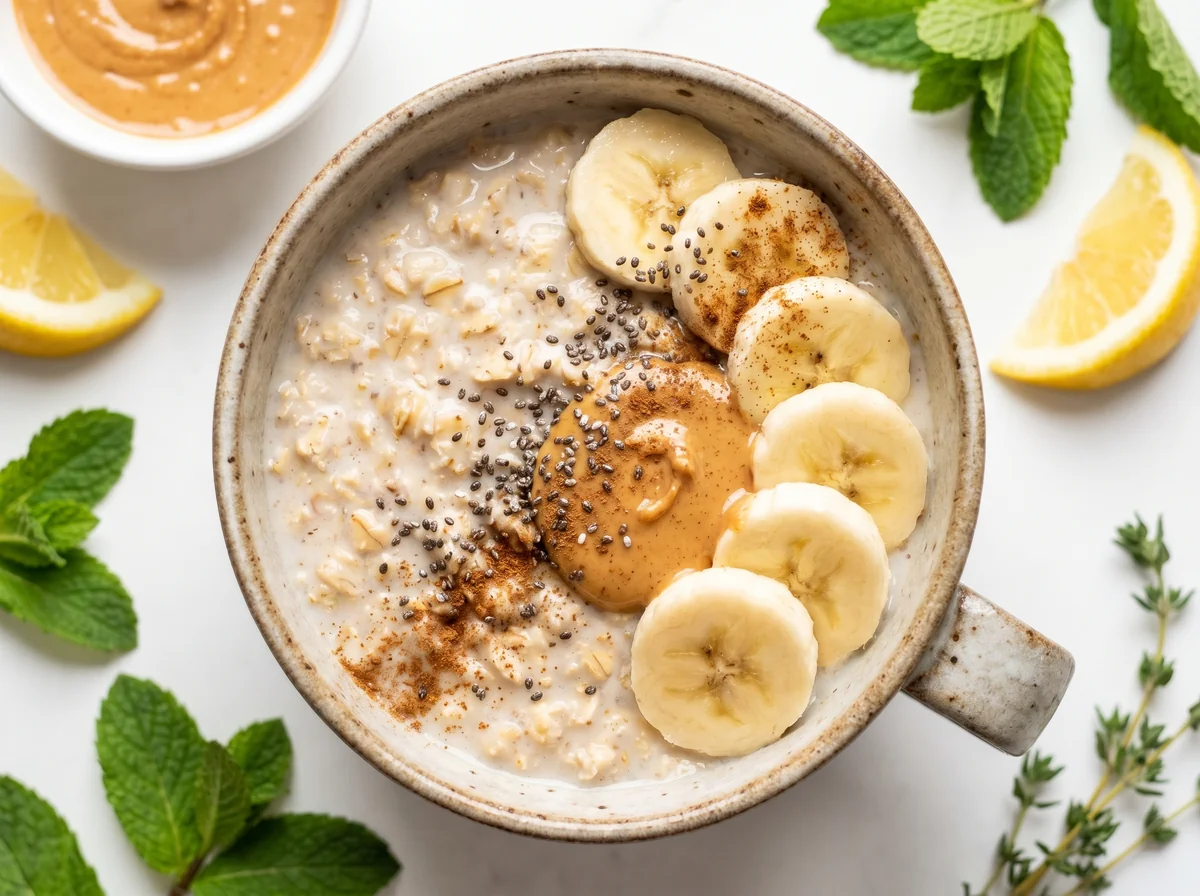
Single-serve oat bowl with banana and peanut butter -- oats cooked in two minutes in the microwave, sweetened with mashed banana, topped with peanut butter and cinnamon. No added sugar, one bowl.
On a busy morning with no time for a pot or washing up, the microwave oat bowl is the solution that combines speed and satiety. The single-serve bowl concept is simple: cook your portion and eat it in the same vessel -- no leftovers, no stacked dishes.
Ripe banana gives you sweetness without any added sugar, and a spoonful of peanut butter adds protein and fats that extend the feeling of fullness until lunch. A pinch of cinnamon completes the warmth. One meal, one bowl, five minutes, and a light start to your day.
Preparation Steps
Prepare the mug
Place the oats and water or milk in a deep microwave-safe mug or bowl, leaving at least a third of it empty so the mixture does not overflow when it boils. Choosing a deep vessel prevents the oats from splattering and keeps the microwave clean.
Cook in the microwave
Place the mug in the microwave on high power for two minutes, stopping at the one-minute mark to stir, then continue. It is ready when the texture thickens and the oats have absorbed most of the liquid. Stirring at the midpoint distributes the heat and prevents sudden boiling over.
Mash the banana
Mash half the banana with a fork until it becomes a smooth paste, then stir it into the hot oats immediately. Ripe banana is sweet enough to sweeten the bowl without any added sugar, and mashing it while the oats are hot melts its sweetness throughout the whole mixture.
Top and serve
Arrange slices of the remaining half banana on top, add the tablespoon of peanut butter, a pinch of cinnamon, and a little salt if desired, and serve warm within minutes. Serving it hot keeps the peanut butter melted and delicious on the surface.
Blood Sugar Impact
The glycemic index (GI) measures how quickly a food raises blood sugar, while the glycemic load (GL) measures how much a full serving raises it. Together they give the complete picture.
Glycemic Index
GI
51Low
Low0–55Medium56–69High70+
A low value (≤55) means a gradual rise in blood sugar — the most suitable range for diabetes and insulin resistance.
Glycemic Load
GL
23High
Low0–10Medium11–19High20+
Glycemic load reflects the impact of the full serving. To lower it: take half a serving, or pair the recipe with a source of protein and fiber.
Nutritional Information
Per ServingMakes 1 servings · one serving is about 275 g of raw ingredients
Calories333 kcal17%of Daily Value*
Protein12 g24%of Daily Value*
Carbohydrates53 g19%of Daily Value*
Fat10 g13%of Daily Value*
Fiber8 g29%of Daily Value*
Sodium4 mg0%of Daily Value*
Potassium628 mg13%of Daily Value*
Phosphorus290 mg23%of Daily Value*
* Percent Daily Values are based on a 2,000-calorie diet per FDA food-label reference values — your daily needs may be higher or lower. Values are derived from the recipe's ingredients via the USDA database.
Troubleshooting
The most common problems when preparing Single-Serve Oat Bowl with Banana and Peanut Butter, and how to fix them:
The oats overflowed in the microwave.
Use a deeper vessel and leave a third of it empty, and stop the microwave at the first minute to stir. Overflow happens when the vessel is full and the liquid boils rapidly.
The texture is dry and too thick.
Add a splash of warm water or milk and stir until it softens. Oats absorb more liquid as they cool, so adjust the texture just before serving.
The texture is watery and did not thicken.
Return it to the microwave for an extra 20 to 30 seconds then leave it for a minute. Oats need a short time to absorb the liquid and thicken after cooking.
The taste is flat and not sweet enough.
Use a riper banana with spotted skin -- it is naturally sweeter -- and mash it entirely into the mixture rather than leaving it just as slices on top.
The peanut butter is clumpy and hard to spread.
Place it on top of the hot oats and leave it for half a minute to soften, or stir the jar well before using, as natural varieties separate their oil.
Storage and Make-Ahead
Serve immediately
Best eaten right after preparation while warm, within five to ten minutes, when the texture and flavour are at their best.
Refrigerator
Store cooked oats without the banana or peanut butter in an airtight container in the refrigerator for up to two days, and add the fresh toppings at serving time.
Reheating
Reheat in the microwave for about 30 to 45 seconds with a splash of water or milk and a stir, until warm and the texture softens again.
Advance prep
Prepare the oats and cinnamon in a dry sealed mug the night before, then add the liquid and cook in the morning to save time.
Tested Ingredient Substitutions
Original Ingredient
Tested Substitute
Ratio
Flavor Difference
Peanut butter
Almond butter or tahini
1:1
An alternative for those with peanut allergy. Tahini adds a sesame flavour; almond butter tastes closer. Both change the allergen -- be mindful of that.
Banana
Grated apple or two mashed dates
1 banana = half a cup grated apple or 2 dates
Natural sweetness alternatives for those who dislike banana. Dates are higher in sugar so keep to two.
Quick rolled oats
Whole grain oats
1:1
Whole grain oats need more time and more liquid; add about 40 ml extra water and an extra minute in the microwave.
Water
Low-fat milk or unsweetened plant-based drink
1:1
Milk increases protein and creaminess. Choose the unsweetened plant-based drink to avoid added sugar.
Cinnamon
Ground cardamom or a pinch of vanilla
1:1
Fragrant alternatives that change the flavour without adding sugar. Cardamom gives a warm Gulf character.
How Much Does It Make? Scaling Guide
Ingredient
1 serving
2 servings
4 servings
Oats
40 g
80 g
160 g
Water or milk
120 ml
240 ml
480 ml
Banana
1 banana
2 bananas
4 bananas
Peanut butter
15 g
30 g
60 g
Cinnamon
a pinch
2 pinches
1/2 tsp
EEINA Nutrition Tip
Choose natural peanut butter with peanuts and salt as the only ingredients, and avoid varieties with added sugar or hydrogenated oils. If you want more satiety without added sugar, replace part of the water with milk or add a tablespoon of chia seeds before cooking.
Add This Recipe to Your Plan
The EEINA app saves your favorite recipes, calculates them from their real ingredients, and shows your daily numbers toward your goal. Try it free now.
Yes. Cook the oats with the liquid in a small saucepan over low heat for about three to five minutes, stirring until thick, then add the banana and toppings the same way.
Is this breakfast suitable for people with diabetes?
Whole oats, peanut butter, and ripe banana in moderation are a reasonable choice because the fibre and protein slow sugar absorption. Control the size of the banana and monitor your response, and consult your doctor or dietitian for your personal plan.
What is the alternative if I am allergic to peanut?
Replace with almond butter or tahini at a one-to-one ratio, getting healthy fats and protein without the peanut allergen.
Do I need to add sugar?
No. The sweetness of ripe banana is sufficient -- the more spotted the skin, the sweeter it is. If you want a sweeter taste, add a mashed date instead of sugar.
Is this dish suitable for suhoor in Ramadan?
Yes -- the fibre in oats and the protein in peanut butter help extend fullness during the fasting hours. Make sure to drink enough water with your suhoor.