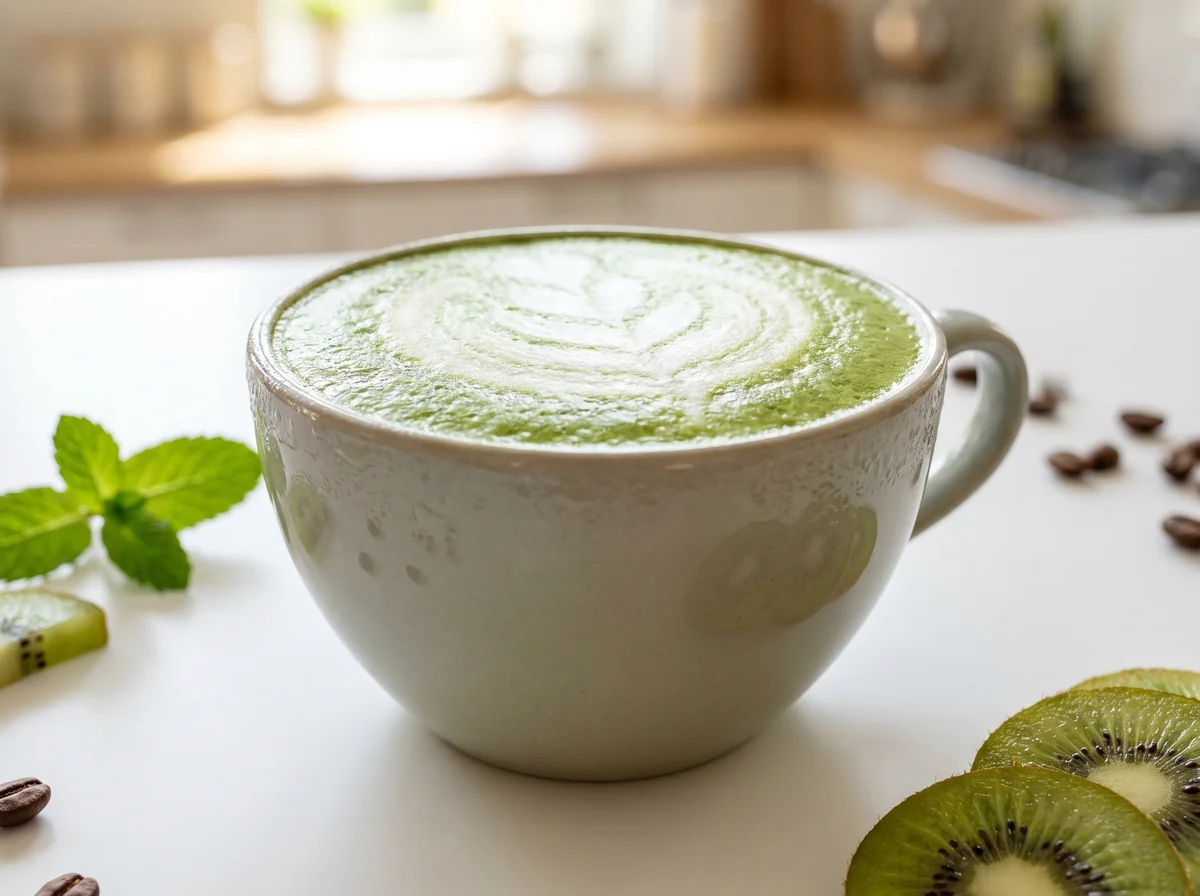
Matcha latte — ground green tea powder whisked with hot water into a smooth paste, then combined with warm, velvety steamed milk. Calm, sustained energy with antioxidant catechins.
In Japan, matcha was never merely a tea but a ritual of presence and contemplation — the ground leaves whisked until they foam.
The latte is a gentler version of that ritual, fitting for a busy Saudi morning: a calm green colour, warm milky comfort, and wakefulness that arrives gently without the rush of coffee. A cup that balances energy and serenity in a single sip.
Preparation Steps
Sift the matcha
Sift the matcha powder into a wide cup through a fine-mesh sieve to break up any lumps. This step is the secret to a smooth texture — matcha clumps quickly and leaves bitter granules if water is added directly without sifting.
Control the water temperature
Heat the water to 70–80°C — just before boiling, when small bubbles rise from the base. Boiling water scorches the matcha and draws out an astringent bitterness; if you do not have a thermometer, let boiled water rest for one minute before using.
Whisk the paste
Pour the hot water over the matcha and whisk with a bamboo whisk or small electric frother in a rapid M-motion for about one minute until fully dissolved and a fine green foam rises on the surface. The disappearance of any granules and the appearance of foam indicate the whisking is correct.
Heat and froth the milk
Heat the milk to 60–65°C without boiling, then froth it with a hand frother or milk steamer until velvety and smooth. A moderate temperature preserves the natural sweetness of the milk and prevents a skin forming on top.
Combine and serve
Slowly pour the frothed milk over the matcha paste with a gentle swirl to blend the two colours, then add the honey and vanilla if desired. Serve immediately while warm, or pour over ice for a refreshing iced version.
Blood Sugar Impact
The glycemic index (GI) measures how quickly a food raises blood sugar, while the glycemic load (GL) measures how much a full serving raises it. Together they give the complete picture.
Glycemic Index
GI
44Low
Low0–55Medium56–69High70+
A low value (≤55) means a gradual rise in blood sugar — the most suitable range for diabetes and insulin resistance.
Glycemic Load
GL
6Low
Low0–10Medium11–19High20+
Glycemic load reflects the impact of the full serving. To lower it: take half a serving, or pair the recipe with a source of protein and fiber.
Nutritional Information
Per ServingMakes 1 servings · one serving is about 270 g of raw ingredients
Calories143 kcal7%of Daily Value*
Protein6 g12%of Daily Value*
Carbohydrates14 g5%of Daily Value*
Fat6 g8%of Daily Value*
Fiber0 g0%of Daily Value*
Sodium86 mg4%of Daily Value*
Potassium270 mg6%of Daily Value*
Phosphorus168 mg13%of Daily Value*
* Percent Daily Values are based on a 2,000-calorie diet per FDA food-label reference values — your daily needs may be higher or lower. Values are derived from the recipe's ingredients via the USDA database.
Troubleshooting
The most common problems when preparing Matcha Latte, and how to fix them:
The matcha is lumpy and grainy
It was not sifted before the water was added. Always sift through a fine-mesh sieve and whisk the paste vigorously before adding the milk.
The flavour is bitter and astringent
The water was too hot, or too much powder was used. Lower the temperature to 70–80°C, keep to 2 g, and choose a ceremonial grade for a smoother taste.
No foam on the surface
The whisking was too gentle or at the wrong angle. Use a bamboo whisk with a rapid M-motion from the wrist, not a slow circular motion — approximately one minute.
The colour is dull or brownish
The matcha is old, of poor quality, or has oxidised. Choose a vivid green colour, store it sealed away from light and heat, and use it within a few weeks of opening.
The milk separated or curdled
The milk boiled, or a highly acidic plant milk was used. Heat only to 60–65°C without boiling; if using a plant milk, choose the barista variety, which is heat-stable and does not separate.
Storage and Make-Ahead
Matcha powder
Store in a sealed, opaque container away from light, moisture, and strong odours — preferably in the fridge after opening. Use within 4–6 weeks of opening to preserve colour and flavour.
Prepared latte
Best drunk immediately for the best foam and flavour. If needed, keep covered in the fridge for up to 24 hours and shake before drinking, accepting the loss of foam.
Cold version made ahead
Whisk the matcha paste and store it in a sealed container in the fridge for up to two days, then add cold milk and ice at serving time.
Tested Ingredient Substitutions
Original Ingredient
Tested Substitute
Ratio
Flavor Difference
Whole milk
Oat or almond milk (barista variety)
1:1
A dairy-free, lower-calorie option; the barista variety froths better and handles heat well
Honey
Date syrup or date molasses
1:1
A Saudi-inspired warm sweetness that pairs well with matcha, with comparable calories
Ceremonial grade matcha
Culinary grade matcha
1:1
More affordable with a stronger, slightly more bitter flavour — better suited to a sweetened latte than to drinking plain
Added sweetener
No sweetener
Omit
For the lower-calorie, blood-sugar-friendly version — rely on the milk's natural sweetness alone
Hot water
Cold water (shaken iced version)
1:1
Shake the matcha vigorously with cold water in a sealed bottle instead of hot whisking, then add milk and ice
How Much Does It Make? Scaling Guide
Ingredient
1 serving
2 servings
4 servings
Matcha powder
2 g
4 g
8 g
Hot water
60 ml
120 ml
240 ml
Milk
200 ml
400 ml
800 ml
Optional sweetener
1 tsp
2 tsp
4 tsp
EEINA Nutrition Tip
Drink matcha with a meal or just after it — not on a completely empty stomach — as the catechins may reduce the absorption of non-haem iron from plant sources. And if you are watching your caffeine, a late-afternoon cup using half the matcha gives you the ritual without disrupting your sleep.
Add This Recipe to Your Plan
The EEINA app saves your favorite recipes, calculates them from their real ingredients, and shows your daily numbers toward your goal. Try it free now.
Typically between 38 and 70 mg per serving depending on the quantity and grade of powder — usually less than a shot of espresso but real caffeine nonetheless. If you are sensitive to caffeine or pregnant, monitor your intake and consult your doctor.
What is the difference between a matcha latte and regular green tea?
With regular green tea you steep the leaves and discard them; with matcha you drink the whole ground leaf. This delivers a higher concentration of catechins, particularly EGCG, and of L-theanine per cup.
Does matcha help with weight loss?
It may support a balanced dietary pattern, but it does not burn fat on its own — the evidence for its effect is modest. Any real result comes from diet and activity, not from a single cup, and any added sweetener contributes calories.
Can it be made with plant milk?
Yes — oat or almond milk are good dairy-free options. Choose the barista variety: it froths better and holds its texture without separating when heated.
What is the best time to drink it?
Morning or mid-afternoon suits calm, sustained energy. Avoid a full evening serving if you are sensitive to caffeine so it does not affect your sleep quality, or use half the matcha quantity for a lighter version.