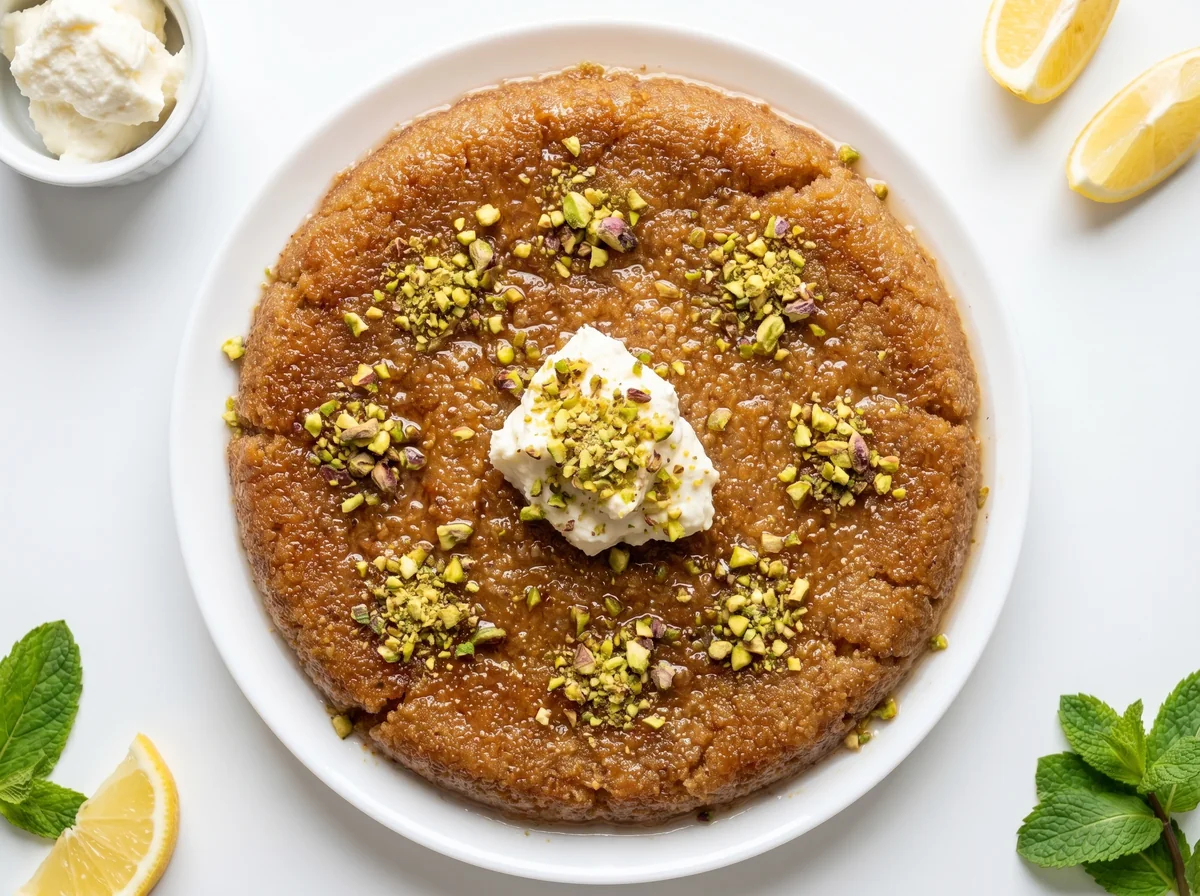
A luxurious Levantine dessert — semolina dough rubbed with butter and syrup, spread out and crowned with clotted cream, pistachios, and sugar syrup. Medium glycemic load, contains gluten, dairy, and tree nuts.
Mafroukeh is a prestigious ancient Levantine dessert (Syrian and Lebanese). Its name comes from the rubbing — the vigorous continuous stirring of the semolina with syrup until it becomes a shiny supple dough.
The semolina dough is toasted in butter, spread out, and crowned with clotted cream (ashta), pistachios, and syrup, creating a delightful contrast between the rich semolina base and the creamy topping. Served at celebrations, for guests, and during holidays, it belongs alongside kanafeh and hareesa in the prestigious family of pistachio and cream Levantine sweets. It reflects the richness of the Levantine sweet kitchen and its mastery of balancing textures and flavors — a symbol of generous hospitality.
Preparation Steps
Prepare the syrup
Boil the sugar, water, and a squeeze of lemon until a medium syrup forms. Add the orange blossom water and ground mastic, then let it cool slightly. Have the syrup ready before rubbing the semolina. The mastic lends a distinctive Levantine aroma.
Toast the semolina in butter
In a pot, melt the butter, add the semolina, and toast over low heat with constant stirring until the color changes slightly and the aroma rises (do not let it darken too much). Toasting the semolina in butter is the foundation of mafroukeh's rich flavor.
Add the syrup and rub
Pour the syrup gradually over the toasted semolina with vigorous continuous stirring. Keep rubbing (the vigorous stirring, from which the name mafroukeh derives) over low heat until the semolina absorbs the syrup and becomes a shiny, cohesive, supple dough that pulls away from the pot. Continuous rubbing is the secret to the texture.
Spread the dough
Pour the mafroukeh dough into a tray or serving dish and spread it into an even layer using the back of a spoon dampened with water or syrup. Allow it to cool slightly to firm up. The spread dough is the base that holds the clotted cream.
Add the clotted cream
Spread a generous layer of clotted cream (ashta) over the semolina base. The clotted cream is mafroukeh's crown — its rich creamy layer contrasts beautifully with the semolina. The dough can be folded over the cream or left open in layers.
Garnish and serve
Decorate generously with crushed pistachios and drizzle cold syrup over the top. Serve at room temperature or chilled. Mafroukeh is a prestigious ancient Levantine dessert; its name comes from the rubbing (the constant stirring of the semolina). It combines toasted buttery semolina with clotted cream and pistachios, and is served at celebrations and for guests — a symbol of the richness and elegance of Levantine sweet-making.
Blood Sugar Impact
The glycemic index (GI) measures how quickly a food raises blood sugar, while the glycemic load (GL) measures how much a full serving raises it. Together they give the complete picture.
Glycemic Index
GI
65Medium
Low0–55Medium56–69High70+
A low value (≤55) means a gradual rise in blood sugar — the most suitable range for diabetes and insulin resistance.
Glycemic Load
GL
36High
Low0–10Medium11–19High20+
Glycemic load reflects the impact of the full serving. To lower it: take half a serving, or pair the recipe with a source of protein and fiber.
Nutritional Information
Per ServingMakes 8 servings · one serving is about 100 g of raw ingredients
Calories359 kcal18%of Daily Value*
Protein6 g12%of Daily Value*
Carbohydrates58 g21%of Daily Value*
Fat12 g15%of Daily Value*
Fiber2 g7%of Daily Value*
Sodium3 mg0%of Daily Value*
* Percent Daily Values are based on a 2,000-calorie diet per FDA food-label reference values — your daily needs may be higher or lower. Values are derived from the recipe's ingredients via the USDA database.
Troubleshooting
The most common problems when preparing Mafroukeh, and how to fix them:
The dough did not hold together (too soft)
Too much syrup or insufficient rubbing. Continue rubbing the semolina with the syrup over low heat until it absorbs it and becomes a supple dough that pulls away from the pot. Add the syrup gradually, not all at once, as excess makes it too soft.
The dough is hard and dry
Too little syrup or over-rubbed. Add a little more syrup and knead — mafroukeh firms up more when chilled. The desired texture is supple, shiny, and soft, not hard or runny.
The semolina tastes raw
Not toasted enough. Toast the semolina in butter over low heat with stirring until its aroma rises and the color changes slightly before adding the syrup. Toasting eliminates the raw flavor and develops the rich nutty taste.
The clotted cream is too liquid and does not hold
The cream is too thin. Use thick clotted cream (genuine ashta or a thick variety) and apply it to a cool, firm base. Thin cream will run, while thick cream holds as a layer on the semolina.
Too sweet
Too much syrup. Reduce the syrup in the dough and at serving time — mafroukeh is sweetened by the syrup in the dough, so do not drown it. The pistachios and cream balance the sweetness, and a moderate amount of syrup is enough.
Storage and Make-Ahead
Refrigerator (4°C)
Mafroukeh keeps in an airtight container in the refrigerator for two to three days (it contains cream and dairy). Remove a little before serving so it softens (semolina firms up when cold). Add the syrup and pistachios at serving time to keep them fresh.
Advance preparation
The semolina dough can be prepared and spread in advance and kept chilled, then topped with cream, pistachios, and syrup at serving time. Fresh clotted cream at serving time gives the best texture and flavor.
Freezer
The semolina dough (without cream) can be frozen for weeks. Thaw and add fresh clotted cream before serving. Clotted cream does not freeze well (the texture changes), so always add it fresh.
Food safety
Mafroukeh contains clotted cream (dairy) which is perishable. Keep it chilled at all times, do not leave it outside the refrigerator for more than two hours, especially in warm weather. Use fresh cream and clean utensils.
Tested Ingredient Substitutions
Original Ingredient
Tested Substitute
Ratio
Flavor Difference
Clotted cream (ashta)
Low-fat cream or whipped cream
Same quantity
Low-fat cream reduces the fat content; whipped cream is a lighter alternative. Genuine ashta is the traditional richest option.
Butter
ghee or reduced amount
To taste
ghee gives a traditional flavor; reducing butter lowers saturated fat. Both toast the semolina (contains dairy).
Pistachios
Walnuts, almonds, or pine nuts
Same quantity
Pistachios are the most traditional and prestigious for Levantine sweets. Walnuts and almonds are alternatives (still tree nuts).
How Much Does It Make? Scaling Guide
Number of servings
Semolina
Butter
Syrup
4 (half recipe)
1 cup
0.25 cup
0.5 cup
8 (base)
2 cups
0.5 cup
1 cup
16 (celebration)
4 cups
1 cup
2 cups
EEINA Nutrition Tip
Mafroukeh is a rich celebration dessert. On the positive side, the pistachios add protein and healthy fats, and the clotted cream adds protein and calcium. However, it remains a dessert concentrated in sugar (syrup) and fat (butter and cream), with a medium glycemic load. To lighten it: reduce the syrup, use moderate butter, and add more pistachios with low-fat cream. Enjoy a small piece on occasion — it is a refined tasting dessert meant to be savored, not eaten in large amounts, especially for people managing blood sugar.
Add This Recipe to Your Plan
The EEINA app saves your favorite recipes, calculates them from their real ingredients, and shows your daily numbers toward your goal. Try it free now.
A luxurious Levantine dessert made from semolina toasted in butter, then rubbed with syrup until supple and shiny. It is spread and crowned with clotted cream (ashta), pistachios, and syrup. Its name comes from the rubbing (continuous vigorous stirring), and it is served at celebrations and for guests.
Why is it called mafroukeh?
From the Arabic root meaning to rub — the vigorous continuous stirring of the semolina dough with syrup over heat until it absorbs it and becomes a supple shiny cohesive mass. This sustained rubbing creates its distinctive texture, so the name describes the essential preparation method.
Is mafroukeh healthy?
It is a rich celebration dessert. The pistachios are a positive (protein and healthy fats) and so is the cream (protein and calcium). However, it is concentrated in sugar (syrup), fat (butter and cream), and calories, with a medium glycemic load. Reduce the syrup, use low-fat cream, and enjoy a small piece. A refined tasting dessert to be savored in moderation.
What is the difference between mafroukeh and hareesa (basbousa)?
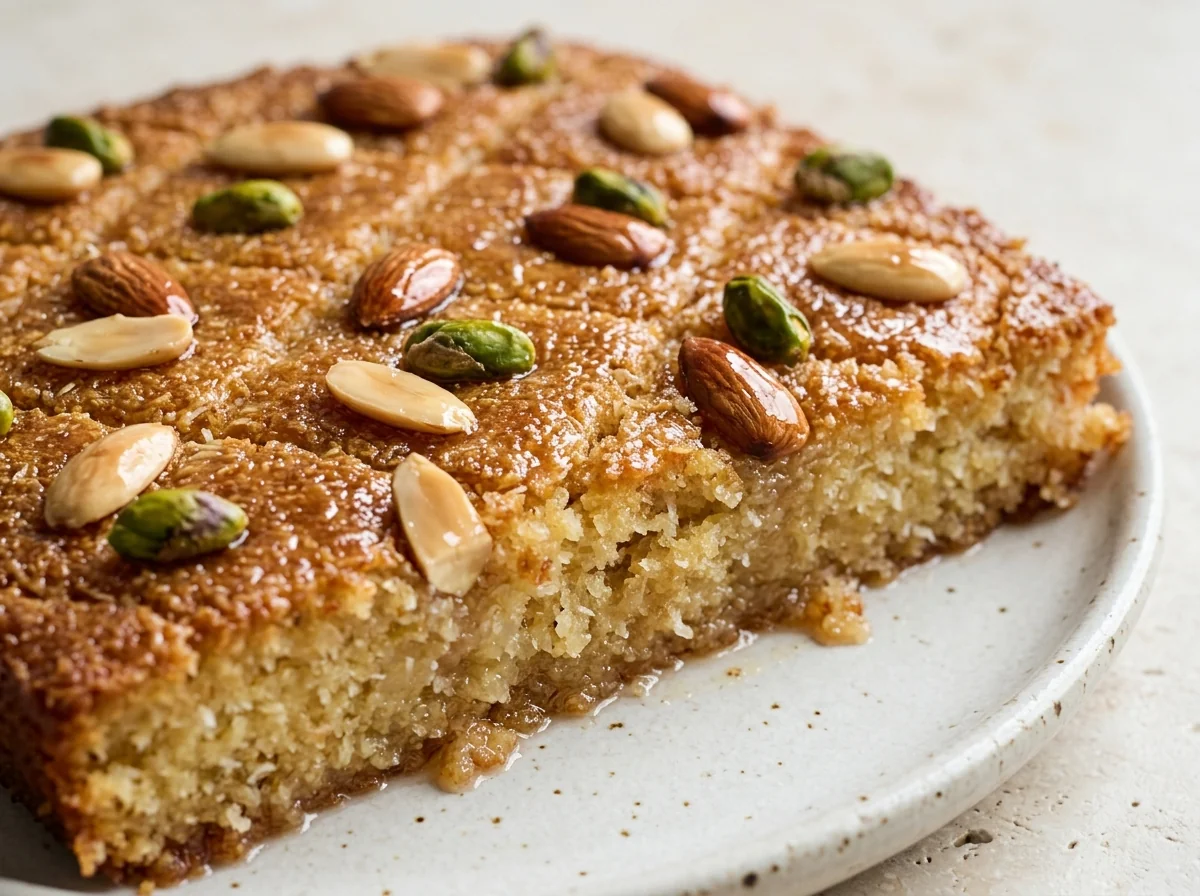
Hareesa (basbousa) is a baked semolina cake cut into pieces and soaked in syrup, while mafroukeh is semolina dough rubbed on the stovetop (not baked) to a soft, creamy texture eaten with a spoon. Mafroukeh is softer and creamier with the clotted cream, while basbousa is cake-like. Both are Levantine semolina desserts.