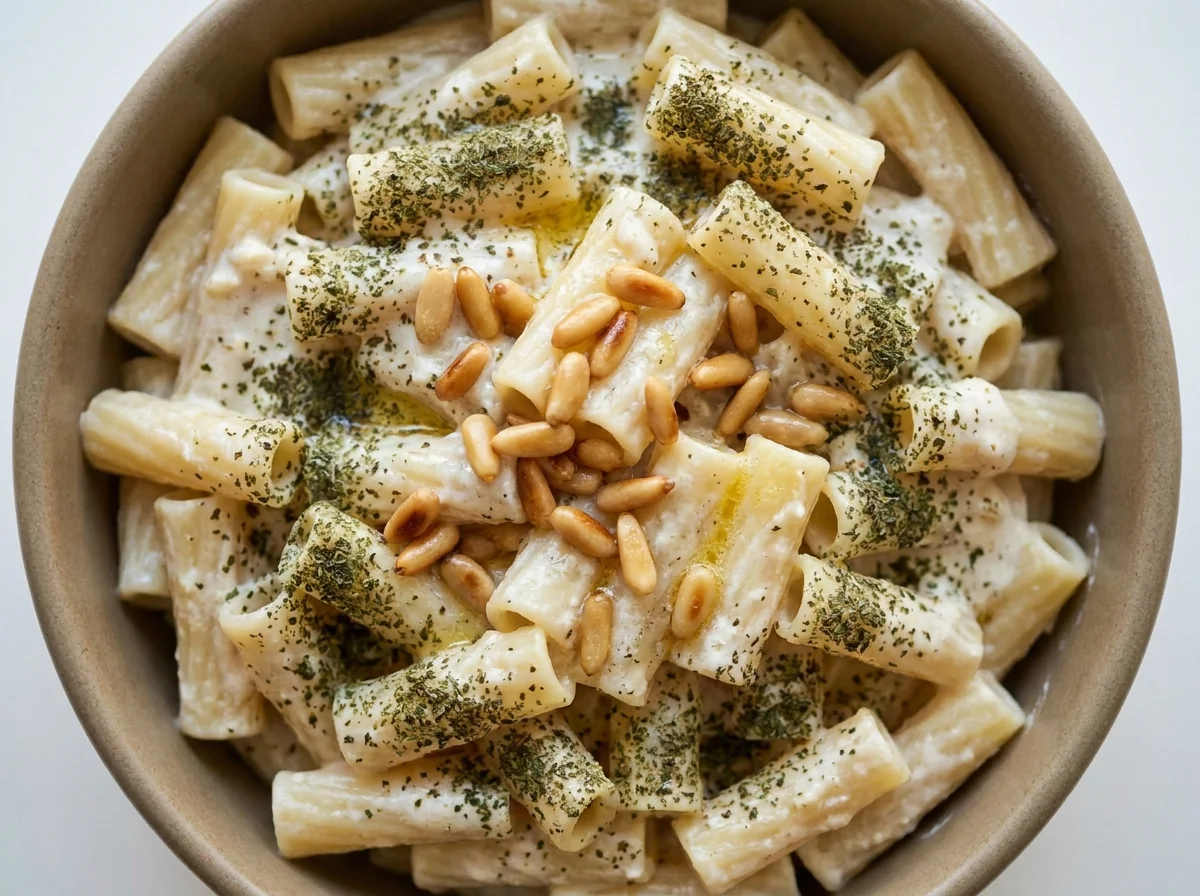
Macaroni with yogurt is a child of the Levantine home kitchen, a delicious crossover between fattet laban and pasta.
It is made in a quarter of an hour from the household's standing pantry, so it became the rescue of a late Suhoor in many homes.
Preparation Steps
Boil the pasta precisely
In salted boiling water, cook the pasta per its package minus one minute. It will finish cooking in the heat of the sauce. Reserve half a cup of its cooking water, then drain it.
Prepare the garlicky yogurt
In a large bowl, whisk the yogurt with the garlic and salt, and for anyone who wants it richer, add the tahini, which gives it a velvety depth. The texture you want: a sauce that flows thickly.
Marry the pasta to the yogurt off the heat
Add the hot drained pasta to the yogurt, not the reverse, and toss. The pasta's heat is enough to warm the yogurt without splitting it; and if the mixture thickens, loosen it with the reserved cooking water.
Crown it with mint ghee
Heat the ghee in a small pan until it whispers, turn off the heat and add the dried mint so it crackles and perfumes, then drizzle it over the dish in golden lines and scatter the pine nuts.
Serve warm, and here is its secret
Eat it warm, not scalding; the dish's warmth keeps the yogurt cohesive and brings out its refreshing acidity, and that is why the summer Suhoor (pre-dawn Ramadan meal) tables of the Levant loved it.
Blood Sugar Impact
The glycemic index (GI) measures how quickly a food raises blood sugar, while the glycemic load (GL) measures how much a full serving raises it. Together they give the complete picture.
Glycemic Index
GI
47Low
Low0–55Medium56–69High70+
A low value (≤55) means a gradual rise in blood sugar — the most suitable range for diabetes and insulin resistance.
Glycemic Load
GL
29High
Low0–10Medium11–19High20+
Glycemic load reflects the impact of the full serving. To lower it: take half a serving, or pair the recipe with a source of protein and fiber.
Nutritional Information
Per ServingMakes 4 servings · one serving is about 220 g of raw ingredients
Calories458 kcal23%of Daily Value*
Protein16 g32%of Daily Value*
Carbohydrates65 g24%of Daily Value*
Fat16 g21%of Daily Value*
Fiber3 g11%of Daily Value*
Sodium355 mg15%of Daily Value*
* Percent Daily Values are based on a 2,000-calorie diet per FDA food-label reference values — your daily needs may be higher or lower. Values are derived from the recipe's ingredients via the USDA database.
Troubleshooting
The most common problems when preparing Levantine Macaroni with Yogurt and Garlic, and how to fix them:
The yogurt split and curdled
It met the heat or met pasta that was just boiling. Leave the pasta for a minute after draining, then mix off the heat.
The dish dried out after a few minutes
The pasta drinks the sauce. The reserved cooking water exists for this moment. Two spoons restore the flow.
The garlic overpowered
It sharpens in the yogurt over time. Start with half the amount if you are going to let the dish wait.
It tastes like 'something is missing'
Usually the mint ghee. It is the soul of the dish, not its garnish. It is not skipped.
Storage and Make-Ahead
Warm and fresh
Its peak is right after serving with a flowing texture.
In the fridge
One day. It thickens and is eaten cold as a macaroni-yogurt salad, and it has its fans.
Not suitable for freezing
The yogurt inevitably splits.
Tested Ingredient Substitutions
Original Ingredient
Tested Substitute
Ratio
Flavor Difference
The short pasta
Boiled wide vermicelli
1:1
Closer to the spirit of the old homes
The cow's-milk yogurt
Goat's-milk yogurt
1:1
A higher, rustic acidity
The pine nuts
Toasted sliced almonds
1:1
More economical
The ghee
Olive oil with mint
1:1
A lighter vegetarian version
How Much Does It Make? Scaling Guide
Ingredient
4 servings
2 servings
8 servings
Pasta
300 g
150 g
600 g
Yogurt
500 g
250 g
1 kg
Garlic
10 g
5 g
20 g
EEINA Nutrition Tip
The golden rule: the pasta goes to the yogurt, and the yogurt does not go to the heat. Every case of yogurt splitting comes from breaking this rule.
Add This Recipe to Your Plan
The EEINA app saves your favorite recipes, calculates them from their real ingredients, and shows your daily numbers toward your goal. Try it free now.
The pasta's carbohydrates for energy with the yogurt's protein and calcium, and it is made in a quarter of an hour from ingredients that never run out of the house.
Cold or hot?
Warm and gentle. This is its identity. Scalding splits the yogurt and cold solidifies the ghee.
Can it be made richer in protein?
Sliced grilled chicken breast over it turns it into a complete Suhoor dinner.
Whole-grain pasta?
It works perfectly and raises the fiber. With an extra minute of boiling.