The Levantine Ramadan sweet bread — a soft brioche dough scented with mahlab and mastic, filled with dates, cream, or walnuts, baked golden. Moderate glycemic load. Contains gluten, dairy, and eggs.
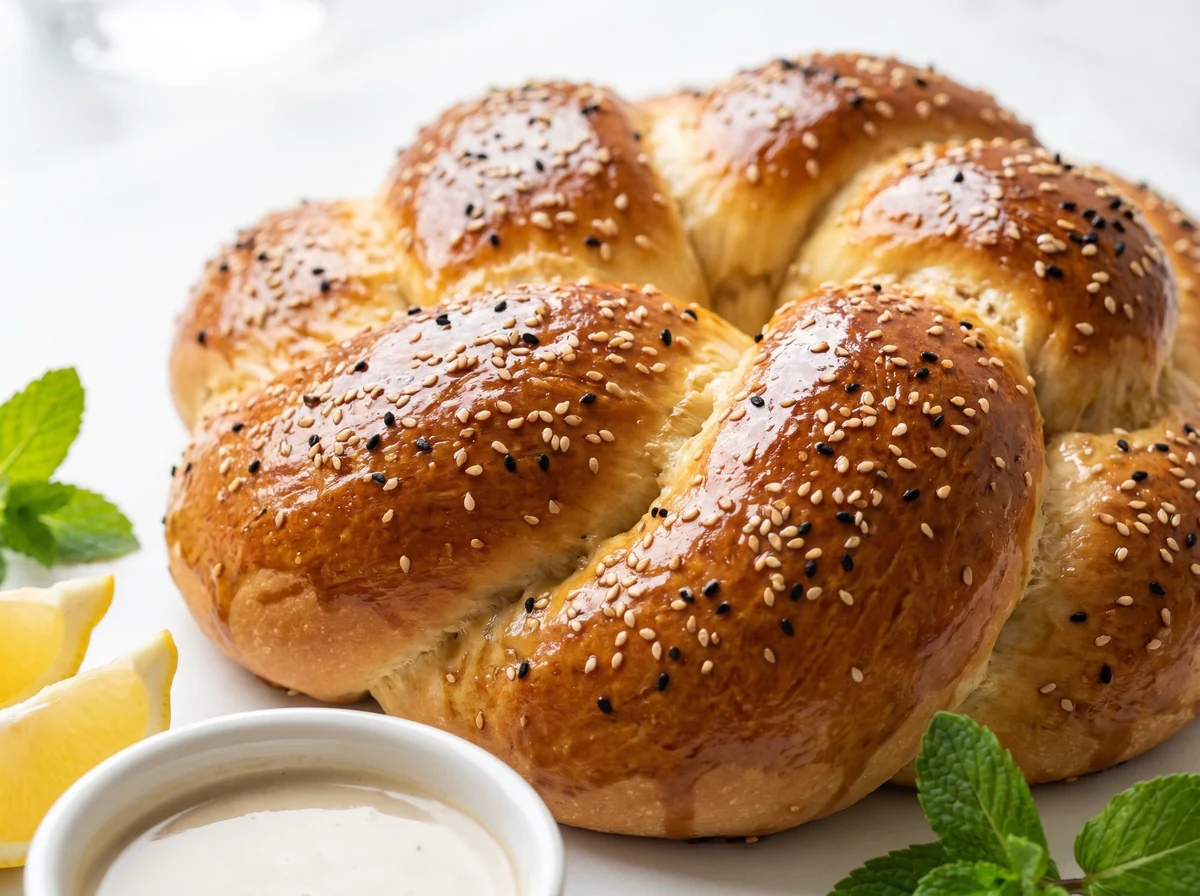
Maarouk (or maarouk Ramadan) is the quintessential Levantine Ramadan sweet bread — from Syria, Lebanon, Jordan, and Palestine. It is a soft brioche dough scented with mahlab and mastic, filled with dates, cream, or walnuts, baked golden.
Its association with Ramadan is profound: its fragrant scent rises from bakeries and markets throughout the holy month, bought for Suhoor (pre-dawn Ramadan meal) and Iftar. Making it at home is a beloved family tradition, and its soft, sweet taste and aroma have made it one of the most evocative reminders of Ramadan in the Levant.
Preparation Steps
Activate the yeast
Dissolve the yeast and a teaspoon of sugar in the warm milk and leave for ten minutes until frothy and active. Warm milk (not hot) activates the yeast without killing it — this is the foundation of the maarouk's tender dough.
Knead the dough
Mix the flour with the sugar, ground mahlab, and ground mastic. Add the yeast mixture, egg, melted butter, and orange blossom water. Knead well (ten minutes) until the dough is soft, smooth, and elastic. The mahlab and mastic give maarouk its distinctive scent.
First rise
Cover the dough and leave it in a warm place until it doubles in size, about one to one and a half hours. A well-risen dough is the secret to soft, airy maarouk — do not rush it.
Shape and fill
Divide the dough into balls. Flatten each ball, place the filling (date paste, cream, or walnut-sugar) in the centre, wrap or shape into long fingers or discs, and seal tightly. Arrange on a greased tray.
Second rise and glaze
Leave the shaped maarouk to rest and rise for another half hour until puffed. Brush the tops with egg yolk and scatter sesame or nigella seeds. The second rise makes the bread even softer and lighter.
Bake and serve
Bake the maarouk in a moderate oven until cooked through and the top is a shiny golden colour, about twenty minutes. Drizzle with a light syrup while still warm (optional). Serve warm. This is the quintessential Levantine Ramadan sweet bread — bought from bakeries and made at home for Suhoor (pre-dawn Ramadan meal) and Iftar. Its fragrant scent fills the markets in Ramadan, a symbol of the holy month's atmosphere, loved by young and old.
Blood Sugar Impact
The glycemic index (GI) measures how quickly a food raises blood sugar, while the glycemic load (GL) measures how much a full serving raises it. Together they give the complete picture.
Glycemic Index
GI
68Medium
Low0–55Medium56–69High70+
A low value (≤55) means a gradual rise in blood sugar — the most suitable range for diabetes and insulin resistance.
Glycemic Load
GL
39High
Low0–10Medium11–19High20+
Glycemic load reflects the impact of the full serving. To lower it: take half a serving, or pair the recipe with a source of protein and fiber.
Nutritional Information
Per ServingMakes 8 servings · one serving is about 120 g of raw ingredients
Calories307 kcal15%of Daily Value*
Protein9 g18%of Daily Value*
Carbohydrates62 g23%of Daily Value*
Fat2 g3%of Daily Value*
Fiber4 g14%of Daily Value*
Sodium25 mg1%of Daily Value*
Potassium270 mg6%of Daily Value*
Phosphorus133 mg11%of Daily Value*
* Percent Daily Values are based on a 2,000-calorie diet per FDA food-label reference values — your daily needs may be higher or lower. Values are derived from the recipe's ingredients via the USDA database.
Troubleshooting
The most common problems when preparing Maarouk — Levantine Ramadan Sweet Bread, and how to fix them:
Maarouk is hard and heavy
Insufficient proofing or kneading. Knead the dough well (ten minutes) until elastic, and give it enough proofing time (doubled in size) twice. Good proofing is the secret to softness and lightness.
Dough did not rise
Yeast is dead or milk was too hot. Make sure the yeast is active (it should foam in warm milk), use warm — not hot — milk (heat kills yeast), and proof in a warm spot.
Filling came out during baking
Over-filled or not sealed well. Do not overfill, seal the dough around the filling firmly (pinch the edges), and place the seam side down in the tray.
Top is pale and did not brown
Not glazed or oven is not hot enough. Brush the top with egg yolk (gives shine and golden colour), bake in a sufficiently hot oven, and watch until the top colours.
Maarouk is dry the next day
Bread dries naturally. Keep in a sealed bag and warm briefly before serving to restore softness, or drizzle a light syrup when baking to keep it moist longer. The date filling keeps it softer.
Storage and Make-Ahead
Room temperature
Keep in a sealed bag or airtight container at room temperature for two to three days (like bread). Warm briefly before serving to restore freshness — best enjoyed warm.
Freezer
Baked maarouk freezes in a sealed bag for one to two months. Thaw at room temperature and warm slightly — it returns to soft. Practical for preparing a large Ramadan batch.
Meal prep
The date filling can be made in advance and stored, and the maarouk kneaded and baked fresh. Or bake a batch and freeze, reheating what is needed each day in Ramadan for Suhoor (pre-dawn Ramadan meal).
Food safety
Bake the maarouk until fully cooked through (it contains egg and milk), store sealed, and cream filling (if used) requires refrigeration (contains dairy).
Tested Ingredient Substitutions
Original Ingredient
Tested Substitute
Ratio
Flavor Difference
Date filling
Cream, walnut-sugar, or chocolate
as desired
Dates are the healthiest option (natural sugar, fibre, minerals); cream and walnuts are richer traditional fillings; chocolate is a modern version for children
White flour
Mix in some brown flour
up to a third
Raises fibre and lowers glycemic load slightly while keeping acceptable softness (too much makes it heavy)
Final syrup
Skip it
—
Maarouk is sweet from its filling and dough, so skipping the syrup reduces sugar without affecting the flavour much
How Much Does It Make? Scaling Guide
Servings
Flour
Milk
Yeast
4 (half recipe)
2 cups
1/2 cup
1 spoon
8 (base)
4 cups
1 cup
2 spoons
16 (Ramadan)
8 cups
2 cups
4 tbsp
EEINA Nutrition Tip
Maarouk is a sweetened leavened bread — lighter than fried sweets, especially when filled with dates (natural sugar plus fibre and minerals, better than sugary fillings). The challenge is the white flour, sugar, and moderate glycemic load. To lighten it: choose the date filling, skip the final syrup, replace some of the flour with brown flour, and stop at one piece. It is a Ramadan treat — enjoy it in moderation as part of a balanced Suhoor (pre-dawn Ramadan meal) or Iftar.
Add This Recipe to Your Plan
The EEINA app saves your favorite recipes, calculates them from their real ingredients, and shows your daily numbers toward your goal. Try it free now.
Maarouk is a Levantine sweet bread — a soft brioche dough scented with mahlab and mastic, filled with dates, cream, or walnuts. It became a Ramadan staple because it is prepared and bought in abundance throughout the month for Suhoor (pre-dawn Ramadan meal) and Iftar, and its fragrant scent is part of the Levantine Ramadan atmosphere.
What are mahlab and mastic?
Mahlab is ground St. Lucie cherry pit seeds (fragrant, almond-like flavour), and mastic is resin from the mastic tree (a distinctive, fragrant flavour). Both give maarouk and Levantine sweet breads their unmistakeable scent.
How do I get soft, airy maarouk?
Knead the dough well until elastic, and give it enough proofing time twice (before and after shaping) in a warm spot. Use warm milk to activate the yeast. Good proofing and proper kneading are the secret to softness.
Is maarouk healthy?
It is a sweetened leavened bread — lighter than fried sweets, especially with the date filling (natural sugar and fibre). The challenge is white flour, sugar, and moderate glycemic load. Choose the date filling, skip the syrup, and enjoy one piece as part of a balanced Suhoor (pre-dawn Ramadan meal) or Iftar.