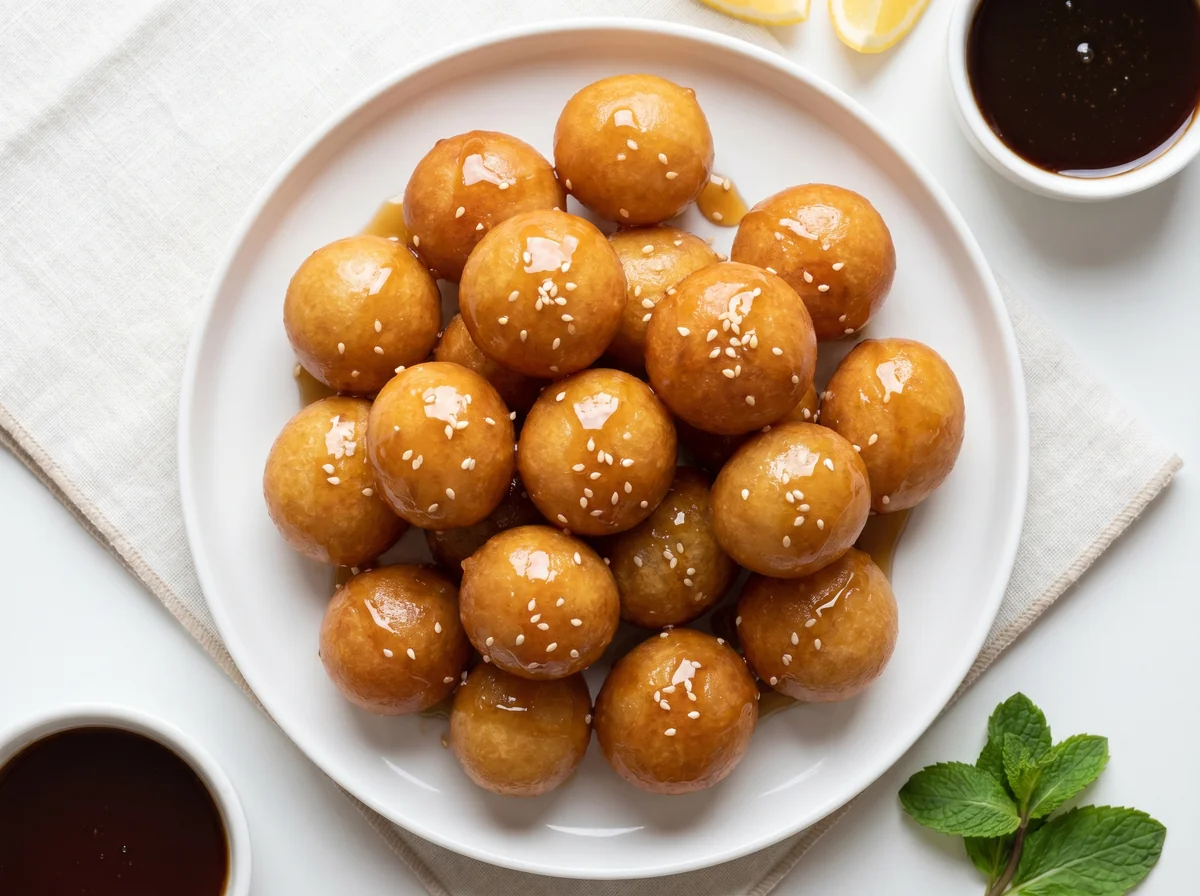
The Gulf's beloved Ramadan sweet — balls of fermented batter fried until golden and crisp on the outside and soft inside, dipped in date molasses or syrup and sprinkled with sesame. A celebratory sweet with a high glycemic load. Contains gluten and sesame.
Luqaimat are the most famous Gulf sweet and the queen of Ramadan tables from Saudi Arabia to the UAE, Kuwait, Bahrain, Qatar, and Oman. The name is the diminutive of luqma (morsel), and these are balls of fermented batter, fried and dipped in date molasses, with ancient roots across the Islamic world (known as awwama in the Levant).
Made at Iftar and for weddings, every family has its own secret batter consistency and seasoning with cardamom and saffron. Their crisp exterior and soft hollow interior dunked in sweet date molasses is the source of their enduring love.
Preparation Steps
Prepare the batter
Combine the flour, cornstarch, yeast, sugar, cardamom, saffron, and pinch of salt. Gradually add the warm water and whisk until you have a thick, sticky, pourable batter (thicker than cake batter, thinner than bread dough — it falls heavily from a spoon). The right consistency is the secret to puffed-up luqaimat.
Ferment
Cover the batter with a cloth and leave in a warm place for a full hour until it has doubled in size and bubbles appear on the surface. Sufficient fermentation is what gives luqaimat their lightness and airy interior — do not rush it. A warm spot speeds up fermentation.
Heat the oil
Heat a generous amount of deep oil over medium heat until it reaches frying temperature (a small piece of batter dropped in floats immediately and bubbles all around without burning). The right medium heat cooks the luqaimat through before the outside burns. Oil that is too hot burns the surface and leaves the centre raw.
Shape and fry
The traditional method: Wet your hands and squeeze the batter out between your thumb and index finger into a ball, cut it off with a wet teaspoon, and drop it into the oil. Or use two spoons. Drop in several balls without crowding and turn them in the oil so they colour all around and puff up, about three to four minutes until golden brown and crisp.
Drain
Lift the luqaimat onto absorbent paper to remove excess oil. Wet your hands and spoon between each batch to prevent sticking. Good luqaimat are hollow and light inside with a crisp outside.
Dip and serve
Dip the hot luqaimat in date molasses or syrup until coated, or arrange on a plate and drizzle the molasses over them, then scatter the toasted sesame or pistachios. Serve immediately while still hot and crisp. Luqaimat are the Gulf's Ramadan and celebration sweet — eaten the moment they are fried and dipped, at their peak crunch.
Blood Sugar Impact
The glycemic index (GI) measures how quickly a food raises blood sugar, while the glycemic load (GL) measures how much a full serving raises it. Together they give the complete picture.
Glycemic Index
GI
75High
Low0–55Medium56–69High70+
A low value (≤55) means a gradual rise in blood sugar — the most suitable range for diabetes and insulin resistance.
Glycemic Load
GL
20High
Low0–10Medium11–19High20+
Glycemic load reflects the impact of the full serving. To lower it: take half a serving, or pair the recipe with a source of protein and fiber.
Nutritional Information
Per ServingMakes 8 servings · one serving is about 90 g of raw ingredients
Calories203 kcal10%of Daily Value*
Protein4 g8%of Daily Value*
Carbohydrates27 g10%of Daily Value*
Fat9 g12%of Daily Value*
Fiber1 g4%of Daily Value*
Sodium302 mg13%of Daily Value*
* Percent Daily Values are based on a 2,000-calorie diet per FDA food-label reference values — your daily needs may be higher or lower. Values are derived from the recipe's ingredients via the USDA database.
Troubleshooting
The most common problems when preparing Luqaimat (Gulf Fried Dough Balls), and how to fix them:
Luqaimat came out heavy and dense instead of hollow
The batter did not ferment enough, or was too thick. Let it ferment for a full hour until doubled with bubbles on the surface, and make sure the consistency is a thick, sticky batter — not a heavy dough. Fermentation creates the hollow centre and lightness.
Outside burnt, inside raw
Oil too hot. Fry over medium heat, not high — excessive heat burns the surface before the centre cooks. Test the oil with a small piece: it should float and brown gradually, not instantly.
Luqaimat absorbed too much oil and are greasy
Oil was cold so the batter soaked it up. Make sure the oil is hot enough before dropping them in (a ball floats and bubbles around it), and do not crowd the pot or the temperature drops.
Balls are uneven or stuck together
Batter sticks to hands and spoon. Wet your hand and spoon between each ball — moisture prevents sticking and gives smooth, even balls. The technique takes practice.
Luqaimat went soft after dipping
Not fried long enough, or dipped in too much date molasses while cold. Fry until properly crisp, dip while hot, and serve immediately — they soften if left in the molasses too long.
Storage and Make-Ahead
Room temperature
Luqaimat are eaten the moment they are fried and dipped — they lose their crunch quickly, so do not prepare them long before serving. Without dipping they keep for a few hours.
Batter
Fermented batter keeps in the refrigerator for one day and is fried directly after removing to come to temperature slightly. Refrigerator fermentation is slow and develops flavour.
Freezer
Fried luqaimat (before dipping) can be frozen for a month and reheated in the oven or air-fryer to restore crunch, then dipped fresh. Fresh-made is always best.
Reheating
Reheat luqaimat (before dipping) in a 180°C oven or air-fryer for five minutes to restore the crunch, then dip in fresh date molasses. Avoid the microwave — it makes them soft.
Tested Ingredient Substitutions
Original Ingredient
Tested Substitute
Ratio
Flavor Difference
Deep-frying
Air-fryer
a light drizzle of oil
Significantly reduces fat; gives good crunch but less than traditionally fried
date molasses
Sugar syrup (qater) or honey
to taste
date molasses is deeper in flavour and carries some date minerals; syrup is sweeter and lighter in flavour
Sesame (garnish)
Crushed pistachios or plain
to taste
For sesame allergy, pistachios are an alternative (tree nuts) or leave plain
How Much Does It Make? Scaling Guide
Number of servings
Flour
Yeast
date molasses
4 (half recipe)
1 cup
0.5 tbsp
0.25 cup
8 (base)
2 cups
1 tbsp
0.5 cup
16 (large gathering)
4 cups
2 tbsp
1 cup
EEINA Nutrition Tip
Luqaimat are a Ramadan and celebration sweet — fried and dipped in date molasses, so their glycemic load is high and calories are concentrated. Moderation is the key: three to four small balls are enough for enjoyment, especially after a full Iftar meal. date molasses is better than sugar syrup because it carries some of the minerals from dates, but it is still sugar. For people with diabetes: very few on special occasions with careful attention — these rank among the highest-index sweets.
Add This Recipe to Your Plan
The EEINA app saves your favorite recipes, calculates them from their real ingredients, and shows your daily numbers toward your goal. Try it free now.
Sufficient fermentation (a full hour until the batter doubles) and the right sticky, pourable batter consistency, plus frying over medium heat. Fermentation creates the hollow centre and lightness; moderate heat cooks the inside without burning the outside.
What is the difference between luqaimat and awwama?
They are essentially the same sweet with two names: luqaimat in the Gulf and awwama in the Levant. Both are fermented batter balls, fried and dipped in syrup or date molasses, with minor differences in seasoning and presentation.
date molasses or syrup?
date molasses is the traditional Gulf choice — deeper in flavour and carries some date minerals, but it is still sugar. Syrup (sugar water) is sweeter and lighter in flavour. Both raise the glycemic load, so moderation matters.
Can they be made healthier?
Fry in an air-fryer to reduce fat, use date molasses in moderation, and serve a small number. They remain a high-glycemic-index celebration sweet — the healthier approach is a moderate quantity, not turning them into everyday food.