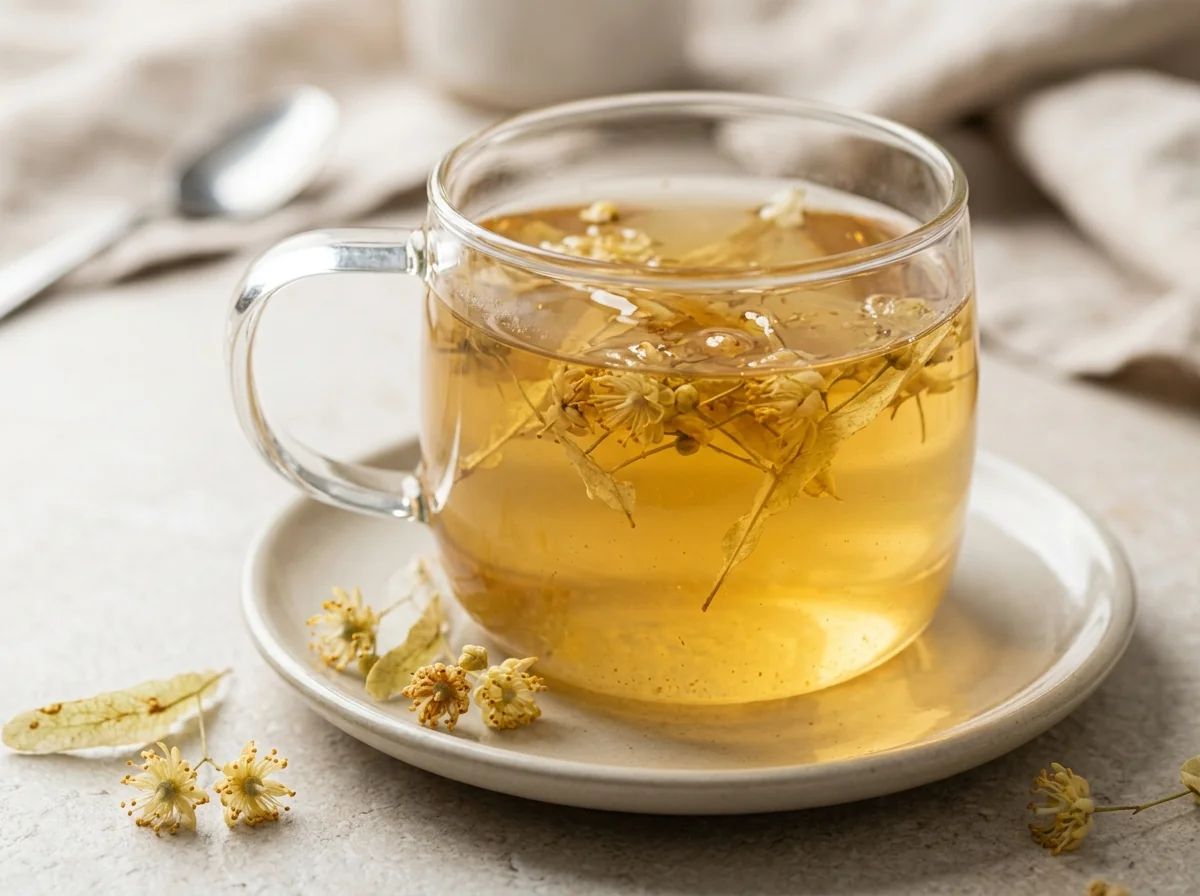
Dried linden flowers, known in the Levant as tilio, steeped in boiled water for a quarter of an hour to give a golden tea with a soft honeyed aroma. A time-honored, caffeine-free evening drink.
Tilio is the name homes in the Levant and Egypt inherited for the flowers of the linden tree — the shade tree that lines Europe's streets, whose fragrant blossoms have been dried into an evening tea for centuries.
In Arab herbal shops, tilio appears in zhourat blends alongside chamomile and anise, reached for in times of fatigue and winter chills. Its steep is unusually slow: a full quarter of an hour, covered, until it yields its golden color and an aroma reminiscent of honey — then it is sipped slowly before bed.
Preparation Steps
Prepare the flowers
Place the dried linden flowers in a teapot or small saucepan. Look them over quickly and pick out any large woody stems — what you want are the flowers and their pale, leaf-like bracts.
Boil the water and pour
Bring the water to a full boil, then pour it directly over the flowers. Linden flowers are light, dry blossoms that need water at boiling temperature to draw out their honeyed aroma and gentle silkiness.
Steep covered for 15 minutes
Cover the pot and let the flowers steep for 15 minutes, until the water takes on a golden color and a honeyed floral scent. The long, covered steep is what sets tilio apart — its flowers release their flavor more slowly than quick-steeping herbs.
Strain and serve
Strain the tea from the flowers through a fine-mesh strainer into two cups, and add the honey and lemon juice once the heat has eased slightly, or leave it plain. Sip it warm and unhurried in the evening.
Blood Sugar Impact
The glycemic index (GI) measures how quickly a food raises blood sugar, while the glycemic load (GL) measures how much a full serving raises it. Together they give the complete picture.
Glycemic Index
GI
56Medium
Low0–55Medium56–69High70+
A low value (≤55) means a gradual rise in blood sugar — the most suitable range for diabetes and insulin resistance.
Glycemic Load
GL
2Low
Low0–10Medium11–19High20+
Glycemic load reflects the impact of the full serving. To lower it: take half a serving, or pair the recipe with a source of protein and fiber.
Nutritional Information
Per ServingMakes 2 servings · one serving is about 260 g of raw ingredients
Calories11 kcal1%of Daily Value*
Protein0 g0%of Daily Value*
Carbohydrates3 g1%of Daily Value*
Fat0 g0%of Daily Value*
Fiber0 g0%of Daily Value*
Sodium0 mg0%of Daily Value*
Potassium4 mg0%of Daily Value*
Phosphorus0 mg0%of Daily Value*
* Percent Daily Values are based on a 2,000-calorie diet per FDA food-label reference values — your daily needs may be higher or lower. Values are derived from the recipe's ingredients via the USDA database.
Troubleshooting
The most common problems when preparing Linden Flower Tea (Tilio), and how to fix them:
The flavor is so light it can barely be tasted
The steep was too short or the flowers too few. Tilio needs a full 15 minutes covered and a tablespoon per cup, and old, faded flowers have lost their fragrance — replace them with fresh ones.
A slightly silky, viscous texture in the tea
This is normal; linden flowers are rich in mucilage that gives a distinctive smooth mouthfeel. It is not a flaw or spoilage, and it lessens if you shorten the steep by two minutes.
A dominant grassy, woody taste
The blend contains too many stems and twigs rather than flowers. Buy from a trusted herbalist flowers with their pale bracts, and pick out the woody stems before steeping.
The tea cools down before the long steep is over
Steep in a covered, thick-walled pot or a thermos, or warm the pot with hot water before starting. Covering preserves both the heat and the aroma.
Storage and Make-Ahead
Serve immediately
Drink it warm right after straining, when its honeyed aroma is at its peak.
Refrigerator (4°C)
Store the strained tea sealed for up to 24 hours; reheat gently without boiling, or drink it cold with a slice of lemon.
Dry flowers
Store in an airtight container in a dry, dark place away from heat; they keep for about a year. They lose fragrance gradually, so buying small quantities is best.
What to avoid
Do not leave the finished tea out of the refrigerator for more than two hours, and do not leave the flowers in the water after steeping or the taste turns heavy.
Tested Ingredient Substitutions
Original Ingredient
Tested Substitute
Ratio
Flavor Difference
Linden flowers
Dried chamomile flowers
2 tablespoons (4 g) with only a 5-minute steep
The closest traditionally calming evening alternative, with an apple-like character instead of the honeyed aroma and a shorter steep.
Honey
No sweetener at all
Omit
Tilio is naturally sweet-tasting with its honeyed aroma and is pleasant plain; the gentler option for blood sugar.
Lemon juice
A small cinnamon stick steeped with the flowers
1 stick (about 3 cm)
Wintery aromatic warmth instead of refreshing acidity, shifting the cup toward the character of Levantine zhourat.
Linden alone
A zhourat blend (linden, chamomile, and anise)
One third of each at the same total weight
The familiar Levantine herbalist formula — richer in flavor, with tilio remaining the backbone of the aroma.
How Much Does It Make? Scaling Guide
Amount
Linden flowers
Water
Honey
1 cup
1 tablespoon (2 g)
250 ml
1/2 teaspoon
2 cups (recipe)
2 tablespoons (4 g)
500 ml
1 teaspoon (7 g)
4 cups
4 tablespoons (8 g)
1 liter
2 teaspoons (14 g)
EEINA Nutrition Tip
Moderation matters with tilio more than with most herbs: one to three cups a day is a sufficient limit, and it should not become a permanent, uninterrupted daily drink. Pregnant and breastfeeding women, anyone with heart disease, and anyone taking diuretics or sedatives should consult a doctor before making it a habit, and those with pollen allergies may react to it.
Add This Recipe to Your Plan
The EEINA app saves your favorite recipes, calculates them from their real ingredients, and shows your daily numbers toward your goal. Try it free now.
Yes; tilio is the popular name in the Levant and Egypt for the flowers of the linden tree (Tilia), taken from its Latin name. It is sold in herbal shops as dried flowers with pale, leaf-like bracts.
Does it help with sleep and relaxation?
Its evening use for relaxation is a long tradition, recognized in Europe as a traditional herb for mild stress, but strong clinical trials are lacking. It is a warm, caffeine-free cup that prepares you for sleep within a calm routine — not a sleeping aid and not a treatment for insomnia.
How many cups a day, and can I drink it daily?
Up to three cups a day is a reasonable limit according to the traditionally accepted European dosages. It is best kept as an occasional drink rather than a permanent, uninterrupted daily habit — moderation is the rule with all herbs.
Are there any cautions?
Pregnant and breastfeeding women should avoid it or consult a doctor; anyone with heart disease or taking diuretic, sedative, or blood-thinning medication should check with their doctor before making it a habit; and those with pollen allergies may react to it. Stop the drink and seek medical advice at any unusual symptom.
Is it suitable for people with diabetes?
The plain tea is nearly sugar-free, and the teaspoon of honey is its only sugar source, so reduce or omit it — especially since tilio's aroma is naturally sweet and pleasant without sweetening.
Can it be given to children?
Some households traditionally offer it to children during colds, but the evidence on its safety and dosing for them is insufficient, so the safest course is to consult a pediatrician before giving it to them regularly.
Sources: USDA · University of Sydney · Our methodology · Updated on