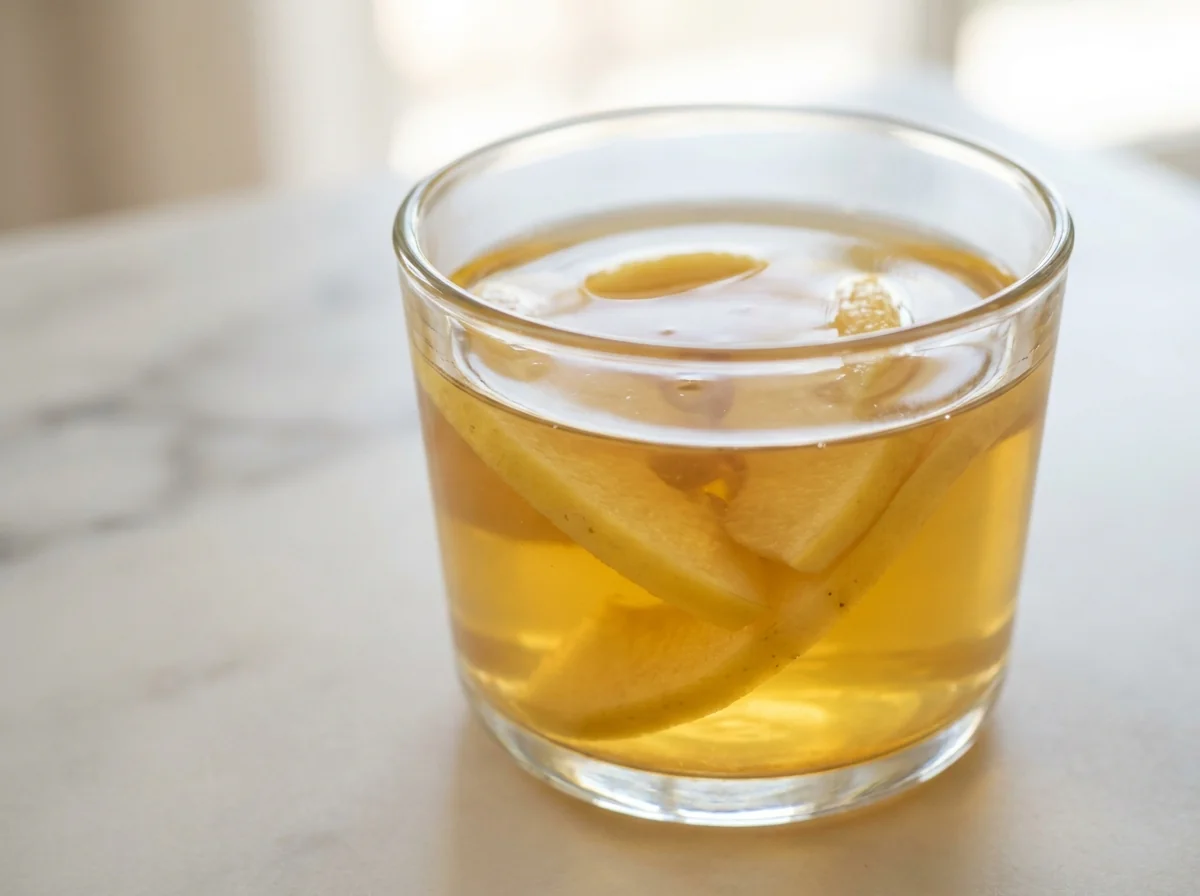
A documented Arab drink dating back to the fourteenth century, revived by the researcher Daniel Newman from a medieval Egyptian source.
It combines the aroma of rose water with the acidity of quince and lemon in a sweet-tart drink that was served to relieve the heat.
Preparation Steps
Prepare the rose water syrup
Dissolve the sugar in the water over medium heat while stirring until it clears, and let it simmer gently for about five minutes until it thickens slightly, as this syrup is the base of the sweet flavor.
Incorporate the quince juice
Add the quince juice to the boiling syrup and stir, and leave it over low heat for about ten minutes until the fragrant flavor comes together, because quince needs gentle heat for its taste to mature.
Add the lemon
Take the pot off the heat, then add the lemon juice, because adding it after cooking preserves its lively acidity and balances the sweetness of the syrup without losing its brightness.
Perfume and strain
Add the rose water and stir, then strain the syrup and let it cool. Use the rose water with a light hand so it does not overpower the fruit flavor.
Serve
Pour the syrup over ice and garnish each glass with a thin quince slice, and serve it cold as a sweet, tart, fragrant drink.
Blood Sugar Impact
The glycemic index (GI) measures how quickly a food raises blood sugar, while the glycemic load (GL) measures how much a full serving raises it. Together they give the complete picture.
Glycemic Index
GI
59Medium
Low0–55Medium56–69High70+
A low value (≤55) means a gradual rise in blood sugar — the most suitable range for diabetes and insulin resistance.
Glycemic Load
GL
36High
Low0–10Medium11–19High20+
Glycemic load reflects the impact of the full serving. To lower it: take half a serving, or pair the recipe with a source of protein and fiber.
Nutritional Information
Per ServingMakes 4 servings · one serving is about 195 g of raw ingredients
Calories241 kcal12%of Daily Value*
Protein0 g0%of Daily Value*
Carbohydrates63 g23%of Daily Value*
Fat0 g0%of Daily Value*
Fiber2 g7%of Daily Value*
Sodium4 mg0%of Daily Value*
* Percent Daily Values are based on a 2,000-calorie diet per FDA food-label reference values — your daily needs may be higher or lower. Values are derived from the recipe's ingredients via the USDA database.
Troubleshooting
The most common problems when preparing Lemon Quince Syrup (Sharab Laymun Safarjali), and how to fix them:
The drink is overly perfumed
We used too much rose water; add a little water and lemon juice to restore the balance.
The syrup is thin
The sugar did not boil enough; return it to the heat for a few minutes until it thickens before adding the juices.
Storage and Make-Ahead
Refrigeration
Keep it concentrated in a sealed bottle in the refrigerator for up to five days, and dilute it with water or soda when serving.
Serving
Dilute it only just before serving so the concentrate keeps its flavor longer.
Tested Ingredient Substitutions
Original Ingredient
Tested Substitute
Ratio
Flavor Difference
quince juice
apple juice
250 ml
An available alternative with a close flavor when quince is not available, less fragrant and more sweet.
sugar
honey
160 g
A natural sweetener; dissolve it in warm, not boiling, water to preserve its flavor.
rose water
orange blossom water
15 ml
A familiar alternative aroma in Arab cooking with a delicate citrusy note.
lemon juice
soaked black lime juice
60 ml
A deeper acidity with a Gulf character if you want a darker flavor.
How Much Does It Make? Scaling Guide
Ingredient
2 cups
4 cups (base)
8 cups
Quince juice
125 ml
250 ml
500 ml
Lemon juice
30 ml
60 ml
120 ml
Sugar
100 g
200 g
400 g
Rose water
8 ml
15 ml
30 ml
Water
100 ml
200 ml
400 ml
EEINA Nutrition Tip
Choose a ripe, yellow, fragrant quince, because its juice is then sweeter and more plentiful.
Add This Recipe to Your Plan
The EEINA app saves your favorite recipes, calculates them from their real ingredients, and shows your daily numbers toward your goal. Try it free now.
Grate the ripe quince and press it through cheesecloth, or briefly boil it and then strain it, because its flesh is firm and needs help to release its juice.
Is musk essential?
No, musk was mentioned in the original recipe as an optional addition; we skip it and rely on rose water for the aroma.