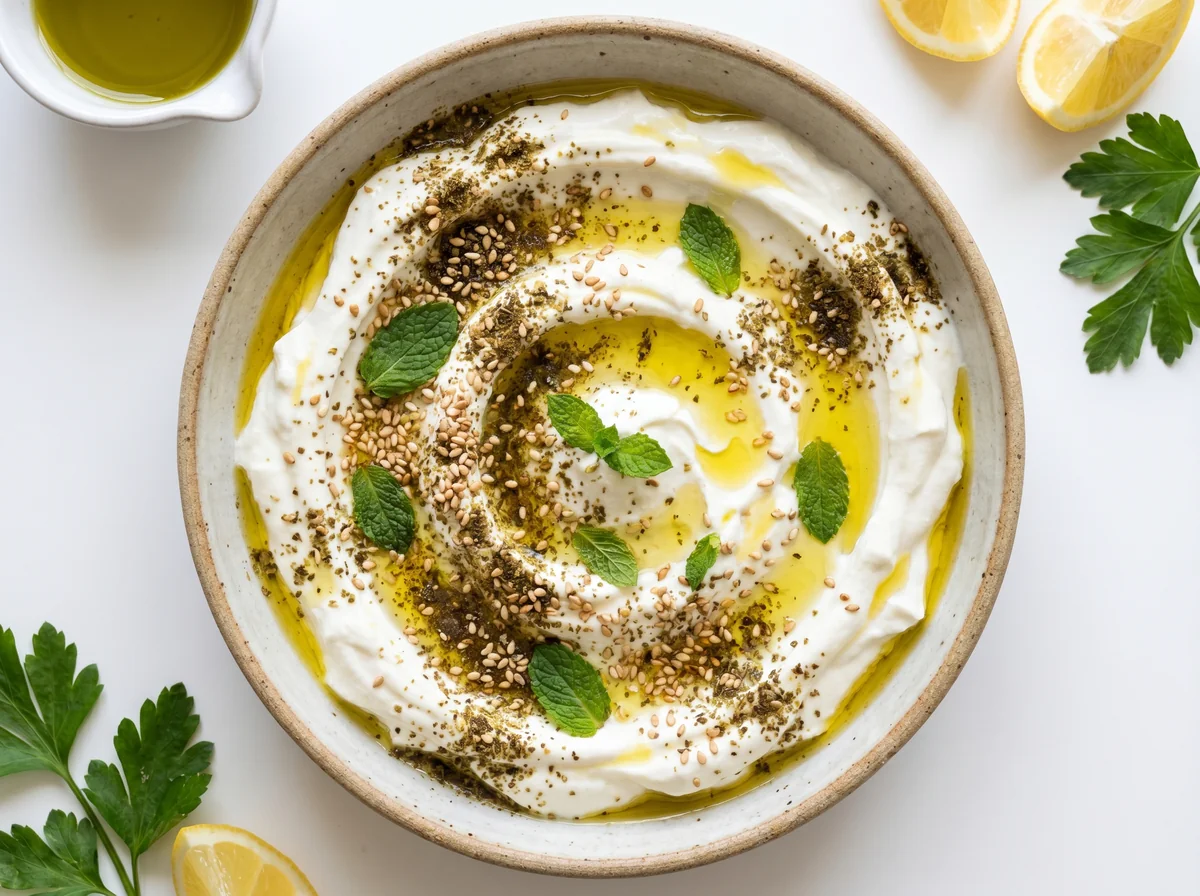
A light Levantine breakfast — creamy strained labneh (strained yogurt) spread in a dish, flooded with olive oil and sprinkled with za'atar (thyme-sumac-sesame blend). Low glycemic index, rich in protein and calcium. Contains dairy and sesame (in the za'atar).
Labneh (strained yogurt) is the heart of the Levantine table, made by straining yogurt until it loses its whey and thickens to a creamy consistency between yogurt and cheese.
It originally existed as a way to preserve milk before refrigeration — straining and salting extend its life. Served at breakfast spread with oil and sprinkled with za'atar (thyme-sumac-sesame blend), it is a source of protein and calcium with a low glycemic index that Levantine families have started their days with for generations.
Preparation Steps
Strain the labneh (if making your own)
If labneh (strained yogurt) is not ready-made, pour full-fat yogurt into cheesecloth over a colander, add a pinch of salt, stir, tie the cloth, and hang it in the refrigerator for twelve to twenty-four hours until the water drains and the labneh firms to a creamy consistency resembling soft cheese. The longer it strains, the firmer it becomes.
Spread the labneh
Place the labneh (strained yogurt) in a flat serving dish and spread it with the back of a spoon in circular motions to form an even layer with small indentations on the surface. These hollows trap the olive oil and za'atar so every bite is evenly flavored.
Add the oil and za'atar
Pour the extra-virgin olive oil generously over the labneh until it fills the hollows and covers the surface with a glossy layer, then scatter the dried za'atar (thyme-sumac-sesame blend) evenly over the oil. The order matters: oil first so the za'atar adheres to it rather than drifting dry.
Serve
Serve immediately with warm Arabic bread or fresh vegetables. Every bite should gather labneh, oil, and za'atar together. Eat wrapped in bread or scooped with cucumber, and enjoy as a breakfast or a light supper dish.
Blood Sugar Impact
The glycemic index (GI) measures how quickly a food raises blood sugar, while the glycemic load (GL) measures how much a full serving raises it. Together they give the complete picture.
Glycemic Index
GI
37Low
Low0–55Medium56–69High70+
A low value (≤55) means a gradual rise in blood sugar — the most suitable range for diabetes and insulin resistance.
Glycemic Load
GL
5Low
Low0–10Medium11–19High20+
Glycemic load reflects the impact of the full serving. To lower it: take half a serving, or pair the recipe with a source of protein and fiber.
Nutritional Information
Per ServingMakes 4 servings · one serving is about 165 g of raw ingredients
Calories391 kcal20%of Daily Value*
Protein18 g36%of Daily Value*
Carbohydrates19 g7%of Daily Value*
Fat28 g36%of Daily Value*
Fiber6 g21%of Daily Value*
Sodium161 mg7%of Daily Value*
* Percent Daily Values are based on a 2,000-calorie diet per FDA food-label reference values — your daily needs may be higher or lower. Values are derived from the recipe's ingredients via the USDA database.
Troubleshooting
The most common problems when preparing Labneh with Za'atar, and how to fix them:
Home-made labneh stayed liquid and did not firm up
Not enough straining time or very low-fat yogurt was used. Leave it to strain for at least twelve hours in the refrigerator. Use full-fat yogurt for a firmer texture, and you can gently squeeze the cloth to remove extra moisture.
The labneh tastes too sour
The yogurt used was old or very acidic. Choose fresh yogurt with moderate acidity. If making it yourself, shorten the original yogurt's fermentation time. A pinch of salt and generous olive oil balance the acidity.
The za'atar blows off dry and does not stick
Za'atar was added before the oil. Pour the olive oil first to moisten the surface of the labneh, then scatter the za'atar on top so it adheres and soaks up the oil.
The labneh dried out on top after sitting in the fridge
The surface evaporated. Cover it with a thin layer of olive oil before storing — the oil isolates it from air and maintains its creamy texture. Stir before serving.
Storage and Make-Ahead
Refrigerator (4°C)
Plain labneh keeps in a sealed container with a layer of olive oil on top for one week to ten days. Add the za'atar and oil at serving time, not before, to preserve the flavor.
Labneh balls in oil
For longer storage, shape the labneh into balls and cover completely with olive oil in a sealed jar. Keeps in the refrigerator for a month — a traditional Levantine preservation method.
Freezer
Freezing labneh is not recommended — freezing separates the water from the fat and ruins its creamy texture upon thawing.
Advance preparation
Strain the labneh in advance and store plain; dress with oil and za'atar in a minute at breakfast time. The za'atar-and-oil mixture can be pre-mixed and stored in a jar.
Tested Ingredient Substitutions
Original Ingredient
Tested Substitute
Ratio
Flavor Difference
Full-fat labneh
Labneh from low-fat yogurt
same amount
Fewer calories and fat with the same protein; slightly lighter texture.
Ready-made za'atar blend
Wild thyme, sumac (tart purple spice), toasted sesame, and salt
to taste
Fresher flavor and control over salt.
Olive oil
Reduce to 1 tablespoon per serving
1 spoon instead of 2
Lowers calories while keeping the flavor; olive oil remains a healthy fat.
How Much Does It Make? Scaling Guide
Number of servings
Labneh
Olive oil
Za'atar mix
2 (half recipe)
1 cup
2 tbsp
2 tbsp
4 (base)
2 cups
4 tbsp
4 tbsp
8 (large table)
4 cups
8 tbsp
8 tbsp
EEINA Nutrition Tip
Labneh with za'atar is a smart breakfast for those monitoring their blood sugar: its protein and thick texture extend fullness, and its glycemic index is very low. The only thing to watch is calories from olive oil — it is a healthy fat but calorie-dense, so one tablespoon per serving is enough. Choose labneh from full-fat or low-fat yogurt depending on your goal.
Add This Recipe to Your Plan
The EEINA app saves your favorite recipes, calculates them from their real ingredients, and shows your daily numbers toward your goal. Try it free now.
Labneh (strained yogurt) is yogurt that has lost a large portion of its whey, making it thicker and more concentrated in protein per spoonful. It sits between yogurt and fresh soft cheese.
Is labneh with za'atar suitable for diabetics?
Yes — its glycemic index is very low and glycemic load is minimal, and its protein extends fullness. It is a good breakfast for blood-sugar monitoring, while watching olive oil quantity from a calorie perspective.
How do I strain labneh at home?
Pour full-fat yogurt with a pinch of salt into cheesecloth over a colander and leave it to strain in the refrigerator for twelve to twenty-four hours, depending on the desired thickness.
Do I add za'atar before or after the oil?
After. Pour the oil first then scatter the za'atar on top so it adheres and soaks up the oil rather than blowing away dry.