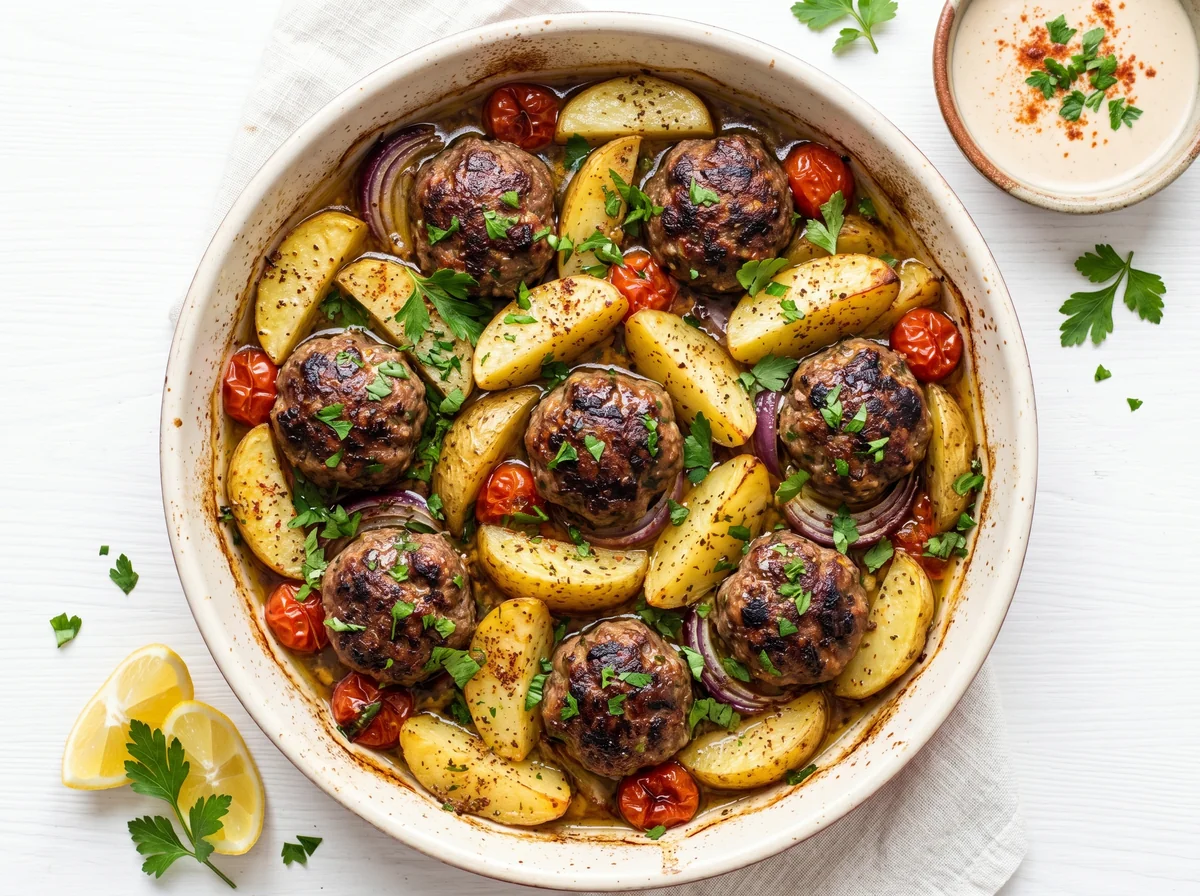
A beloved oven dish — seasoned ground-meat kofta and sliced potatoes baked together in tomato sauce until tender and golden. A filling family oven meal, moderate in carbohydrates, and free from common allergens.
The kofta and potato tray bake is a beloved Egyptian (and Levantine) family oven dish — one of those practical one-tray meals that brings meat and vegetables together. The kofta (seasoned ground meat) is shaped and arranged with sliced potatoes (and sometimes peppers) in a tomato sauce, then baked until everything is cooked and the sauce has caramelized. It is a practical, filling home dish that requires no standing over the stove, beloved by families and for guests.
The seasoned kofta and tender potatoes in the rich tomato sauce are a warm, satisfying pleasure. It differs from tahini kofta (tahini sauce) and Daoud Pasha (meatballs in tomato) by its form — a potato tray bake. It is a symbol of the practical home kitchen and the generosity of its family table.
Preparation Steps
Prepare the kofta
Combine the ground meat with the grated onion, chopped parsley, spices, salt, and pepper, then knead well until it all comes together. Well-seasoned, well-kneaded kofta is the foundation of the dish — knead it thoroughly so it is firm, tender, and uniform.
Shape the kofta
Shape the kofta into fingers, patties, or press it into a flat layer across the bottom of the tray. You can brown the kofta briefly before baking for color and flavor, or place it in the tray raw. Arrange it in the baking dish.
Prepare the potatoes
Cut the potatoes into slices (or cubes); you can lightly fry or par-boil them to speed up cooking in the oven. The potatoes cook alongside the kofta in the sauce, so even slices and light pre-cooking ensure they cook through.
Prepare the sauce
Mix the grated tomatoes, tomato paste, onion, salt, pepper, and water into a tomato sauce. The tomato sauce braises the kofta and potatoes, giving them moisture and flavor — it is what distinguishes this tray from tahini kofta.
Assemble and bake
Arrange the kofta, potatoes, and peppers in the tray, pour the tomato sauce over everything to cover, then bake in a medium oven until the kofta is cooked, the potatoes are tender, and the sauce has reduced and caramelized (about 45 minutes). Bake until the potatoes are done and the surface is golden.
Serve
Serve the tray hot with rice or bread and a salad. This is a beloved Egyptian (and Levantine) family oven dish — a practical one-tray meal that brings together meat and vegetables. The seasoned kofta and tender potatoes in rich tomato sauce are a warm, satisfying pleasure, a symbol of the practical home kitchen and its generous family table.
Blood Sugar Impact
The glycemic index (GI) measures how quickly a food raises blood sugar, while the glycemic load (GL) measures how much a full serving raises it. Together they give the complete picture.
Glycemic Index
GI
66Medium
Low0–55Medium56–69High70+
A low value (≤55) means a gradual rise in blood sugar — the most suitable range for diabetes and insulin resistance.
Glycemic Load
GL
15Medium
Low0–10Medium11–19High20+
Glycemic load reflects the impact of the full serving. To lower it: take half a serving, or pair the recipe with a source of protein and fiber.
Nutritional Information
Per ServingMakes 5 servings · one serving is about 340 g of raw ingredients
Calories465 kcal23%of Daily Value*
Protein23 g46%of Daily Value*
Carbohydrates26 g9%of Daily Value*
Fat30 g38%of Daily Value*
Fiber4 g14%of Daily Value*
Sodium101 mg4%of Daily Value*
Potassium1003 mg21%of Daily Value*
Phosphorus282 mg23%of Daily Value*
* Percent Daily Values are based on a 2,000-calorie diet per FDA food-label reference values — your daily needs may be higher or lower. Values are derived from the recipe's ingredients via the USDA database.
Troubleshooting
The most common problems when preparing Kofta and Potato Tray Bake, and how to fix them:
Potatoes are still raw
Not pre-cooked or sliced too thick. Lightly fry or par-boil the potatoes before baking (speeds up cooking), or slice them thin, and bake for long enough. Potatoes need time to soften in the oven with the sauce.
Kofta is dry
Meat too lean or overbaked. Knead the kofta well (it stays firm and moist), and the sauce keeps it moist during baking — do not overbake. Some fat or grated onion in the kofta keeps it tender.
Sauce dried out or burned
Too little water or oven too hot. Pour enough sauce to cover the ingredients (it evaporates during baking), and cover the tray with foil for the first part of baking if needed. Sufficient sauce keeps the dish moist.
Kofta fell apart
Insufficiently kneaded or meat was too wet. Knead the meat well with onion and spices until it holds together, and drain the water from the grated onion. Good kneading makes the kofta firm, not crumbly.
Bland flavor
Underseasoned kofta or not enough tomato paste. Season the kofta well (spices, onion, parsley, and salt) and make the sauce rich (paste, tomatoes, and spices). Well-seasoned kofta and a rich sauce deliver the flavor.
Storage and Make-Ahead
Refrigerator (4°C)
The kofta tray keeps in a sealed container in the fridge for 3 days and the flavor improves. Reheat in the oven or over low heat with the sauce. Practical for the following days' meals — reheat in portions.
Freezer
The cooked tray freezes for two months in a sealed container (the kofta and sauce freeze well; the potatoes may change texture slightly). Thaw and reheat. Practical for making a large batch.
Advance preparation
Prepare the kofta and sauce ahead (refrigerate them), then assemble the tray and bake when needed. Or bake the whole tray a day ahead and reheat. Practical for gatherings — an oven dish that needs no supervision.
Food safety
Bake the kofta until fully cooked (ground meat), cool the tray quickly, do not leave it out of refrigeration for more than two hours, and reheat thoroughly before serving.
Tested Ingredient Substitutions
Original Ingredient
Tested Substitute
Ratio
Flavor Difference
Fatty ground meat
Lean ground meat or ground chicken
Same amount
Lean meat or ground chicken is lower in fat; both make good seasoned kofta (knead well so it holds together)
Frying the potatoes
Baking or par-boiling them
—
Baking the potatoes with a spray of oil or par-boiling them significantly reduces fat compared to frying, while still cooking through in the oven
Potatoes
Sweet potato or more vegetables
Same amount
Sweet potato adds fiber and vitamin A (slightly lower index), and adding peppers and zucchini increases the vegetables and fiber
How Much Does It Make? Scaling Guide
Number of servings
Meat
Potatoes
Tomatoes
3 (small)
400 g
2 or 3
1
5 (base)
600 g
4
2
10 (gathering)
1200 g
8
4
EEINA Nutrition Tip
The kofta and potato tray is a filling dish that provides good protein (the meat), while the potatoes bring carbohydrates, potassium, and vitamin C, and the tomatoes offer antioxidants (lycopene). Its challenges are the fat (fatty ground meat and oil), sodium, and the potatoes' carbohydrate load. For a lighter version: use lean meat, bake the potatoes instead of frying them (a spray of oil), add more vegetables (peppers, zucchini), reduce the salt, and serve with a large salad and a modest portion of rice. A relatively balanced, filling family dish when fat and carbohydrates are kept moderate.
Add This Recipe to Your Plan
The EEINA app saves your favorite recipes, calculates them from their real ingredients, and shows your daily numbers toward your goal. Try it free now.
An Egyptian (and Levantine) family oven dish: seasoned ground-meat kofta and sliced potatoes arranged in tomato sauce and baked until cooked through and caramelized. A practical, filling family meal (one tray, one oven, no standing at the stove) — the seasoned kofta and tender potatoes in rich tomato sauce are a warm pleasure.
What is the difference between this dish, tahini kofta, and Daoud Pasha?
All three use kofta (seasoned ground meat), but: the kofta and potato tray bake is baked with sliced potatoes in tomato sauce (a potato tray bake); tahini kofta is baked in tahini sauce (no tomato); and Daoud Pasha is small meatballs in tomato and onion sauce (no potatoes). The shape, sauce, and additions distinguish each one.
How do I get the potatoes cooked at the same time as the kofta?
Potatoes take longer, so lightly fry or par-boil them before baking (speeds up cooking), or slice them thin, and bake the tray for long enough (about 45 minutes). You can also par-bake the potatoes before adding the kofta. Enough sauce helps them cook and keeps them tender.
Is the kofta and potato tray healthy?
A relatively balanced, filling dish: meat provides protein; potatoes bring carbohydrates, potassium, and vitamin C; tomatoes offer antioxidants. The challenges are fat (the meat and frying) and sodium. Use lean meat, bake the potatoes instead of frying them, add more vegetables, reduce the salt, and balance with a salad. A filling family dish when fat and carbohydrates are kept moderate.
Sources: University of Sydney · Gulf GSO · Our methodology · Updated on