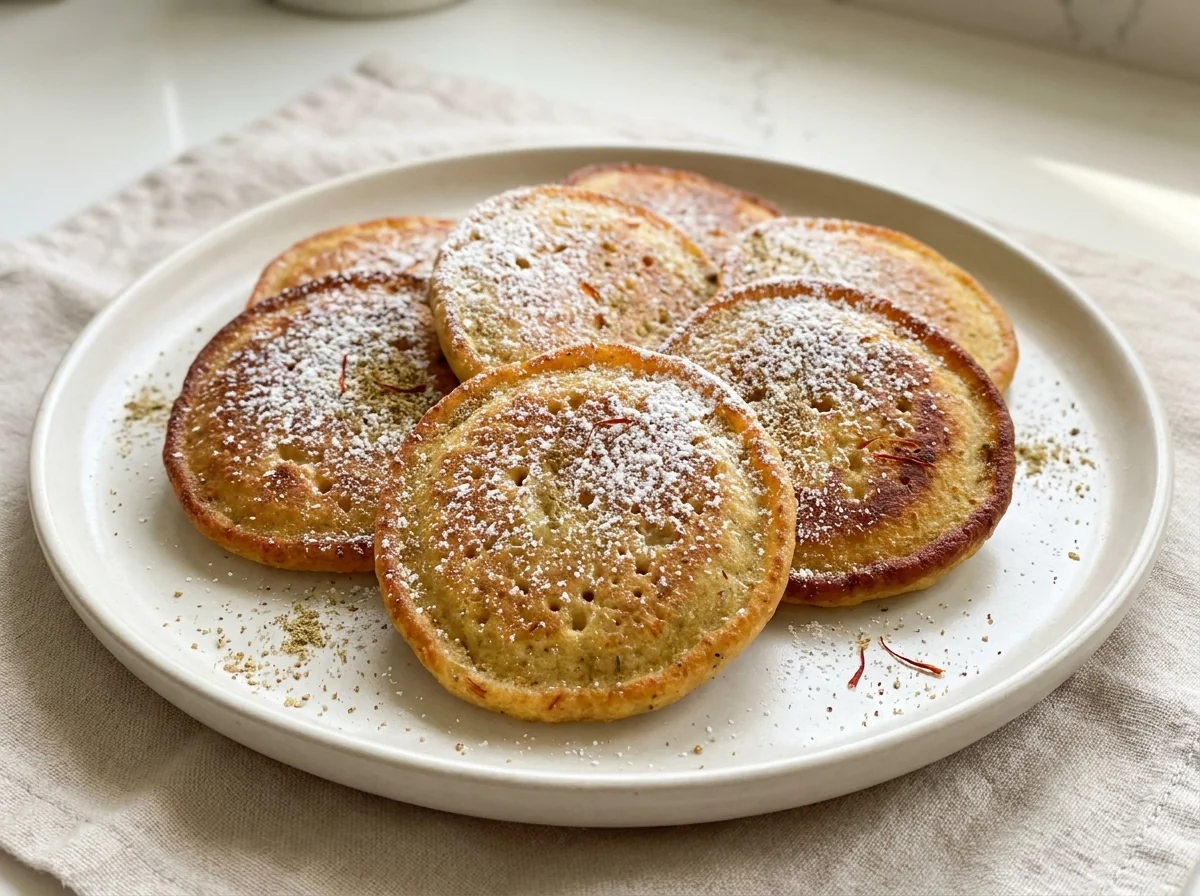
Khanfaroosh is among the oldest sweets of the Emirates and its coastal people; its small discs are fried until they puff up and turn golden, becoming crisp on the outside and soft within.
It is distinguished by the saffron, cardamom, and rose water that give it its fragrant aroma and golden color, and it appears on Ramadan and holiday tables with coffee and tea, a sweet that carries the memory of old homes.
Preparation Steps
Soaking the saffron
Soak the saffron threads in warm rose water for about ten minutes until its color dissolves and it becomes fragrant, for this spreads its flavor throughout the whole batter.
The dry mixture
Mix the rice flour and wheat flour with the baking powder and ground cardamom in a bowl until the dry ingredients are evenly combined.
Whisking the eggs and sugar
Whisk the eggs with the sugar until the color lightens and turns fluffy, then add the saffron infusion and rose water and stir.
Forming the batter
Add the dry mixture gradually to the eggs until you have a sticky, cohesive batter, and let it rest for about half an hour so its texture firms up.
Frying
Heat the oil over medium heat, pour in a small ladle of the batter or shape it into discs, and fry until it turns golden on both sides and puffs up.
Draining and serving
Lift the discs onto absorbent paper to rid them of excess oil, then dust them with the powdered sugar and serve them warm.
Blood Sugar Impact
The glycemic index (GI) measures how quickly a food raises blood sugar, while the glycemic load (GL) measures how much a full serving raises it. Together they give the complete picture.
Glycemic Index
GI
69Medium
Low0–55Medium56–69High70+
A low value (≤55) means a gradual rise in blood sugar — the most suitable range for diabetes and insulin resistance.
Glycemic Load
GL
20High
Low0–10Medium11–19High20+
Glycemic load reflects the impact of the full serving. To lower it: take half a serving, or pair the recipe with a source of protein and fiber.
Nutritional Information
Per ServingMakes 12 servings · one serving is about 50 g of raw ingredients
Calories187 kcal9%of Daily Value*
Protein3 g6%of Daily Value*
Carbohydrates30 g11%of Daily Value*
Fat6 g8%of Daily Value*
Fiber1 g4%of Daily Value*
Sodium57 mg2%of Daily Value*
* Percent Daily Values are based on a 2,000-calorie diet per FDA food-label reference values — your daily needs may be higher or lower. Values are derived from the recipe's ingredients via the USDA database.
Troubleshooting
The most common problems when preparing Emirati Khanfaroosh (Saffron and Cardamom Fritters), and how to fix them:
The discs soak up too much oil
Raise the oil temperature a little and make sure it is hot before frying, for lukewarm oil lets the batter absorb it.
The outside is golden but the inside is raw
Lower the heat a little and fry for longer, and make the discs smaller so they cook through to the center.
The batter is runny and will not hold together
Add a little flour and let the batter rest, for rice flour absorbs the liquid over time.
Storage and Make-Ahead
Room temperature
Their crispness lasts the same day; keep them in a loosely covered container so they do not turn damp.
Freezing
Freeze the cooled fried discs in an airtight container for up to a month, and reheat them in the oven to restore their crispness.
Tested Ingredient Substitutions
Original Ingredient
Tested Substitute
Ratio
Flavor Difference
rice flour
fine corn flour
same weight, 120 g
A slightly different texture but it stays crisp
sugar
coconut sugar
same weight, 150 g
A deeper flavor and a darker color
saffron
a little turmeric
a pinch
Turmeric approximates the color, not the flavor
rose water
orange blossom water
same amount, 10 ml
Orange blossom water is lighter in fragrance, and both are traditional
How Much Does It Make? Scaling Guide
Ingredient
Half amount
Base amount (base)
Double
Rice flour
60 g
120 g
240 g
Wheat flour
60 g
120 g
240 g
Sugar
75 g
150 g
300 g
Egg
50 g
100 g
200 g
Baking powder
2.5 g
5 g
10 g
EEINA Nutrition Tip
Keep the oil at medium heat, for oil that is too hot burns the surface and leaves the center raw, while lukewarm oil makes the discs soak up more oil.
Add This Recipe to Your Plan
The EEINA app saves your favorite recipes, calculates them from their real ingredients, and shows your daily numbers toward your goal. Try it free now.