The iced latte is the undisputed king of summer drinks in Saudi cafes, and cold brew is its artisan secret: a full night's extraction yields a smooth coffee that needs none of the army of sugar the cafes drown it in.
A jar that sits overnight, and an iced morning is ready.
Preparation Steps
The cold brew. The coffee of a full night
Steep the coarse coffee in cold water in a jar overnight, twelve hours in the fridge, then strain it through cloth or a paper filter. "Cold brew": a slow cold extraction that yields a smooth, low-acid, naturally sweet coffee without the bitterness of heat.
Or the quick route
A double espresso (or our concentrated hot-steeped coffee) chilled in the fridge. The weakest trick: pouring it hot over ice waters it down.
Sweeten the coffee, not the cup
Dissolve the honey in the cold coffee by stirring before building. Sweetening at the base distributes evenly; in the iced cup it settles to the bottom.
Build over a full cup of ice
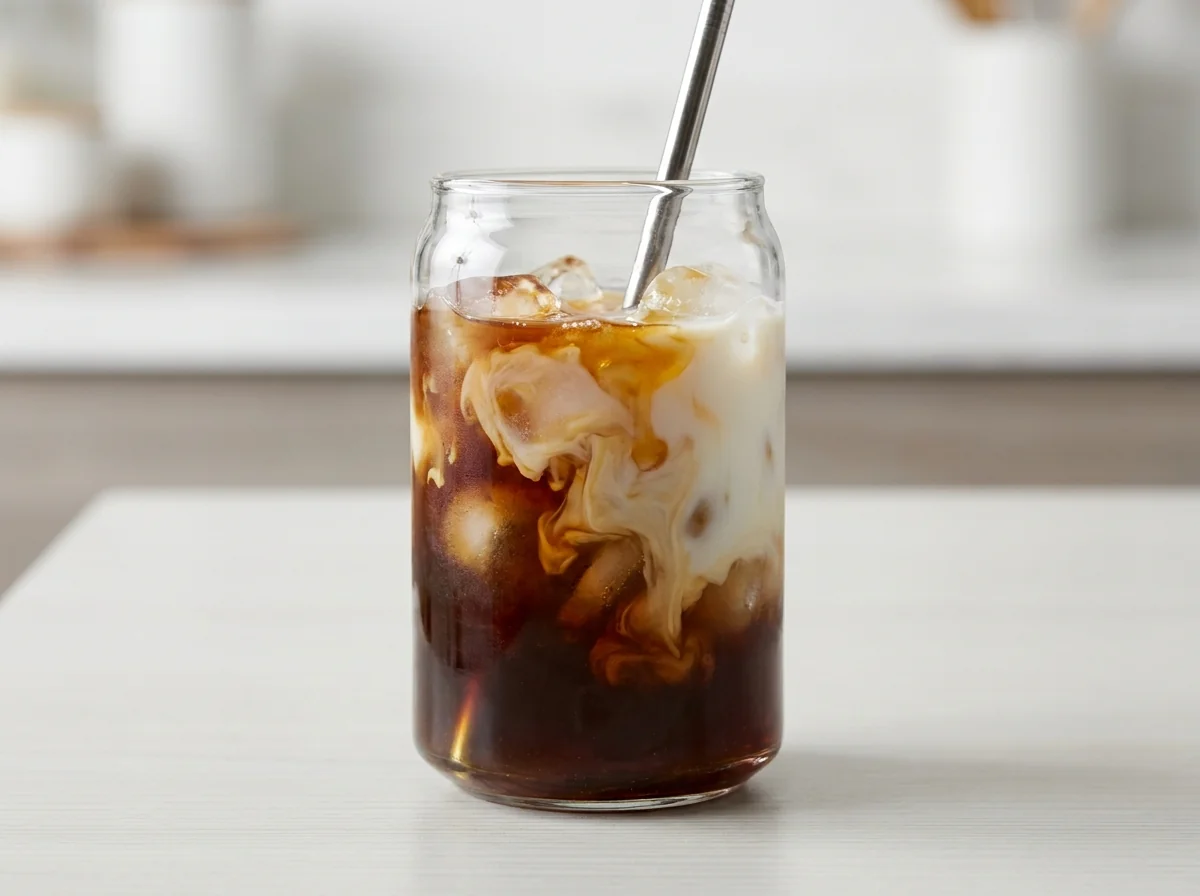
Fill a tall cup with ice, then the coffee to two-thirds, then pour the cold milk over the back of a spoon. It descends as a white layer over the dark: the famous café gradient.
Stir when drinking
The straw blends the layers at the moment of sipping. The café iced latte people line up for in summer, from a jar that sat in your fridge.
Blood Sugar Impact
The glycemic index (GI) measures how quickly a food raises blood sugar, while the glycemic load (GL) measures how much a full serving raises it. Together they give the complete picture.
Glycemic Index
GI
38Low
Low0–55Medium56–69High70+
A low value (≤55) means a gradual rise in blood sugar — the most suitable range for diabetes and insulin resistance.
Glycemic Load
GL
5Low
Low0–10Medium11–19High20+
Glycemic load reflects the impact of the full serving. To lower it: take half a serving, or pair the recipe with a source of protein and fiber.
Nutritional Information
Per ServingMakes 2 servings · one serving is about 450 g of raw ingredients
Calories102 kcal5%of Daily Value*
Protein3 g6%of Daily Value*
Carbohydrates14 g5%of Daily Value*
Fat3 g4%of Daily Value*
Fiber0 g0%of Daily Value*
Sodium71 mg3%of Daily Value*
Potassium366 mg8%of Daily Value*
Phosphorus98 mg8%of Daily Value*
* Percent Daily Values are based on a 2,000-calorie diet per FDA food-label reference values — your daily needs may be higher or lower. Values are derived from the recipe's ingredients via the USDA database.
Troubleshooting
The most common problems when preparing Homemade Iced Latte with Cold Brew, and how to fix them:
It came out watery and pale
Hot coffee was poured over ice and melted half of it. Pre-chilled is the rule. The ice is for cooling, not for melting.
The cold brew came out cloudy and heavy
A fine grind or squeezing the grounds. Coarse, and strain without squeezing. Gravity alone.
A lingering acidity
A steep past its day or too light a bean. The twelve hours and a medium roast.
The sweetener settled at the bottom
Honey added to an iced cup. Put it in the cold base before building. It dissolves with patient stirring.
Storage and Make-Ahead
The cold brew base
A full week in the fridge. A ready concentrate: a week of iced latte from one night.
The assembled cup
For the moment. The ice waters it after a quarter hour.
Coffee ice cubes
Coffee frozen into cubes. Ice that never waters the latte: the golden summer trick.
Tested Ingredient Substitutions
Original Ingredient
Tested Substitute
Ratio
Flavor Difference
The milk
Oat or almond milk from our pantry
1:1
A wonderful cold plant-based option
The honey
Date syrup or omitting it
to taste
Cold brew is drunk plain with dignity
A caramel upgrade
Drops of vanilla and a pinch of salt
to taste
A faux caramel without its sugar
The hosting version
A large pitcher built in layers before the guests
to taste
The pouring spectacle is half the hospitality
How Much Does It Make? Scaling Guide
Ingredient
2 cups
1 cup
6-cup pitcher
Coffee
40 g
20 g
120 g
Cold water
400 ml
200 ml
1.2 L
Milk
200 ml
100 ml
600 ml
EEINA Nutrition Tip
Mix the coffee with cold water and let time do the extracting. Hot water draws the bean's flavors and its bitterness together in minutes; cold water selects at its leisure: twelve hours dissolve the sweet and the chocolatey and leave the sour and the astringent in the grounds. That is why people drink cold brew with half the sugar of their usual coffee, or with none at all: the smoothness is extracted, not added.
Add This Recipe to Your Plan
The EEINA app saves your favorite recipes, calculates them from their real ingredients, and shows your daily numbers toward your goal. Try it free now.
How does cold brew differ from regular iced coffee?
Iced coffee is hot coffee that was chilled. Its acidity is intact; cold brew was extracted cold in the first place, so it was born smooth. The difference is tasted by the tongue from the first sip.
How much sugar does it save over the cafe?
A flavored cafe iced drink has 40-60 g of hidden sugar; your cup has 15 g of visible honey or zero. About 80 calories versus about 300: the biggest sugar saving in the whole drinks notebook.
Is cold brew's caffeine higher?
Its concentration is slightly higher due to the long extraction, and diluting with milk and ice tempers it: two cups is the limit of a reasonable day.
My favorite bean is dark. Does it work?
Dark beans yield a luxurious chocolatey cold brew. Cold brew reconciles all roasts: try your own bean.