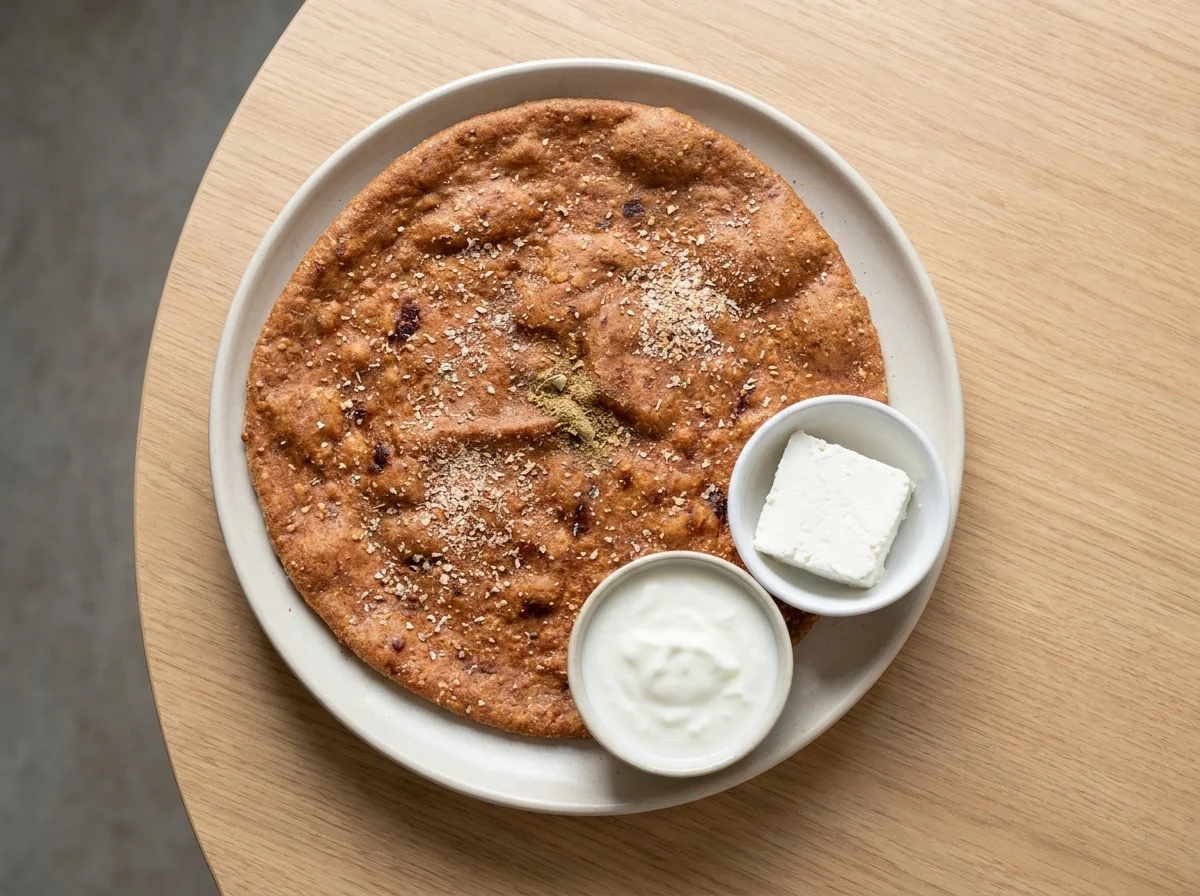
Red bread is among the most time-honored kinds of traditional Saudi bread, made famous by the Al-Ahsa region in the east of the Kingdom as Saudipedia documents.
Whole-wheat flour is kneaded with steeped (mu'arras) date water so it takes on its red color and sweetness, and it is scented with aniseed, nigella seeds, and sesame, and traditionally baked in clay ovens.
Preparation Steps
Steep the dates to extract a sweet red water
Pit the dates and soak them in the boiling water for a quarter hour until they break down, then mash them and press them in the same soaking water and strain, so you get a dark red sweet date water. This soaking and pressing is called ta'rees, and it is what gives Hasawi bread its color and sweetness without added sugar.
Knead the whole-wheat dough with date water
Mix the whole-wheat flour, the white flour, the bran, the yeast, the powdered milk, the salt, and the cardamom, then add the lukewarm date water and the oil and knead eight minutes until a soft dough of a brownish-pink color forms.
Add the flavoring seeds and let it rise
Knead the aniseed, the nigella seeds, and half the sesame into the dough, the seeds that set the bread of Al-Ahsa apart from others, then cover the dough for one hour until it doubles in size.
Shape the discs and coat them with sesame
Divide the dough into eight balls and flatten them into finger-thick discs on trays lined with baking paper. Brush their surface with a little water or the soaked saffron and scatter the rest of the sesame, and leave them to rest a third of an hour.
Bake until the color deepens
Bake in a preheated oven at 200 degrees for twenty to twenty-five minutes until the surface of the discs turns a dark reddish-brown. In Al-Ahsa it is traditionally baked in clay ovens over palm trunks.
Serve it the Hasawi way
Eat it warm on its own, for the sweetness of the dates in it is enough, or with white cheese and laban, a traditional breakfast that brings whole wheat and dates together in one loaf.
Blood Sugar Impact
The glycemic index (GI) measures how quickly a food raises blood sugar, while the glycemic load (GL) measures how much a full serving raises it. Together they give the complete picture.
Glycemic Index
GI
55Low
Low0–55Medium56–69High70+
A low value (≤55) means a gradual rise in blood sugar — the most suitable range for diabetes and insulin resistance.
Glycemic Load
GL
28High
Low0–10Medium11–19High20+
Glycemic load reflects the impact of the full serving. To lower it: take half a serving, or pair the recipe with a source of protein and fiber.
Nutritional Information
Per ServingMakes 8 servings · one serving is about 120 g of raw ingredients
Calories328 kcal16%of Daily Value*
Protein9 g18%of Daily Value*
Carbohydrates59 g21%of Daily Value*
Fat7 g9%of Daily Value*
Fiber8 g29%of Daily Value*
Sodium206 mg9%of Daily Value*
Potassium437 mg9%of Daily Value*
Phosphorus231 mg18%of Daily Value*
* Percent Daily Values are based on a 2,000-calorie diet per FDA food-label reference values — your daily needs may be higher or lower. Values are derived from the recipe's ingredients via the USDA database.
Troubleshooting
The most common problems when preparing Hasawi Red Bread, and how to fix them:
The color came out pale
The amount of dates is too little or their color is light. Use a full two hundred grams of dark dates, and press the dates well in the soaking water to extract all their color.
The bread is heavy and didn't rise
The date water was added hot so it killed the yeast, or the dough didn't get its full proofing time. Add the water lukewarm and leave the dough a full hour.
The surface cracked and dried out
The oven is dry or its heat is too high. Wipe the discs with water before baking, and place a small dish of water in the bottom of the oven to moisten its air.
The taste is too sweet with the cheese
This is its nature with the full amount of dates. Anyone who wants it less sweet reduces the dates to 150 g, so the color stays and the taste balances out.
Storage and Make-Ahead
Warm
At its best in the hour it comes out of the oven.
At room temperature
Three days in an airtight bag, for the dates' moisture keeps it soft longer than white bread.
In the freezer
Two months as wrapped discs, thawed and reheated two minutes in a hot oven.
Tested Ingredient Substitutions
Original Ingredient
Tested Substitute
Ratio
Flavor Difference
Khalas dates
Any soft dark date (brown Sukkari or Safri)
1:1
All dates work, and the dark ones give a deeper color
The dominant whole-wheat flour
Half whole-wheat and half white
~
A lighter texture for those not used to whole flour
Aniseed
Ground anise
1:1
Their flavors are close, from the same family
The electric oven
A thick griddle with a lid over low heat
~
The closest home method to the effect of a clay oven
How Much Does It Make? Scaling Guide
Ingredient
8 discs
4 discs
16 discs
Whole-wheat flour
300 g
150 g
600 g
Dates
200 g
100 g
400 g
Sesame and spices
12 g
6 g
24 g
EEINA Nutrition Tip
The color and sweetness in this bread come from the dates, not from sugar, so the darker the ta'rees dates (such as ripe Khalas), the deeper the color and the clearer the sweetness. Add the date water to the dough lukewarm, not hot, because high heat kills the yeast so the bread won't rise.
Add This Recipe to Your Plan
The EEINA app saves your favorite recipes, calculates them from their real ingredients, and shows your daily numbers toward your goal. Try it free now.
Why is it considered one of the healthiest kinds of traditional bread?
Because it is based on whole-wheat flour with its bran, its sweetness is from dates rather than added sugar, and its flavorings are real seeds. So it is a sweet, high-fiber bread with a composition that has few peers.
Is it eaten savory or sweet?
Both ways: with white cheese and laban the salt balances its sweetness, and with tea it is eaten on its own, for its moderate sweetness allows both methods.
What is ta'rees, and why doesn't ready-made date paste work?
Ta'rees is soaking the dates, pressing them, and straining them into a sweet colored water that enters the dough as a homogeneous liquid. Ready-made paste, on the other hand, clumps in the dough in patches, and it is suitable for filling, not for kneading.
Is it stuffed with dates or cheese?
Yes, some households in Al-Ahsa stuff it with dates or with soft cheese, a stuffed version from the same dough.