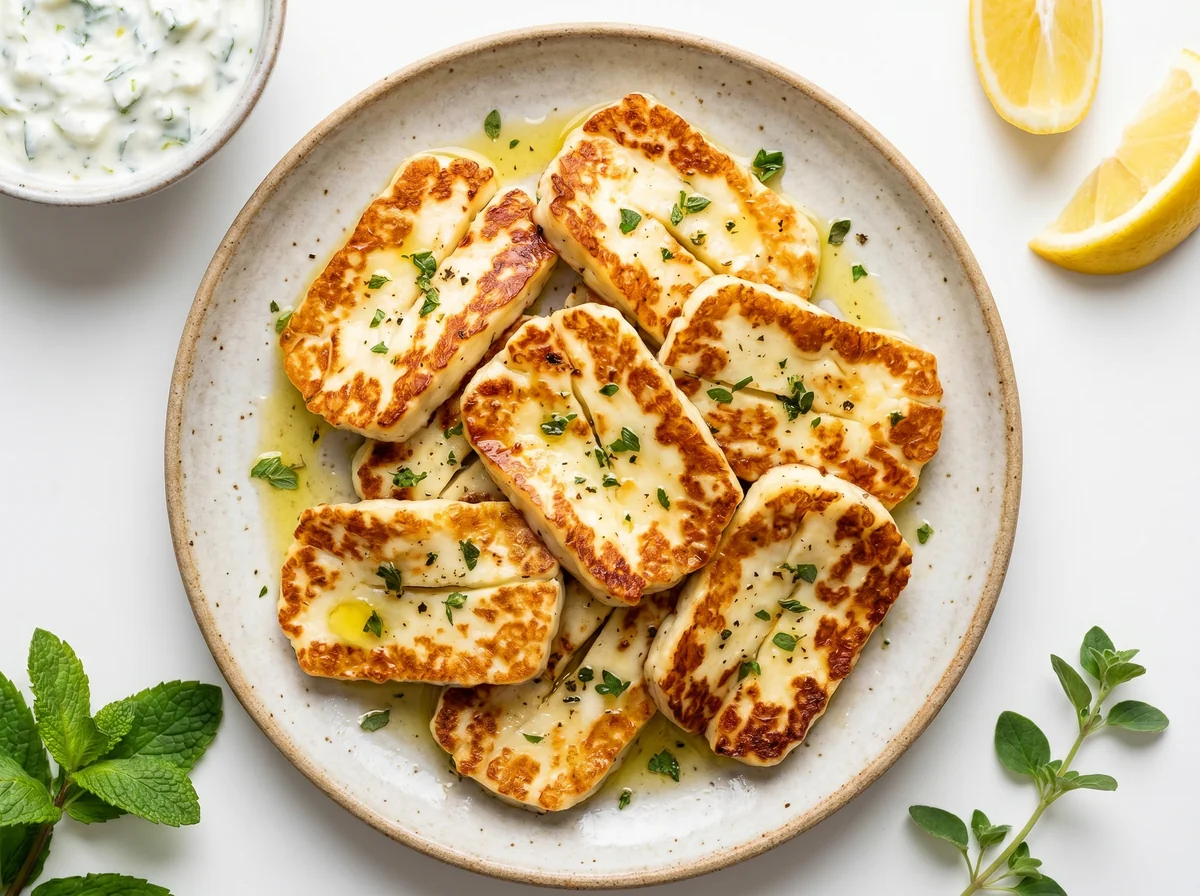
A quick grilled cheese — halloumi slices grilled until golden and still soft inside, served with olive oil, lemon, and za'atar (thyme-sumac-sesame blend) alongside fresh vegetables. High in protein, low in carbohydrates, but high in sodium and contains dairy.
Halloumi is a white semi-hard cheese originating in Cyprus that spread across the Levant and the Mediterranean. Its defining trait is a high melting point, allowing it to be grilled or pan-fried while holding its shape and developing a golden, crispy face.
It is served at breakfast, on mezze spreads, and in salads — hot, drizzled with oil and lemon and za'atar. It has become a fixture on Levantine and Gulf tables as a quick protein option. Its pleasantly rubbery texture and distinctly salty flavour have made it a favourite when grilled.
Preparation Steps
Prepare the cheese
Slice the halloumi to about 1 cm thick — slices that are too thin will melt, and ones that are too thick will not heat through. Pat the slices dry with a towel: dry halloumi browns much better. Halloumi is a non-melting cheese, so it holds its shape when grilled.
Heat the pan or grill
Heat a non-stick pan or griddle over medium-high heat until thoroughly hot. A very light brush of oil is optional (halloumi releases its own fat and may not need any). A properly hot pan gives the golden-brown crust you are looking for.
Grill the halloumi
Place the halloumi slices in the hot pan and leave them undisturbed for 1 to 2 minutes until a golden-brown face forms, then flip and grill the other side. Do not overdo it — halloumi becomes tough and rubbery with too much cooking. The goal is a golden exterior and a soft, yielding interior.
Season and serve
Lift the grilled halloumi onto a plate and drizzle with olive oil, lemon juice, and dried za'atar or dried mint. Serve immediately while hot (halloumi firms up as it cools) with tomatoes, cucumber, fresh vegetables, and bread. It makes a quick high-protein breakfast or snack, and is a great companion for mezze platters or salads.
Blood Sugar Impact
The glycemic index (GI) measures how quickly a food raises blood sugar, while the glycemic load (GL) measures how much a full serving raises it. Together they give the complete picture.
Glycemic Index
GI
11Low
Low0–55Medium56–69High70+
A low value (≤55) means a gradual rise in blood sugar — the most suitable range for diabetes and insulin resistance.
Glycemic Load
GL
1Low
Low0–10Medium11–19High20+
Glycemic load reflects the impact of the full serving. To lower it: take half a serving, or pair the recipe with a source of protein and fiber.
Nutritional Information
Per ServingMakes 2 servings · one serving is about 190 g of raw ingredients
Calories399 kcal20%of Daily Value*
Protein23 g46%of Daily Value*
Carbohydrates6 g2%of Daily Value*
Fat32 g41%of Daily Value*
Fiber1 g4%of Daily Value*
Sodium1353 mg59%of Daily Value*
* Percent Daily Values are based on a 2,000-calorie diet per FDA food-label reference values — your daily needs may be higher or lower. Values are derived from the recipe's ingredients via the USDA database.
Troubleshooting
The most common problems when preparing Grilled Halloumi, and how to fix them:
The halloumi is tough and rubbery
It was overcooked or it cooled down before eating. Grill for just 1 to 2 minutes per side until golden, and serve it hot immediately. Halloumi toughens with excessive cooking and when it cools.
The halloumi melted or stuck
The slices are too thin or the pan was cold. Cut to 1 cm thickness and heat the pan thoroughly before adding the cheese. Halloumi does not normally melt, but very thin slices may break apart.
The halloumi did not brown
The pan was not hot enough or the cheese was wet. Pat the slices dry and heat the pan over medium-high heat — leave the cheese undisturbed until the golden face forms before flipping.
The halloumi is too salty
Some halloumi brands are very salty. Soak the slices in cold water for 10 minutes before grilling to draw out some of the salt, skip any added salt, and balance with fresh vegetables and lemon juice.
The halloumi is greasy after grilling
It is natural for halloumi to be fatty. Add no oil to the pan (it releases its own fat), and you can blot the grilled slices on absorbent paper. Serve with vegetables to balance the richness.
Storage and Make-Ahead
Raw cheese
Uncooked halloumi keeps in the refrigerator in its packaging or in salted water for weeks, and in the freezer for months (grill directly from frozen after thawing). It is a long-lasting cheese.
Grilled halloumi
Eat the grilled halloumi fresh and hot immediately — it firms up when it cools. It does not keep well once grilled, so cook only as much as will be eaten straight away.
Meal prep
No advance prep needed (very quick — 13 minutes). Slice the cheese and prepare the vegetables in advance and grill at the moment of serving for a hot breakfast or snack.
Food safety
Halloumi is a pasteurised ready-to-eat cheese — it is grilled for flavour, not safety. Keep it refrigerated and do not leave the grilled cheese out for long.
Tested Ingredient Substitutions
Original Ingredient
Tested Substitute
Ratio
Flavor Difference
Halloumi cheese
Compressed quark or Akkawi cheese
Same amount
Look for a cheese that holds up to grilling without melting. Quark is lower in fat and salt; Akkawi is close in behaviour
Pan grilling
Charcoal grill or oven grill
Same amount
A charcoal grill gives a smoky flavour; the oven top grill (broiler) is a simple home option
Za'atar (thyme-sumac-sesame blend)
Dried mint, sumac (tart purple spice), or black pepper
To taste
All complement the salty flavour of halloumi; za'atar is the traditional Levantine choice
How Much Does It Make? Scaling Guide
Number of servings
Halloumi
Olive oil
1 (individual)
100 g
0.5 tbsp
2 (base)
200 g
1 tbsp
4 (family)
400 g
2 tbsp
EEINA Nutrition Tip
Grilled halloumi is high in protein and low in carbohydrates (GI is practically zero), making it a good choice for satiety and blood-sugar management. Its main challenge is the high sodium — halloumi is a salty cheese. For anyone monitoring blood pressure: keep to a moderate portion (70 to 100 g), add no extra salt, and balance it with plenty of fresh vegetables. It is relatively rich in fat, so one serving is enough.
Add This Recipe to Your Plan
The EEINA app saves your favorite recipes, calculates them from their real ingredients, and shows your daily numbers toward your goal. Try it free now.
Halloumi has a high melting point due to the way it is made (boiled in its own whey), so it withstands heat and holds its shape with a golden-brown face instead of melting like other cheeses. That is precisely what makes it ideal for grilling.
How do I stop halloumi from going rubbery?
Grill briefly — just 1 to 2 minutes per side until just golden — and serve it hot immediately. Halloumi goes tough and rubbery with too much cooking and when it cools, so speed and instant serving are the keys.
Is grilled halloumi healthy?
High in protein and low in carbohydrates (near-zero GI), it is a good choice for satiety. Its main challenge is the high sodium and fat, so keep to a moderate portion, soak it to reduce saltiness, and balance it with vegetables — especially for anyone monitoring blood pressure.
How can I reduce the saltiness of halloumi?
Soak the slices in cold water for 10 minutes to half an hour before grilling (some salt comes out), add no extra salt, and balance with plenty of fresh vegetables and lemon juice. Some halloumi brands are less salty than others.