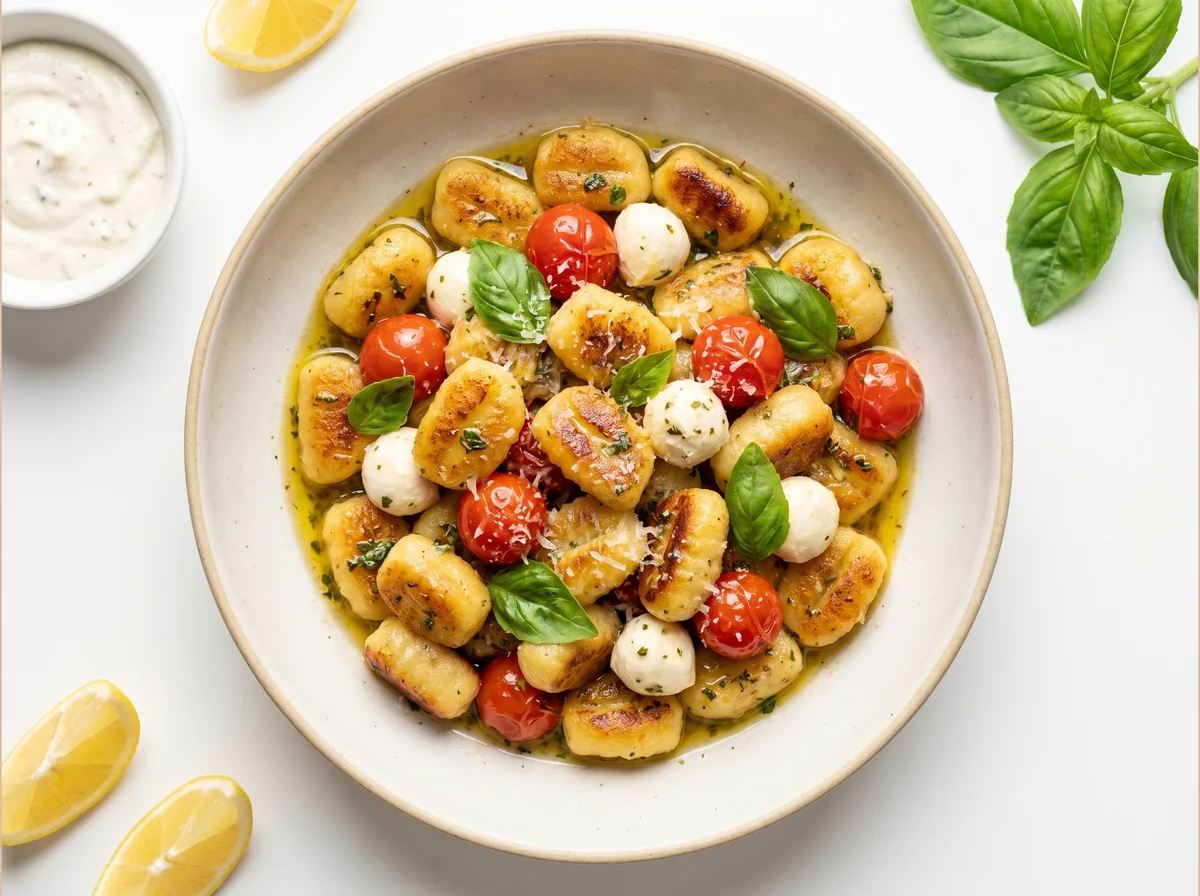
Soft pillowy potato gnocchi in a creamy garlic-spinach sauce with Parmesan. A comforting Italian pasta dinner, rich and satisfying, containing gluten and dairy.
Gnocchi (pronounced 'nyoki') are small pillowy dumplings made from potatoes and flour — a beloved Italian pasta tradition, especially in northern Italy. Unlike regular pasta (made from semolina), gnocchi are softer and denser and absorb sauces beautifully.
Creamy spinach sauce is one of the most popular gnocchi sauces globally — combining the richness of cream and Parmesan with the freshness of spinach and garlic. A comforting restaurant-style dinner you can prepare at home in 35 minutes using store-bought gnocchi.
Preparation Steps
Cook the gnocchi
Bring a large pot of salted water to a boil. Add the gnocchi and cook until they float to the surface (about 2 to 3 minutes) — this is the sign they are done. Remove with a slotted spoon and set aside. Do not overcook; floating = ready.
Sauté the garlic
In a wide pan, melt the butter with the olive oil over medium heat. Add the minced garlic and stir for one minute until golden and fragrant — do not let it burn (burnt garlic turns bitter and spoils the whole sauce).
Add the cream
Pour in the cream and stir over medium heat for two to three minutes until it begins to bubble and thicken slightly. Season with salt, black pepper, and a pinch of nutmeg (nutmeg is the classic secret flavour in creamy white sauces).
Add the spinach
Add the fresh spinach and stir for one to two minutes until wilted. The spinach will reduce in volume dramatically — this is normal. It adds colour, nutrients, and a gentle vegetal flavour to the sauce.
Finish and serve
Add the cooked gnocchi to the sauce and toss gently to coat. Stir in the Parmesan (it thickens the sauce and adds a salty, umami depth). Taste and adjust the seasoning. Serve immediately while the sauce is creamy and hot — gnocchi in cream sauce stiffens as it cools. Grate extra Parmesan on top and serve as a satisfying Italian dinner.
Blood Sugar Impact
The glycemic index (GI) measures how quickly a food raises blood sugar, while the glycemic load (GL) measures how much a full serving raises it. Together they give the complete picture.
Glycemic Index
GI
56Medium
Low0–55Medium56–69High70+
A low value (≤55) means a gradual rise in blood sugar — the most suitable range for diabetes and insulin resistance.
Glycemic Load
GL
24High
Low0–10Medium11–19High20+
Glycemic load reflects the impact of the full serving. To lower it: take half a serving, or pair the recipe with a source of protein and fiber.
Nutritional Information
Per ServingMakes 4 servings · one serving is about 280 g of raw ingredients
Calories386 kcal19%of Daily Value*
Protein12 g24%of Daily Value*
Carbohydrates47 g17%of Daily Value*
Fat18 g23%of Daily Value*
Fiber4 g14%of Daily Value*
Sodium587 mg26%of Daily Value*
* Percent Daily Values are based on a 2,000-calorie diet per FDA food-label reference values — your daily needs may be higher or lower. Values are derived from the recipe's ingredients via the USDA database.
Troubleshooting
The most common problems when preparing Gnocchi in Creamy Spinach Sauce, and how to fix them:
Gnocchi fell apart in the water
Overcooked or too much flour. Cook only until they float (2 to 3 minutes) then remove immediately with a slotted spoon. Floating = done. Overcooking makes them disintegrate.
Sauce is too thin
The cream was not reduced enough, or too much spinach water was released. Simmer the cream for longer to thicken, and wilt the spinach separately in a separate pan before adding to the sauce to remove its excess water.
Gnocchi are stiff and dry in the sauce
Left too long after cooking, or the sauce thickened too much. Serve immediately after mixing. If needed: add a little pasta cooking water to loosen (the starchy water emulsifies the sauce).
Storage and Make-Ahead
Refrigerator (4°C)
Store in an airtight container for two days. Reheat gently with a little splash of water or cream to bring the sauce back. Gnocchi in cream sauce thickens on cooling — reheating brings it back. The USDA recommends reheating leftovers to 74°C.
Freezer
Cream sauce does not freeze well (it separates on thawing). Freeze cooked gnocchi without sauce, then make a fresh sauce when needed. Uncooked store-bought gnocchi can be frozen per its package instructions.
Meal prep
Prepare the creamy spinach sauce in advance and store refrigerated for two days. Cook the gnocchi fresh (only 3 minutes) and add to the reheated sauce — ready in 5 minutes on the day.
Food safety
Cream-based dishes are perishable. Store immediately in the refrigerator — do not leave at room temperature for more than 2 hours (USDA danger zone). Use within two days. Reheat thoroughly until piping hot.
Tested Ingredient Substitutions
Original Ingredient
Tested Substitute
Ratio
Flavor Difference
Cooking cream
Low-fat cream or cream cheese mixed with pasta water
100 ml cream + 100 ml pasta water
Reduces calories significantly — pasta water is starchy and emulsifies into a sauce naturally
Store-bought gnocchi
Homemade gnocchi or regular pasta
Same weight
Homemade gnocchi have a softer texture; regular pasta (penne/rigatoni) works with the same sauce — faster if pasta is all you have
Parmesan
Grana Padano or Pecorino Romano
Same quantity
Both are similar aged Italian cheeses — Pecorino is sharper and saltier (use slightly less)
Baby spinach
Kale, rocket (arugula), or Swiss chard
Same quantity
All wilt into the cream sauce beautifully — kale is firmer (cook slightly longer), rocket adds a peppery note
Butter
Olive oil only
Same quantity
Reduces saturated fat; olive oil gives a lighter, Mediterranean flavour instead of a dairy-rich one
How Much Does It Make? Scaling Guide
Servings
Ratio
2 (single × 2)
half the recipe
4 (base)
recipe as written
6 (family)
1.5x the recipe
8 (guests)
double the recipe
EEINA Nutrition Tip
Gnocchi in cream sauce is a relatively high-calorie dish (starchy + creamy), but with some mindful adjustments it can be lighter: use low-fat cream or replace part of it with pasta cooking water (it thickens naturally and reduces fat), reduce the Parmesan, and add more spinach (free calories and added nutrients). The serving size matters — a moderate portion with a large side salad is a balanced meal. For diabetics: the medium glycaemic load requires attention — combine with protein and fibre (a salad with the meal, protein alongside it) to slow the glycaemic response.
Add This Recipe to Your Plan
The EEINA app saves your favorite recipes, calculates them from their real ingredients, and shows your daily numbers toward your goal. Try it free now.
They float to the surface of the boiling water — this is the universal sign that gnocchi are done (about 2 to 3 minutes). Remove them with a slotted spoon immediately when they float — do not wait further.
Can I use homemade gnocchi?
Yes, and they are even better in texture and flavour. The classic recipe: mashed baked potato (not boiled — it absorbs water) + flour + a pinch of salt, kneaded lightly until just combined, shaped, and cooked the same way. Store-bought is a great convenience option.
Is this dish suitable for a gluten-free diet?
Standard gnocchi contain wheat flour (gluten). For a gluten-free version: use gluten-free gnocchi (available in health food stores and some supermarkets, usually made from rice flour or corn starch). The sauce is naturally gluten-free.
Sources: USDA · University of Sydney · Gulf GSO · Our methodology · Updated on