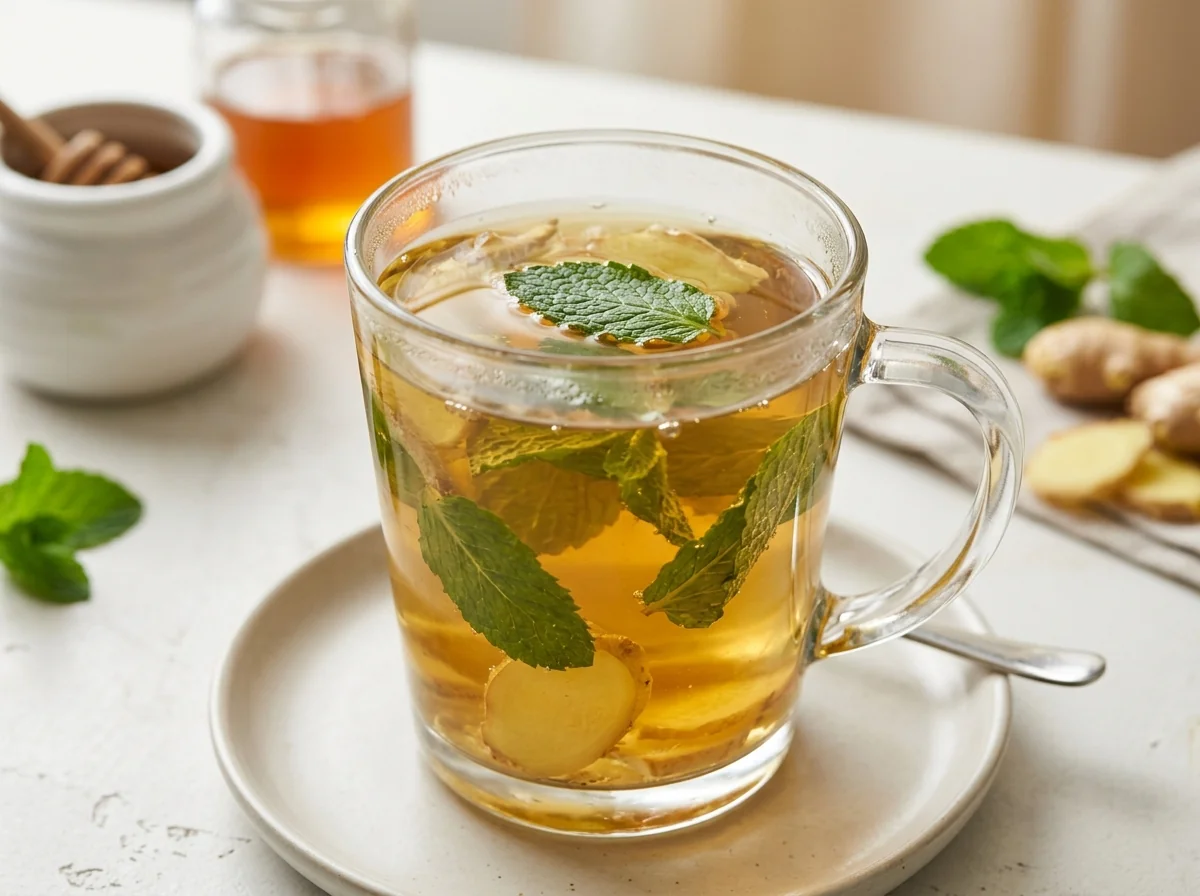
A warm, fragrant drink that pairs ginger's gentle heat with the coolness of fresh mint. Steeped off the heat so the flavor stays clean without excess sharpness, then finished with a squeeze of lemon and a little honey.
Ginger and mint are an old pairing in Arab cafes and homes: the first brings warmth and a gentle bite, the second balances it with cool freshness.
In this version neither is boiled — both are steeped in water just taken off the heat, yielding a clear, mellow tea completed by a squeeze of lemon and a little honey. A cup that suits the end of a rich meal or a cold evening.
Preparation Steps
Prepare the mint and ginger
Wash the mint sprig well and leave it whole with its leaves attached, then peel the ginger and cut it into thin slices. Thin slices release the ginger's flavor into the water faster than a whole piece.
Boil the water, then take it off the heat
Bring the water to a full boil in a small saucepan over medium heat, then remove it from the heat immediately. Steeping off the heat preserves the mint's aromatic oils, which a continuous boil would drive away.
Steep covered
Add the mint and ginger slices to the hot water, cover the pot, and let it steep for 15 minutes. Covering traps the aroma that rises with the steam, and the long steep gives the ginger enough time to release its warmth without boiling.
Strain and finish
Strain the tea from the mint and ginger into a serving pot, then add the lemon juice and honey and stir until dissolved. Add the honey while the drink is warm, not boiling hot, to preserve its flavor.
Serve
Pour the tea into two cups and serve warm after meals or in the evening. Garnish each cup with a fresh mint leaf if you like; it also works iced in summer.
Blood Sugar Impact
The glycemic index (GI) measures how quickly a food raises blood sugar, while the glycemic load (GL) measures how much a full serving raises it. Together they give the complete picture.
Glycemic Index
GI
51Low
Low0–55Medium56–69High70+
A low value (≤55) means a gradual rise in blood sugar — the most suitable range for diabetes and insulin resistance.
Glycemic Load
GL
5Low
Low0–10Medium11–19High20+
Glycemic load reflects the impact of the full serving. To lower it: take half a serving, or pair the recipe with a source of protein and fiber.
Nutritional Information
Per ServingMakes 2 servings · one serving is about 280 g of raw ingredients
Calories38 kcal2%of Daily Value*
Protein0 g0%of Daily Value*
Carbohydrates10 g4%of Daily Value*
Fat0 g0%of Daily Value*
Fiber0 g0%of Daily Value*
Sodium1 mg0%of Daily Value*
* Percent Daily Values are based on a 2,000-calorie diet per FDA food-label reference values — your daily needs may be higher or lower. Values are derived from the recipe's ingredients via the USDA database.
Troubleshooting
The most common problems when preparing Ginger Mint Tea, and how to fix them:
The flavor is bland despite steeping
Too little mint, or the ginger was cut too thick. Use a whole sprig with its leaves and thin ginger slices, and make sure the pot stays covered for the full 15 minutes.
The ginger heat is overpowering
Too much ginger, or the slices were bruised and released too much. Stick to a small piece of about 10 grams per half liter, and dilute the cup with hot water if the heat is still too strong.
A slight bitterness in the taste
The mint was boiled with the water or steeped far too long. Steep off the heat — 15 minutes is enough — then strain right away and do not leave the herbs sitting in the pot.
The honey clumped and did not dissolve
It was added when the drink was too cool. Add it while the tea is still warm and stir well, or dissolve it first in a little warm tea and return it to the pot.
Storage and Make-Ahead
Serve immediately
Best drunk warm right after straining, when the mint aroma is at its peak — it is the first thing to fade with time.
Refrigerator (4°C)
Store the strained tea in a sealed pitcher for up to 24 hours. Drink it iced, or reheat gently without bringing it back to a boil.
Fresh herbs
Mint keeps for days in the refrigerator wrapped in a damp paper towel; ginger lasts two weeks in the vegetable drawer, or grated and frozen for months.
What to avoid
Do not leave the tea sitting with its herbs in the pot for hours or it turns bitter, and do not leave it at room temperature for more than two hours.
Tested Ingredient Substitutions
Original Ingredient
Tested Substitute
Ratio
Flavor Difference
Fresh mint
Dried mint
1 teaspoon (2 g)
Does the job when fresh is unavailable, with a slightly deeper, less refreshing flavor; needs finer straining.
Fresh ginger
Ground ginger
1/2 teaspoon (1 g)
Faster but clouds the drink slightly and has a less lively flavor; strain through a fine-mesh strainer.
Honey
No sweetener at all
Omit
Brings the calories down to nearly zero; the lemon and mint are enough for a bright taste. The gentler option for blood sugar.
Lemon juice
Lemon slices steeped with the herbs
2 slices
A softer lemony flavor that blends in during steeping, instead of direct acidity at the end.
How Much Does It Make? Scaling Guide
Amount
Mint
Ginger
Water
Honey
1 cup
half a sprig (5 g)
5 g
250 ml
1/2 tablespoon
2 cups (the recipe)
1 sprig (10 g)
10 g
500 ml
1 tablespoon
4 cups
2 sprigs (20 g)
20 g
1 L
2 tablespoons
EEINA Nutrition Tip
Never boil mint; boiling drives off its aromatic oils and leaves a flat taste that leans bitter. Take the water off the heat first, then add the mint and cover. If you are watching calories, half the honey is enough — or skip it entirely; the lemon alone brightens the taste.
Add This Recipe to Your Plan
The EEINA app saves your favorite recipes, calculates them from their real ingredients, and shows your daily numbers toward your goal. Try it free now.
In ginger lemon tea the ginger is boiled on the stove, which makes it sharper and stronger. Here the ginger is steeped with mint off the heat, so the drink comes out milder, more refreshing, and dominated by the mint's aroma.
Does it really help digestion?
Ginger is backed by good evidence for easing nausea and settling the stomach, and mint is a traditional after-meal digestive drink. It supports digestive comfort only — it does not treat IBS or any disease.
Is it suitable for people with diabetes?
Plain, without honey, the drink is nearly sugar-free. The tablespoon of honey is the only sugar source, so halve it or omit it for greater blood sugar comfort.
Can pregnant and breastfeeding women drink it?
Usual culinary amounts of ginger and mint are generally safe, but it is advised to consult a doctor before making any herbal drink a regular habit during pregnancy and breastfeeding. Anyone on blood-thinning medication should check with their doctor before consuming ginger heavily.
How many cups per day?
One or two cups a day are enough for most people; there is no need to overdo any herbal drink. Those with acid reflux may find mint aggravates their symptoms and should cut back.
Sources: USDA · University of Sydney · Our methodology · Updated on