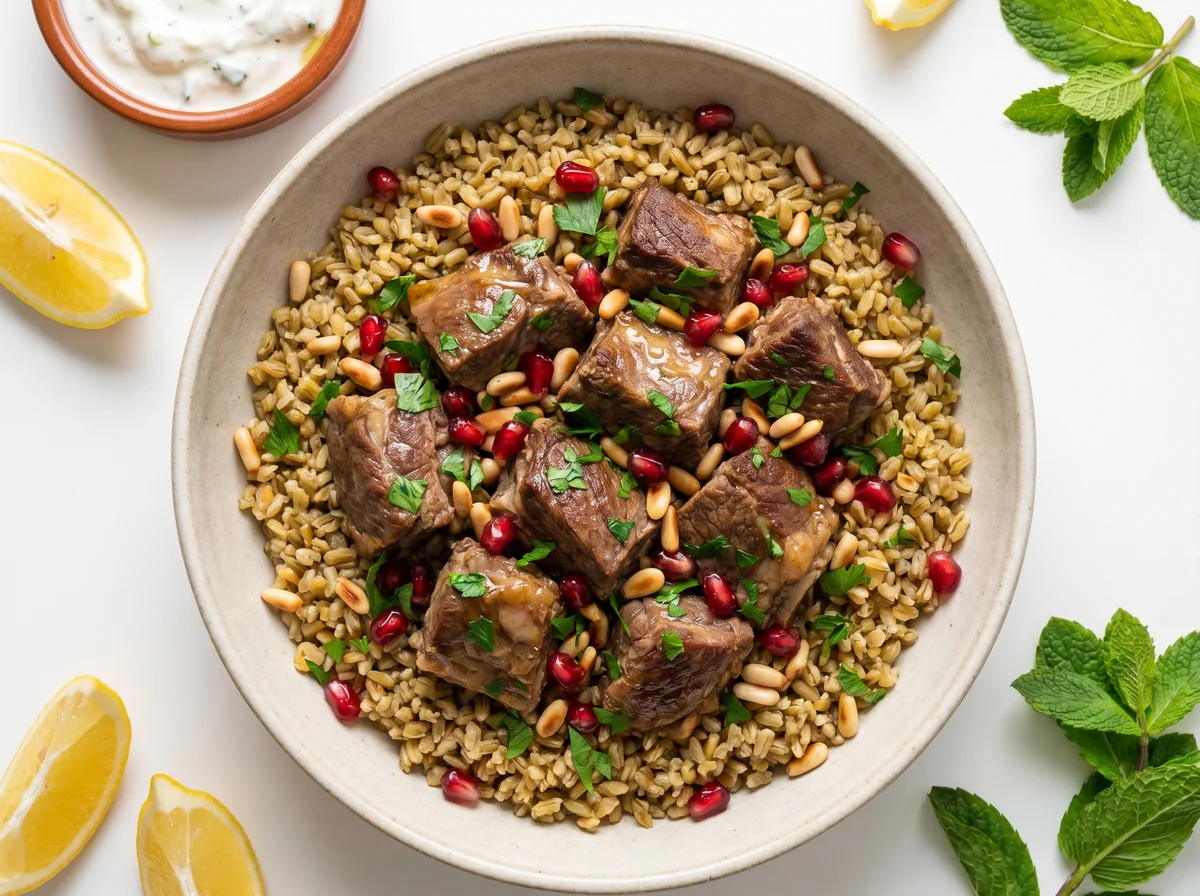
A nourishing Levantine dish — freekeh (smoked green wheat) cooked pilaf-style in lamb broth with onion and spices into a smoky, fiber-rich pilaf crowned with tender pieces of lamb. Low glycemic load, contains gluten.
Freekeh with lamb is a beloved and nourishing Levantine heritage dish popular in Syria, Lebanon, Palestine, and Jordan. It is built on freekeh — green wheat harvested young, then the surface is toasted (lightly scorched), giving it its distinctive smoky flavor and greenish color, then cracked.
The freekeh is cooked pilaf-style in lamb broth with onion and spices, then crowned with tender lamb pieces and toasted almonds and pine nuts. Freekeh has ancient roots in the region and stands out for being richer in fiber and protein than white rice while having a lower glycemic index. Its unique smoky flavor and nutritional value have made it a refined, healthy alternative to rice and a symbol of authentic Levantine cuisine — gracing the tables of gatherings and special occasions.
Preparation Steps
Braise the lamb and prepare the broth
Place 600 g bone-in lamb pieces (bone-in gives a richer broth) in a pot with one onion, a cinnamon stick, cardamom pods, and a pinch of salt. Cover with hot water. Bring to a boil, skimming the foam that rises continuously until the broth runs clear. Reduce the heat, cover, and simmer gently until the lamb is fully cooked and very tender (the pieces pull apart easily). Lift out the lamb and keep it warm. Strain the broth and keep it hot on the side. The lamb broth is the foundation of the freekeh's flavor — it is cooked in broth, not water, which gives it its depth, so make sure you have plenty of hot broth ready.
Wash and soak the freekeh
Place the 2 cups of freekeh in a strainer and wash under running water until the water runs clear, then soak for a few minutes and drain well. Freekeh is green wheat harvested young and then toasted, giving it its smoky flavor and green color before being cracked. It is richer in fiber and protein than white rice.
Sauté the onion then the freekeh
Heat the 3 tablespoons of ghee or oil and add the chopped onion, stirring until softened. Add the drained freekeh and stir for a few minutes until it absorbs the fat and turns fragrant. This sautéing step separates the grains and prevents clumping — just like preparing rice for a pilaf.
Cook the freekeh in the broth
Add the baharat, cinnamon, cardamom, salt, and pepper, then pour in the hot broth — about twice the volume of the freekeh (4 cups of broth for 2 cups of freekeh). Bring to a boil, then reduce heat, cover, and cook gently for about 30 minutes. Freekeh needs more liquid and more time than rice — do not rush it.
Check the texture and rest the freekeh
Check that the freekeh is tender with a slight bite remaining. Add hot broth if it has dried out before fully cooking. Turn off the heat and leave covered to rest for 10 minutes. The finished texture should be moist and cohesive, not dry.
Plate, garnish, and serve
Spread the freekeh on a platter and arrange the tender lamb pieces over it. Garnish with toasted almonds and pine nuts and serve hot alongside labneh (strained yogurt) and salad. A heritage Levantine dish — a refined, healthy alternative to rice.
Blood Sugar Impact
The glycemic index (GI) measures how quickly a food raises blood sugar, while the glycemic load (GL) measures how much a full serving raises it. Together they give the complete picture.
Glycemic Index
GI
42Low
Low0–55Medium56–69High70+
A low value (≤55) means a gradual rise in blood sugar — the most suitable range for diabetes and insulin resistance.
Glycemic Load
GL
18Medium
Low0–10Medium11–19High20+
Glycemic load reflects the impact of the full serving. To lower it: take half a serving, or pair the recipe with a source of protein and fiber.
Nutritional Information
Per ServingMakes 5 servings · one serving is about 225 g of raw ingredients
Calories536 kcal27%of Daily Value*
Protein27 g54%of Daily Value*
Carbohydrates54 g20%of Daily Value*
Fat24 g31%of Daily Value*
Fiber12 g43%of Daily Value*
Sodium62 mg3%of Daily Value*
* Percent Daily Values are based on a 2,000-calorie diet per FDA food-label reference values — your daily needs may be higher or lower. Values are derived from the recipe's ingredients via the USDA database.
Troubleshooting
The most common problems when preparing Freekeh with Lamb, and how to fix them:
Freekeh is still hard and didn't soften
Too little broth or too short a cooking time. Freekeh has a firmer grain than rice — it needs more liquid (about twice its volume) and more time. Add hot broth and cook covered until the grains soften with a gentle bite remaining.
Clumped and sticky
It wasn't sautéed, or it was stirred too much. Sauté the freekeh in ghee before adding the broth (this separates the grains), and don't stir it much during cooking. Sautéing and leaving it alone keeps it fluffy like a pilaf, not porridge.
Bland flavor
It was cooked in water, not broth. Cook the freekeh in rich, spiced lamb broth (not water) — the broth is the foundation of its flavor together with the spices. Rich broth and spices (cinnamon, cardamom, baharat) create the depth.
Dry
Not enough broth or cooked uncovered. Cook covered with enough broth, and add hot broth if it dries out before the grains are tender. Good freekeh should be moist and cohesive, not dry.
Bitter or earthy taste
Not washed, or old freekeh. Wash the freekeh thoroughly (remove dust, husks, and residue from excessive toasting) and use fresh, good-quality freekeh. Thorough washing gives a clean, smoky flavor — not bitter.
Storage and Make-Ahead
Refrigerator (4°C)
Freekeh with lamb keeps in an airtight container in the refrigerator for 3 to 4 days, and the flavor improves. Reheat with a splash of hot broth or water (to restore moisture, as it dries out when chilled). Practical for meals over the following days.
Freezer
Cooked freekeh freezes well for 2 to 3 months in an airtight container. Thaw and reheat with broth. Practical for cooking a large batch and freezing in portions.
Advance prep
Braise the lamb and prepare the broth ahead of time (can be stored chilled or frozen), then cook the freekeh fresh when serving. Or prepare the whole dish a day before an occasion — it only gets better. Saves time on the day of the gathering.
Raw freekeh
Dry (uncooked) freekeh keeps in an airtight container in a cool, dry place for months (like dried grains), and keeps longer if refrigerated or frozen (it contains some oils). A practical pantry staple.
Tested Ingredient Substitutions
Original Ingredient
Tested Substitute
Ratio
Flavor Difference
Lamb
Chicken or lean beef
same amount
Chicken is leaner (freekeh with chicken is a popular and delicious combination); lean beef is an alternative; lamb is the traditional choice with the richest flavor
Ghee
Olive oil
same amount
Reduces saturated fat; ghee is the traditional flavor; olive oil is healthier with a gentle Levantine character
Whole freekeh
Finely cracked freekeh
same amount
Fine freekeh cooks faster and has a softer texture (closer to bulgur); whole freekeh has more bite and a more pronounced grain texture — both are nutritious freekeh
How Much Does It Make? Scaling Guide
Servings
Freekeh
Meat
Broth
3 (small)
1.5 cups
400 g
3 cups
5 (base)
2 cups
600 g
4 cups
10 (feast)
4 cups
1200 g
8 cups
EEINA Nutrition Tip
Freekeh is an excellent nutritional choice: a whole grain rich in fiber (far more than white rice), plant protein, and minerals (magnesium and iron). Its glycemic index is low and its glycemic load is moderate — the fiber slows blood sugar — so it keeps you full for longer and supports digestion and blood sugar control. The biggest nutritional challenge in this dish is the fat from the lamb and ghee. For a lighter version: use lean lamb (or chicken), reduce the ghee, control the salt, and balance it with salad and labneh. A fiber-rich, filling dish — an excellent healthy alternative to rice, especially for people with diabetes and those seeking satisfying, wholesome food.
Add This Recipe to Your Plan
The EEINA app saves your favorite recipes, calculates them from their real ingredients, and shows your daily numbers toward your goal. Try it free now.
Freekeh is green wheat harvested young and then toasted (the surface is lightly scorched), giving it a distinctive smoky flavor and a greenish color, then cracked. An ancient Levantine grain cooked like rice or in soups. It is richer in fiber and protein than white rice and has a lower glycemic index. Its unique smoky flavor sets its dishes apart.
Is freekeh healthier than rice?
Yes, generally: freekeh is a whole grain rich in fiber (far more than white rice), protein, and minerals. Its glycemic index is lower and its glycemic load is moderate — the fiber slows blood sugar, keeping you full longer and supporting blood sugar control and digestion. White rice is lower in fiber and higher in GI. Freekeh is an excellent healthy alternative to rice, especially for people with diabetes.
How do I cook freekeh without it clumping?
Wash it well, sauté it in ghee before adding the broth (this separates the grains), cook it in enough liquid (about twice its volume) over low heat covered, and don't stir it much. Let it rest covered after cooking. Sautéing, sufficient liquid, and resting give a fluffy, loose texture like a pilaf.
Is freekeh with lamb suitable for people with diabetes?
Yes, it is a relatively good choice: freekeh is low-GI and rich in fiber (slows blood sugar spikes), better than white rice. That said, it is still a source of carbohydrates, so control portion size, use lean meat, and balance it with protein, vegetables, and salad. A satisfying healthy alternative, in moderation.
Sources: USDA · University of Sydney · Gulf GSO · Our methodology · Updated on