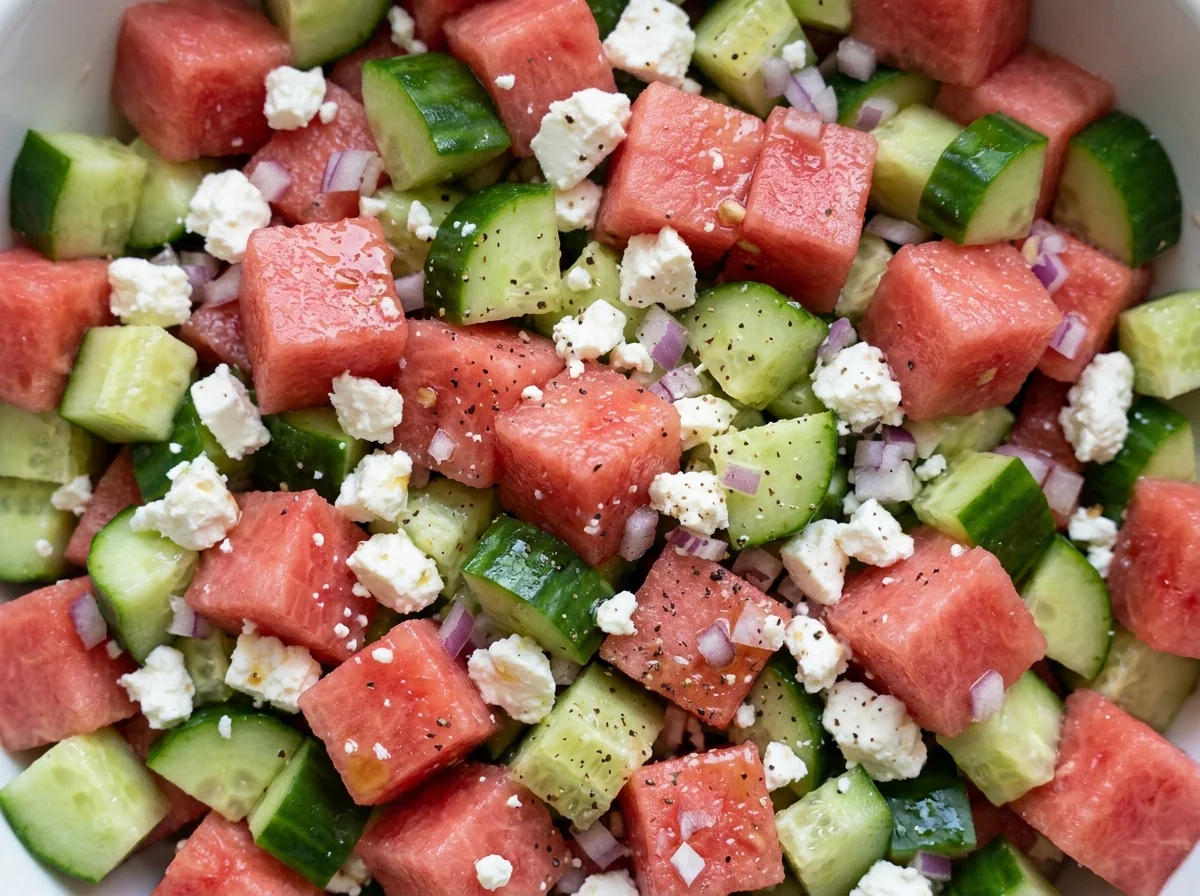
A cold summer salad that pairs the sweetness of watermelon with the crunch of cucumber and a deliberately small touch of feta, tossed in one bowl in ten minutes with no cooking. It was designed as a renal recipe from the start — the feta is measured so it perfumes the whole dish without weighing down the sodium and phosphorus.
The watermelon-and-feta pairing is a well-known Mediterranean summer salad, and the secret of the renal version lies in the quantities, not the ingredients: the feta here is deliberately scant — 60 grams for a dish that serves four — because the cheese is the salad's only carrier of sodium and phosphorus, and a little scattered on top perfumes more than a lot buried in the toss.
We took the recipe from the American Kidney Fund's Kidney Kitchen as it is, with no sugar to begin with, and it is the kind that gets tossed in one bowl and reaches the table before the guests sit down.
Preparation Steps
Cut the watermelon and cucumber
Cut the chilled watermelon into 2 cm cubes, removing any visible seeds, and wash the cucumber and cut it into slightly smaller 1 cm cubes with the skin on if it is thin; the difference in size gives every bite sweetness and crunch together.
Slice the onion thinly
Peel the half red onion and slice it into thin, nearly translucent slices with a knife or peeler; the thinness of the slice is the difference between a gentle sharp touch and an overpowering bite of onion.
Combine and dress
In a wide bowl, add the watermelon, cucumber, and onion, pour in the olive oil and balsamic vinegar, and sprinkle the black pepper, then toss gently with two spoons from the bottom up until everything glistens with the dressing without crushing the watermelon.
Scatter the feta and serve cold
Scatter the crumbled feta over the top at the end without tossing it in, so the tongue meets its small salty pieces between the sweet and the cold. Serve the salad cold as soon as it is made.
Blood Sugar Impact
The glycemic index (GI) measures how quickly a food raises blood sugar, while the glycemic load (GL) measures how much a full serving raises it. Together they give the complete picture.
Glycemic Index
GI
61Medium
Low0–55Medium56–69High70+
A low value (≤55) means a gradual rise in blood sugar — the most suitable range for diabetes and insulin resistance.
Glycemic Load
GL
9Low
Low0–10Medium11–19High20+
Glycemic load reflects the impact of the full serving. To lower it: take half a serving, or pair the recipe with a source of protein and fiber.
Nutritional Information
Per ServingMakes 4 servings · one serving is about 250 g of raw ingredients
Calories160 kcal8%of Daily Value*
Protein4 g8%of Daily Value*
Carbohydrates16 g6%of Daily Value*
Fat10 g13%of Daily Value*
Fiber1 g4%of Daily Value*
Sodium174 mg8%of Daily Value*
Potassium292 mg6%of Daily Value*
Phosphorus86 mg7%of Daily Value*
* Percent Daily Values are based on a 2,000-calorie diet per FDA food-label reference values — your daily needs may be higher or lower. Values are derived from the recipe's ingredients via the USDA database.
Troubleshooting
The most common problems when preparing Cucumber Watermelon Salad with Feta, and how to fix them:
The salad went watery, with liquid pooling at the bottom
It was tossed too early or stood too long. Toss right before serving, and if you must prepare ahead, cut the ingredients, chill them separately, and combine at serving time.
The onion overpowered the dish
The slices were too thick. Slice them nearly translucent, or soak them 5 minutes in cold water and drain — their sharpness softens while their crunch stays.
The feta melted away and disappeared into the toss
It was tossed with the ingredients. Scatter it over the top at the end without tossing — its visible pieces are what give the salad its taste and its look.
The sweetness and acidity did not balance
The watermelon was underripe or the vinegar was too much. Taste the watermelon before building on it, and start with half the vinegar, adding drop by drop until it sharpens the sweetness rather than covering it.
Storage and Make-Ahead
Serve immediately
Best tossed and served in the same sitting, with the cucumber's crunch and the watermelon's firmness at their peak.
Refrigerator (4°C)
Keep in an airtight container for up to 24 hours, draining the pooled water before serving; it does not hold beyond the next day. Freezing ruins it completely.
Prep ahead
Cut the ingredients and chill each separately for up to a full day, then combine with the dressing and feta at serving time.
Tested Ingredient Substitutions
Original Ingredient
Tested Substitute
Ratio
Flavor Difference
Feta cheese
Fresh mozzarella, crumbled
60 g
Lower in sodium than feta for anyone wanting stricter control, with a gentler, milder flavor.
Balsamic vinegar
Fresh lemon juice
1 tablespoon (15 ml)
A brighter acidity for those who dislike balsamic's sweetness, with no effect on the minerals.
Red onion
Fresh mint leaves, chopped
2 tablespoons (6 g)
For anyone who cannot stand raw onion; mint with watermelon and feta is a long-standing Mediterranean pairing.
Watermelon
Yellow cantaloupe
Same amount, 4 cups
Deeper sweetness and a different color, noting that cantaloupe is higher in potassium than watermelon, so keep the portion moderate.
How Much Does It Make? Scaling Guide
Amount
Watermelon
Cucumbers
Feta
Olive oil
2 servings
2 cups (300 g)
1 cup (130 g)
30 g
1 tbsp (15 ml)
4 servings (recipe)
4 cups (600 g)
2 cups (260 g)
60 g
2 tbsp (30 ml)
8 servings
8 cups (1200 g)
4 cups (520 g)
120 g
4 tbsp (60 ml)
EEINA Nutrition Tip
Chill the watermelon whole in the refrigerator before cutting, not after — pre-chilled cubes hold together and do not bleed their water into the bowl. And the short, thin-skinned cucumber (baladi cucumber) is the best type here: thin skin, high crunch, and seeds you can barely see.
Add This Recipe to Your Plan
The EEINA app saves your favorite recipes, calculates them from their real ingredients, and shows your daily numbers toward your goal. Try it free now.
Deliberately; feta is the only source of sodium and phosphorus in this salad, and 60 grams spread over four servings is enough for flavor while keeping the dish within renal nutrition limits. Scattering it on top instead of tossing it in is a trick that makes a little feel like a lot.
Is watermelon allowed for a kidney patient?
Watermelon is a medium-potassium fruit that is mostly water, and a moderate portion fits into most kidney plans. The portion size and the day's fluids remain a matter for each person's dietitian plan, especially for anyone on a fluid restriction.
Does it work as a main dish?
It is a snack or a refreshing side dish by nature, and it rounds out into a light meal with toasted bread and a little grilled chicken breast made without salty ingredients, for anyone who wants.
When is it at its best?
In the heat of summer, with cold watermelon from the refrigerator, tossed and served in the same minute; every minute of waiting after that pulls from its crunch.