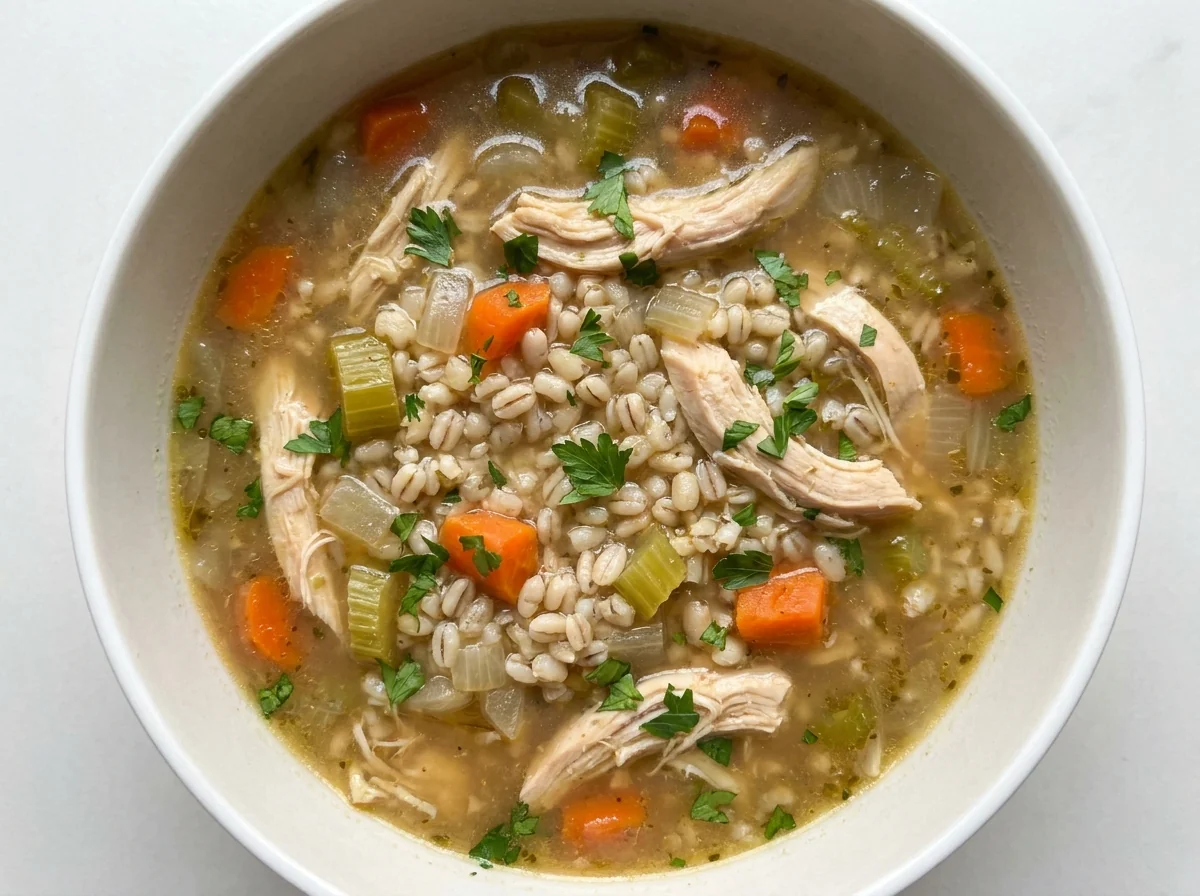
A simple, warming soup we serve to the mother in the first postpartum days, when she needs an easy-to-digest food that brings broth, protein, and vegetables together in a single bowl.
Preparation Steps
Prepare the barley
Rinse the hulled barley well in cold water and drain it, because rinsing removes excess starch and keeps the soup clear rather than gummy.
Saute the onion
Heat the olive oil in a wide pot, add the chopped onion, and stir over medium heat until it wilts and turns golden; this is the sign that its sweet flavor has come out as a base for the soup.
Add the chicken
Place the whole chicken breast over the onion and turn it for two minutes until the surface whitens on the outside, which locks the juices inside the piece.
Boil and skim the foam
Pour in the water and raise the heat until it begins to boil, then skim off the white foam that floats up with a spoon, because removing it gives a clear broth and a cleaner flavor.
Cook the barley
Add the rinsed barley, lower the heat to a gentle simmer, cover the pot, and leave it for about 30 minutes until the barley grains start to swell and soften.
Add the vegetables
Add the carrot and celery and continue cooking for about 15 minutes until the carrot is tender and a fork pierces it easily, which is the sign it is done.
Shred the chicken
Take out the chicken breast and shred it with two forks into small strands, then return it to the pot, because shredding distributes the protein in every spoonful.
Season and serve
Add the salt and black pepper, taste and adjust, then turn off the heat and sprinkle the chopped parsley, and serve it warm since its gentle warmth is comforting for the mother after childbirth.
Blood Sugar Impact
The glycemic index (GI) measures how quickly a food raises blood sugar, while the glycemic load (GL) measures how much a full serving raises it. Together they give the complete picture.
Glycemic Index
GI
27Low
Low0–55Medium56–69High70+
A low value (≤55) means a gradual rise in blood sugar — the most suitable range for diabetes and insulin resistance.
Glycemic Load
GL
7Low
Low0–10Medium11–19High20+
Glycemic load reflects the impact of the full serving. To lower it: take half a serving, or pair the recipe with a source of protein and fiber.
Nutritional Information
Per ServingMakes 4 servings · one serving is about 690 g of raw ingredients
Calories317 kcal16%of Daily Value*
Protein27 g54%of Daily Value*
Carbohydrates35 g13%of Daily Value*
Fat7 g9%of Daily Value*
Fiber9 g32%of Daily Value*
Sodium486 mg21%of Daily Value*
Potassium702 mg15%of Daily Value*
Phosphorus327 mg26%of Daily Value*
* Percent Daily Values are based on a 2,000-calorie diet per FDA food-label reference values — your daily needs may be higher or lower. Values are derived from the recipe's ingredients via the USDA database.
Troubleshooting
The most common problems when preparing Nourishing Chicken and Barley Postpartum Soup, and how to fix them:
The soup is too thick after chilling
Barley absorbs liquid and keeps swelling; add hot water or broth when reheating and stir until the consistency returns.
The chicken is dry and tough
It may have been overcooked; boil the breast whole and take it out as soon as it is done, then shred it and return it in the last few minutes of cooking.
The broth tastes bland
Cook down the onion more at the start and add a little salt in stages, since gradual tasting balances the flavor better than adding it all at once.
Storage and Make-Ahead
Refrigerator
Keep in an airtight container for up to 3 days, and reheat to a boil before serving.
Freezer
Freeze for up to a month in portioned containers; it is better to freeze it before adding a large amount of vegetables to preserve their texture.
Serving
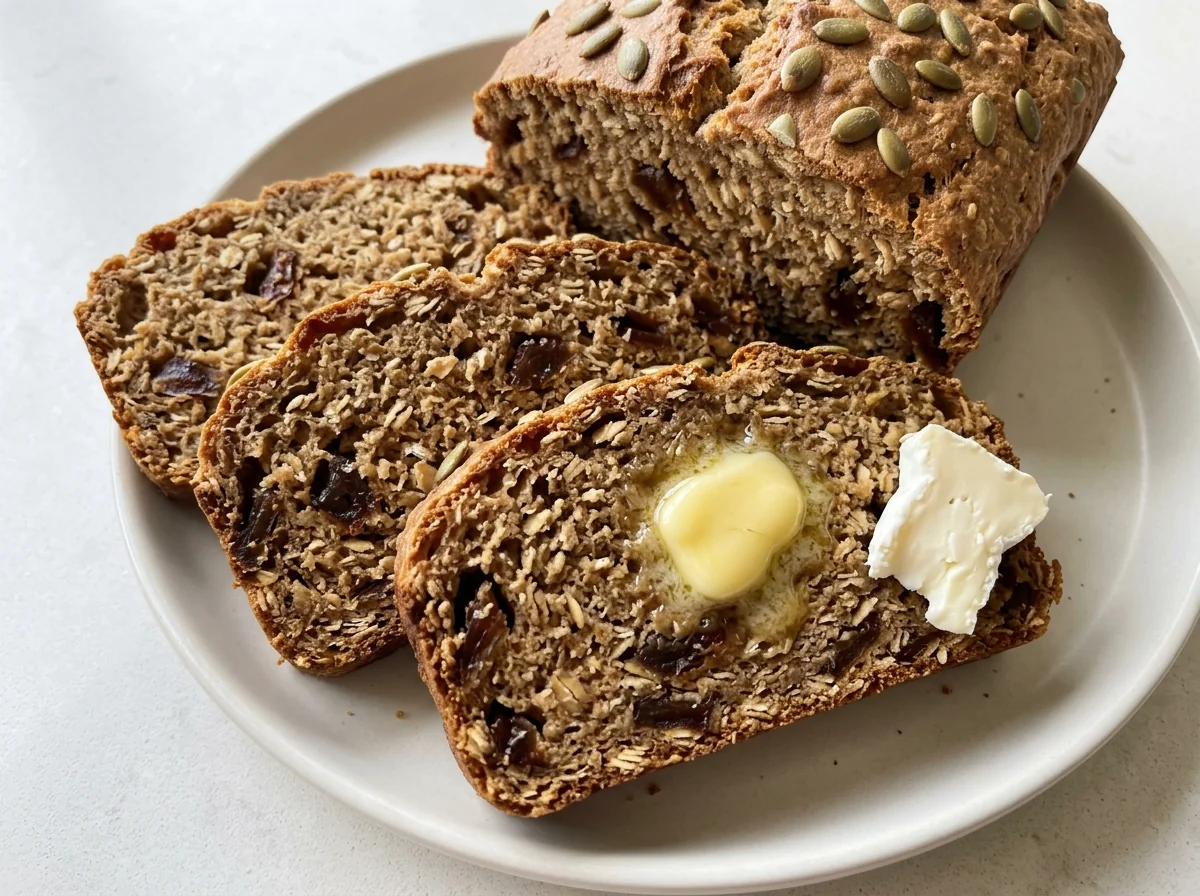
Serve warm with a slice of brown bread.
Tested Ingredient Substitutions
Original Ingredient
Tested Substitute
Ratio
Flavor Difference
Hulled barley
Brown rice
Same weight
Cooking time drops by about 10 minutes and the dish becomes gluten-free.
Chicken breast
Skinless chicken thighs
Same weight
They give a richer broth and stay more tender, with slightly higher fat.
Celery
Zucchini
Same weight
A milder flavor for those who do not like celery; add it in the last 10 minutes.
Olive oil
Neutral vegetable oil
Same amount
A practical alternative with a less pronounced flavor.
How Much Does It Make? Scaling Guide
Ingredient
2 servings
4 servings (base)
8 servings
Chicken breast
200 g
400 g
800 g
Hulled barley
75 g
150 g
300 g
Carrot
75 g
150 g
300 g
Water
900 ml
1800 ml
3600 ml
EEINA Nutrition Tip
Hulled barley retains more of its bran than pearled barley, so it is a good source of fiber. Cook it until fully soft so it is easier to digest.
Add This Recipe to Your Plan
The EEINA app saves your favorite recipes, calculates them from their real ingredients, and shows your daily numbers toward your goal. Try it free now.
No single ingredient increases milk supply on its own; supply depends on frequent breastfeeding. But it is a warm, nourishing meal that gives the mother the protein, fluids, and energy she needs during the postpartum days.
When should I serve it to the mother after childbirth?
Its gentle texture and easy digestion make it suitable from the first days; serve it warm and in small, frequent amounts if the appetite is weak.
Can I make it ahead?
Yes, cook it and keep it in the refrigerator for 3 days or in the freezer for a month, which is convenient for a mother busy with frequent breastfeeding.