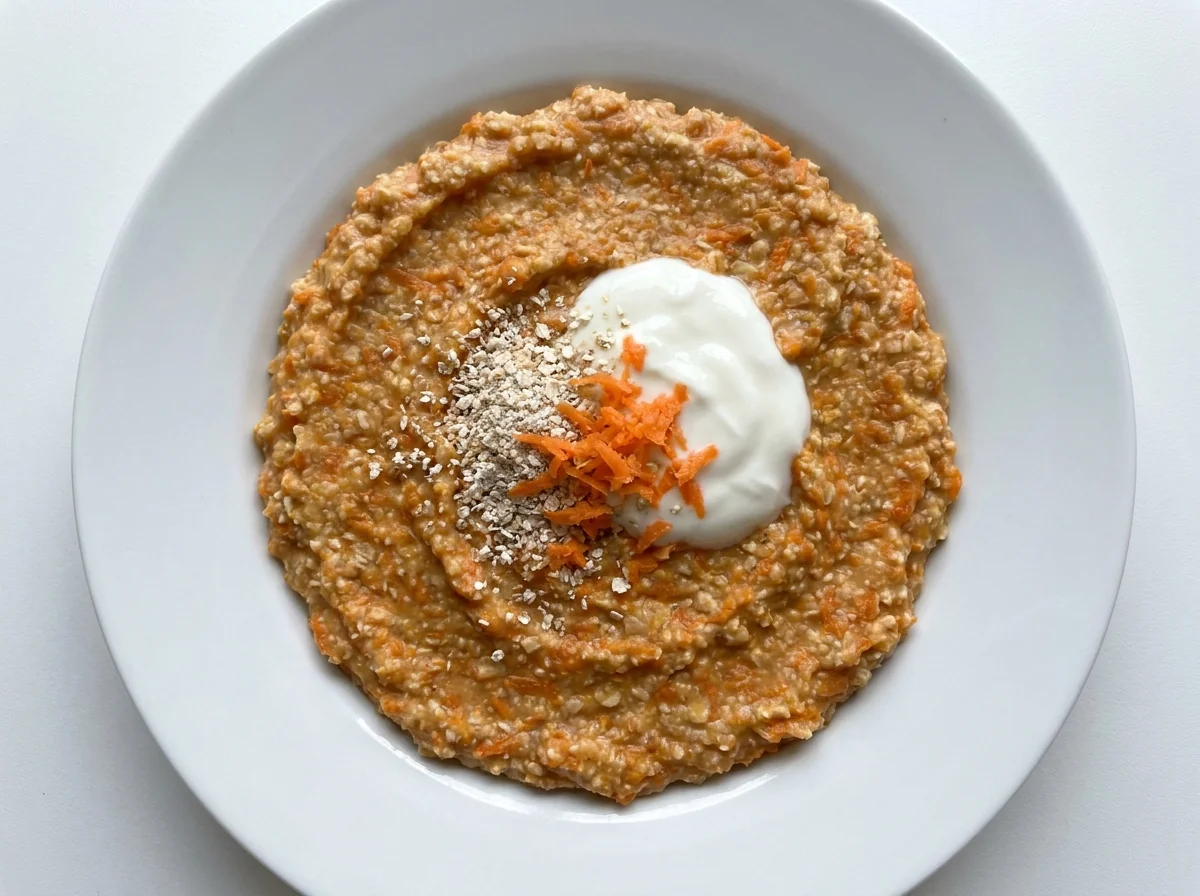
We offer banku in a lighter version than its Ghanaian original.
Instead of fermented corn and cassava dough, we used oats, carrot, and psyllium husk for a soft, pleasant dough that is richer in fiber. We kept the spirit of the dish and its chewy texture that is dipped into soup, and we added yogurt to give the fermented tang that the original banku is known for.
Preparation Steps
The batter
Mix the ground oats with the yogurt and a little water until you get a sticky dough, because the yogurt gives the fermented tang characteristic of banku.
The carrot
Grate the carrot finely and squeeze it lightly, then add it to the batter, so it gives a pleasant sweetness and a golden color without excess moisture.
Cooking
Pour the rest of the water into a pot with the salt over medium heat, then add the batter and stir it continuously for five minutes to get rid of any clumping.
The psyllium
Add the psyllium husk gradually while stirring continuously, because it holds the dough together and gives it its pleasant chewy texture.
Covering
Cover the pot and cook for ten to fifteen minutes over low heat, stirring now and then, until the dough sets and turns glossy.
Smoothing
Stir the dough vigorously for another five minutes until it becomes smooth and firm with no lumps.
Shaping
Wet a spoon with water and shape the dough into balls, so it does not stick to it and you get the traditional banku shape.
Serving
Serve it warm with soup or stew, because it is eaten by dipping while it is soft.
Blood Sugar Impact
The glycemic index (GI) measures how quickly a food raises blood sugar, while the glycemic load (GL) measures how much a full serving raises it. Together they give the complete picture.
Glycemic Index
GI
53Low
Low0–55Medium56–69High70+
A low value (≤55) means a gradual rise in blood sugar — the most suitable range for diabetes and insulin resistance.
Glycemic Load
GL
17Medium
Low0–10Medium11–19High20+
Glycemic load reflects the impact of the full serving. To lower it: take half a serving, or pair the recipe with a source of protein and fiber.
Nutritional Information
Per ServingMakes 4 servings · one serving is about 285 g of raw ingredients
Calories229 kcal11%of Daily Value*
Protein10 g20%of Daily Value*
Carbohydrates42 g15%of Daily Value*
Fat4 g5%of Daily Value*
Fiber10 g36%of Daily Value*
Sodium424 mg18%of Daily Value*
* Percent Daily Values are based on a 2,000-calorie diet per FDA food-label reference values — your daily needs may be higher or lower. Values are derived from the recipe's ingredients via the USDA database.
Troubleshooting
The most common problems when preparing Carrot Oat Banku, and how to fix them:
The dough is runny and will not set
The psyllium is too little; add another spoonful and cook for a few extra minutes while stirring.
Lumps formed
We added the oats or psyllium too fast; stir vigorously and cook over low heat until it smooths out.
The dough is dry and cracked
The water is too little; add a splash of hot water and stir until the texture softens.
The taste is heavy
The carrot is watery; squeeze it before adding and balance with a little salt.
Storage and Make-Ahead
Refrigerator
Keep it well wrapped for up to two days, though it is tastiest fresh.
Reheating
Reheat it with steam or a splash of water over low heat until it becomes soft again.
Tested Ingredient Substitutions
Original Ingredient
Tested Substitute
Ratio
Flavor Difference
psyllium husk
ground flax seeds
same amount, 20 g
A fiber-rich binding alternative; add it gradually.
yogurt
plant-based yogurt or lemon juice
same amount, 60 g
Gives the fermented tang for a dairy-free option.
ground oats
whole cornmeal
same amount, 200 g
Closer to the Ghanaian original; adjust the water slightly.
carrot
grated pumpkin
same amount, 150 g
For a similar sweetness and color; squeeze it before adding.
How Much Does It Make? Scaling Guide
Ingredient
2 servings
4 servings (base)
8 servings
ground oats
100 g
200 g
400 g
Grated carrots
75 g
150 g
300 g
psyllium husk
10 g
20 g
40 g
water
350 ml
700 ml
1400 ml
EEINA Nutrition Tip
Add the psyllium husk gradually while stirring continuously, because adding it all at once forms lumps that are hard to break up afterwards.
Add This Recipe to Your Plan
The EEINA app saves your favorite recipes, calculates them from their real ingredients, and shows your daily numbers toward your goal. Try it free now.