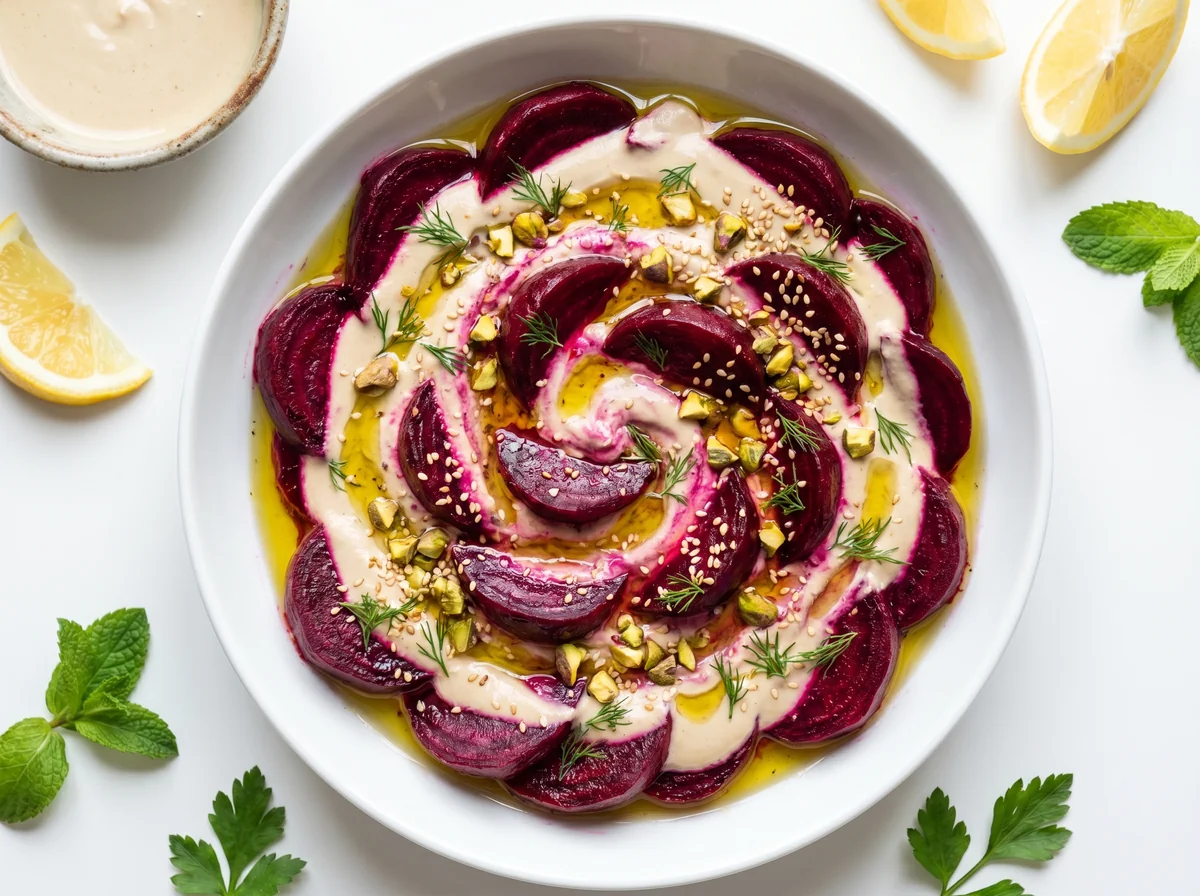
Beet-tahini salad (mutabbal shawandar) is a colorful Levantine starter from the mutabbal family, alongside smoky eggplant dip. It brings together mashed roasted beet with tahini, garlic, and lemon, arriving at a vibrant pink with a sweet, earthy flavor balanced by the creaminess of tahini.
It is a beloved modern addition to the mezze table, served cold with bread or alongside grilled meats. Beet is rich in antioxidants, and tahini in calcium and healthy fats — making it a delicious and nutritious starter.
Preparation Steps
Roast the beet
Wash the beets, wrap them in foil, and roast in an oven at 200°C for about 45 minutes (or boil) until tender and a knife slides in easily. Roasting concentrates the beet's sweetness and flavor more than boiling. Leave to cool then peel — the skin slips off easily.
Mash the beet
Chop the peeled beet and mash with a fork or in a food processor until smooth (or leave it coarsely grated if you prefer a chunkier texture). Beet stains everything — protect your hands and surfaces.
Make the tahini sauce
In a bowl, mix the tahini with the crushed garlic, lemon juice, and water gradually. The tahini will first seize then smooth out as you add the water until it becomes a flowing sauce. This reaction is natural with tahini.
Combine
Add the tahini sauce to the mashed beet with a pinch of salt and stir until blended into a vibrant pink color. The tahini balances the beet's earthy sweetness with its creamy flavor and texture.
Adjust the flavor
Taste and adjust — add more lemon for extra acidity, water to loosen the texture, or salt. The desired consistency is between a paste (for dipping) and a salad. The olive oil adds gloss and depth.
Garnish and serve
Spread the dip on a plate, drizzle the olive oil over the top, and garnish with pomegranate seeds or parsley and crushed walnuts. Serve cold as part of a mezze spread or alongside grilled meats and bread. This Levantine beet-tahini dip is a colorful, refreshing starter that unites the sweetness of beet with the creaminess of tahini.
Blood Sugar Impact
The glycemic index (GI) measures how quickly a food raises blood sugar, while the glycemic load (GL) measures how much a full serving raises it. Together they give the complete picture.
Glycemic Index
GI
38Low
Low0–55Medium56–69High70+
A low value (≤55) means a gradual rise in blood sugar — the most suitable range for diabetes and insulin resistance.
Glycemic Load
GL
3Low
Low0–10Medium11–19High20+
Glycemic load reflects the impact of the full serving. To lower it: take half a serving, or pair the recipe with a source of protein and fiber.
Nutritional Information
Per ServingMakes 4 servings · one serving is about 95 g of raw ingredients
Calories183 kcal9%of Daily Value*
Protein4 g8%of Daily Value*
Carbohydrates11 g4%of Daily Value*
Fat15 g19%of Daily Value*
Fiber3 g11%of Daily Value*
Sodium54 mg2%of Daily Value*
* Percent Daily Values are based on a 2,000-calorie diet per FDA food-label reference values — your daily needs may be higher or lower. Values are derived from the recipe's ingredients via the USDA database.
Troubleshooting
The most common problems when preparing Levantine Beet-tahini Dip, and how to fix them:
tahini sauce seized or turned too thick
It is natural for tahini to seize when lemon is added first. Keep adding water gradually while stirring until it flows, then mix it into the beet.
Salad tastes bland
Not enough garlic, lemon, or salt. Garlic and lemon balance the beet's earthy sweetness — add them generously but in moderation, taste, and adjust the salt.
Beet has a strong earthy flavor
Type of beet or boiled rather than roasted. Roasting concentrates the sweetness and reduces the earthiness; tahini and lemon balance it. Choose fresh, medium-sized beet.
Texture too thick or too thin
Balance the water and tahini. If too thick, add water and lemon; if too thin, add tahini. The desired texture is a smooth paste for dipping with bread, not liquid.
Hands and surfaces are stained red
Beet stains intensely. Wear gloves when peeling and mashing, and work on an easy-to-clean surface. This is natural and does not affect the dish.
Storage and Make-Ahead
Refrigerator (4°C)
The beet-tahini salad keeps in an airtight container in the refrigerator for three to four days, and the flavor improves. Add the garnish at serving time. Serve cold.
Roasted beet
Roast and peel the beet and store it chilled for two days or frozen for months, then make the salad fresh at serving time by adding the tahini and garlic.
Freezer
Not recommended for the finished salad (tahini may separate). Freeze the mashed beet only, and add fresh tahini after thawing.
Meal prep
Roast and mash the beet in advance, and mix with the tahini close to serving time. Ideal for advance preparation for a mezze table, and keeps for days in the refrigerator.
Tested Ingredient Substitutions
Original Ingredient
Tested Substitute
Ratio
Flavor Difference
Roasted beet
Boiled or canned beet
Same amount
Roasting concentrates the sweetness more; boiled/canned is faster and practical
tahini
Greek yogurt (for a labneh version)
Same amount
Yogurt gives a lighter dairy-based version (like beet-yogurt salad) — tahini is creamy and dairy-free
Olive oil
Reduce the amount
1 tablespoon instead of 2
Cuts calories — tahini itself adds fats, so the oil is an extra for gloss and flavor
How Much Does It Make? Scaling Guide
Servings
Beets
Tahini
Garlic
2 (half recipe)
2 pieces
2 tablespoons
2 cloves
4 (base)
3 pieces
¼ cup
3 cloves
8 (big spread)
6 pieces
½ cup
6 cloves
EEINA Nutrition Tip
Beet-tahini salad is one of the healthiest starters: beet is rich in antioxidants (betalains) and nitrates beneficial for heart health and blood pressure, and tahini adds calcium, healthy fats, and protein, with a low glycemic index. An excellent choice for a healthy table. Adjust the olive oil and tahini to manage calories (both are healthy fats but calorie-dense), and serve with vegetables for dipping rather than excess bread.
Add This Recipe to Your Plan
The EEINA app saves your favorite recipes, calculates them from their real ingredients, and shows your daily numbers toward your goal. Try it free now.
What is the difference between beet-tahini salad and beet-yogurt salad?
With tahini (mutabbal shawandar) it is creamy with a sesame flavor and dairy-free, served as a dip with bread. With yogurt it is lighter and more acidic and contains dairy, closer to a salad. Both pair beet with a creamy base.
Is beet-tahini salad healthy?
Very much so — beet is rich in antioxidants and nitrates beneficial for heart health and blood pressure, and tahini adds calcium, healthy fats, and a low glycemic index. A nutritious starter, with the tahini and oil adjusted for calories.
Should I roast or boil the beet?
Roasting concentrates the beet's sweetness and flavor and reduces the earthiness — it is the better choice. Boiling is faster but may thin the flavor. Ready-cooked canned beet is a practical quick option.
Why does tahini seize when you mix it?
A natural reaction — tahini seizes and thickens when acid (lemon) is added first, then melts and flows as water is added gradually. Keep stirring and adding water until you reach the desired consistency.