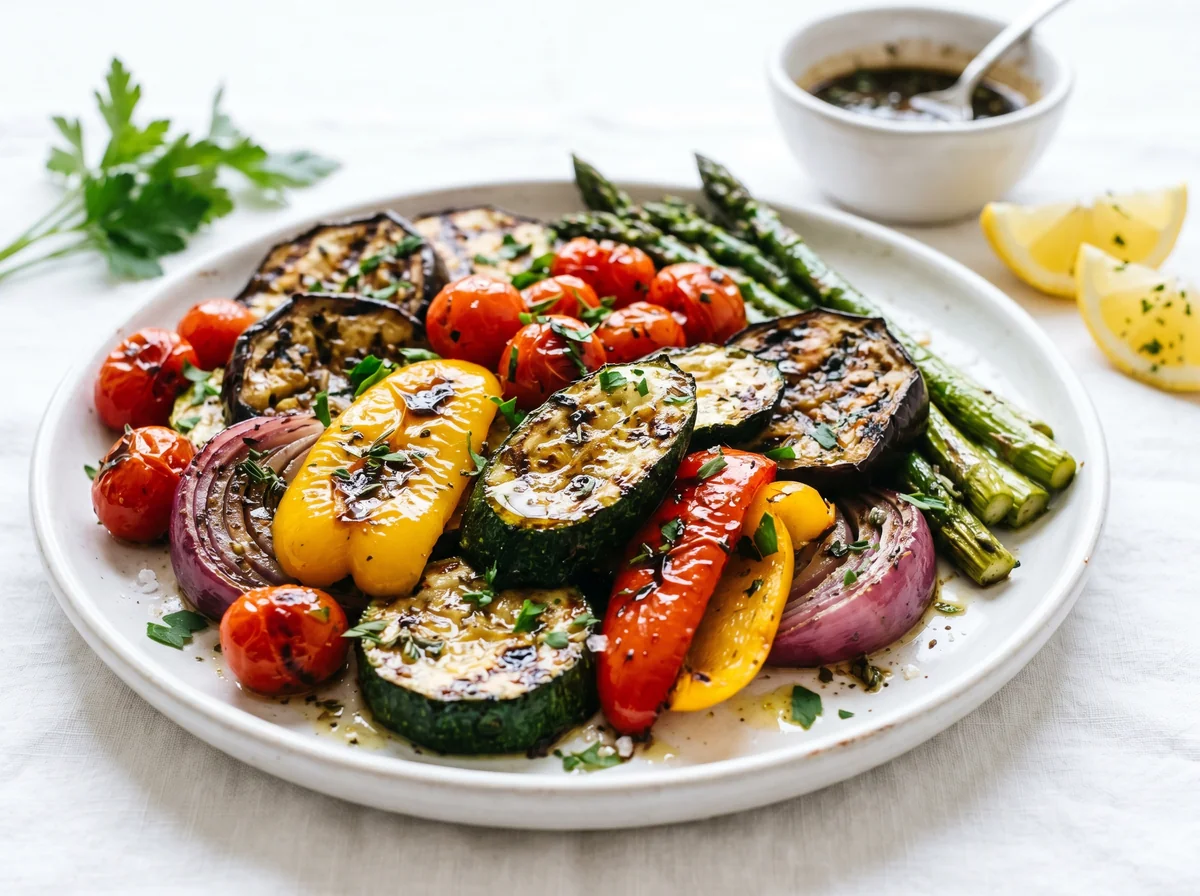
Zucchini, mushrooms, snap peas, and onion marinated in olive oil and balsamic vinegar then grilled until the edges char — a refreshing low-calorie side dish with a sweet-tart flavor that pairs beautifully with rice or salads.
Balsamic vinegar gives grilled vegetables a sweet-tart flavor that caramelizes their edges on the grill.
A light side dish rich in fiber and antioxidants that elevates any simple meal.
Preparation Steps
Prep the vegetables
Slice the zucchini into even-thickness rounds, halve the mushrooms, cut the onion into large chunks, and trim the snap peas. Uniform cuts ensure even cooking on the grill.
Marinate
Toss all the vegetables in a large bowl with the olive oil, balsamic vinegar, salt, and pepper until well coated, then let them sit for 10 minutes to absorb the flavors. The balsamic gives them their signature sweet-tart taste.
Heat the grill
Heat a grill or ridged grill pan over medium-high heat until very hot. High heat gives grill marks without wilting the vegetables.
Grill
Arrange the vegetables on the hot grill and cook, turning occasionally, until the edges are tender and grill marks appear while the centers remain crisp-tender. Do not overcook or they will wilt.
Serve
Serve the grilled vegetables warm or at room temperature as a side dish, or over brown rice or salads. A light, refreshing dish with a distinctive flavor.
Blood Sugar Impact
The glycemic index (GI) measures how quickly a food raises blood sugar, while the glycemic load (GL) measures how much a full serving raises it. Together they give the complete picture.
Glycemic Index
GI
26Low
Low0–55Medium56–69High70+
A low value (≤55) means a gradual rise in blood sugar — the most suitable range for diabetes and insulin resistance.
Glycemic Load
GL
2Low
Low0–10Medium11–19High20+
Glycemic load reflects the impact of the full serving. To lower it: take half a serving, or pair the recipe with a source of protein and fiber.
Nutritional Information
Per ServingMakes 4 servings · one serving is about 230 g of raw ingredients
Calories176 kcal9%of Daily Value*
Protein4 g8%of Daily Value*
Carbohydrates10 g4%of Daily Value*
Fat14 g18%of Daily Value*
Fiber3 g11%of Daily Value*
Sodium594 mg26%of Daily Value*
Potassium528 mg11%of Daily Value*
Phosphorus116 mg9%of Daily Value*
* Percent Daily Values are based on a 2,000-calorie diet per FDA food-label reference values — your daily needs may be higher or lower. Values are derived from the recipe's ingredients via the USDA database.
Troubleshooting
The most common problems when preparing Balsamic Grilled Vegetables, and how to fix them:
Vegetables are dry or tough
Heat is too high or cooking time is too long. Grill over medium-high heat for a set time and let them rest a few minutes before serving.
No grill marks appear
The pan was not hot enough or the surface is wet. Preheat the ridged pan thoroughly and pat the surface dry — do not move the vegetables before the marks form.
Flavor tastes flat
Needs more salt or seasoning. Season well and taste, then add fresh herbs or a squeeze of lemon juice to lift all the flavors.
Storage and Make-Ahead
Refrigerator (4°C)
Two days in a sealed container after cooling. Reheat thoroughly before serving.
Freezer (-18°C)
One to two months in individual portions. Thaw in the refrigerator before reheating.
Meal prep
Prep and cut the ingredients in advance and store in the refrigerator — assembly and cooking takes just minutes at serving time.
Reheating
Reheat over low heat with a splash of water, or in a moderate oven until hot. Do not leave cooked vegetables out of the refrigerator for more than two hours [2].
Tested Ingredient Substitutions
Original Ingredient
Tested Substitute
Ratio
Flavor Difference
Fish
Salmon or shrimp
Same weight
A seafood variation rich in omega-3
Oil/fat
Extra-virgin olive oil
Same amount
Monounsaturated fats better for the heart
Salt
Herbs, spices, and lemon juice
To taste
Reduces sodium while adding plenty of flavor
How Much Does It Make? Scaling Guide
Number of servings
Ratio
2 (individual × 2)
Half the quantities
4 (base)
Quantities as listed
6 (family)
1.5×
8 (entertaining)
Double the quantities
EEINA Nutrition Tip
Grilling with a little olive oil is a healthy technique, and balsamic adds rich flavor for very few calories. A variety of vegetables means a variety of nutrients — and do not over-grill, so the vegetables stay crisp-tender.
Add This Recipe to Your Plan
The EEINA app saves your favorite recipes, calculates them from their real ingredients, and shows your daily numbers toward your goal. Try it free now.
Yes — its glycemic index is low and the protein and fiber slow sugar absorption. Stick to a moderate portion and serve with vegetables or a salad, avoiding large amounts of refined carbohydrates alongside it.
How do I store leftovers?
In a sealed container in the refrigerator for a few days, or in the freezer for future portions (salads and seafood dishes have a shorter shelf life). Reheat thoroughly once.
Can I adapt it to my diet?
Yes — check the substitutions table: you can swap the protein, make it dairy-free or gluten-free, or reduce the salt and fat without losing flavor.
Sources: USDA · University of Sydney · Gulf GSO · Our methodology · Updated on