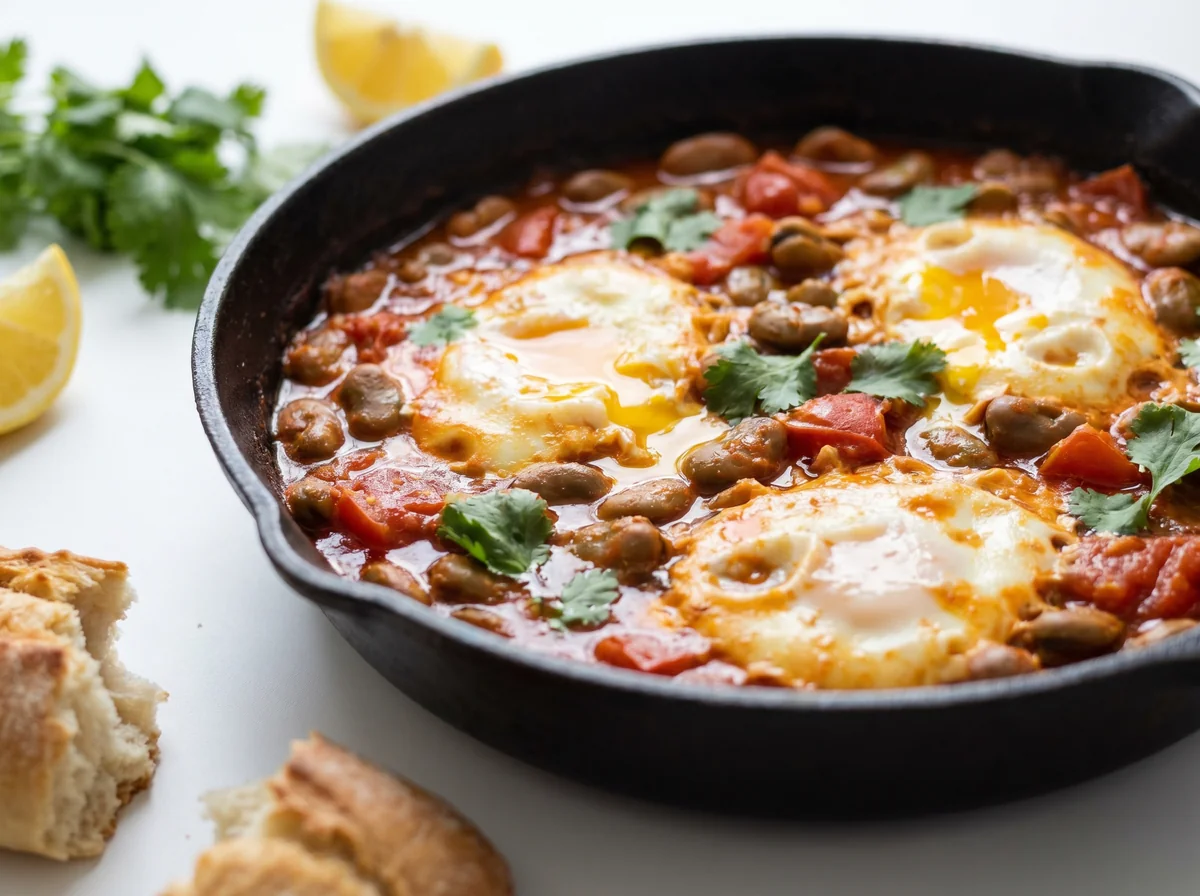
A popular Kuwaiti breakfast — fava beans (bajella) cooked with onion, turmeric, and baharat (Gulf spice blend), then eggs are added and stirred through until just set. A Gulf breakfast rich in protein, low in carbohydrates, containing eggs.
Bajella bil-bid is a beloved Kuwaiti (Gulf) breakfast that combines bajella (fava beans — fresh or dried) with eggs, onion, turmeric, and Gulf spices. The turmeric gives the dish its yellow color and distinctive flavor; the eggs add protein and a rich texture.
It is a filling morning meal (fava beans and eggs together form near-complete protein with fiber), eaten with bread and tea in Kuwaiti and Gulf households. Similar in concept to Egyptian fava beans with eggs but with a Gulf spice profile (turmeric and baharat). Its high protein and fiber content and simplicity have made it a beloved popular breakfast.
Preparation Steps
Prepare the bajella
Use bajella (fava beans): fresh, or dried and soaked then cooked until tender. The bajella is the base of the dish — cook dried beans until fully soft, or use fresh boiled fava beans.
Sauté the onion and spices
Fry the chopped onion in the oil until softened. Add the garlic, turmeric, and Gulf baharat (spice blend) and stir for one minute until fragrant. The turmeric and baharat give the bajella its yellow color and distinctive Gulf flavor.
Add the bajella
Add the cooked bajella, a little water, salt, and pepper, and stir until the beans are well coated with the spices and heated through (you can lightly mash some for a thicker consistency). The bajella absorbs the baharat and turmeric, turning into a yellow, well-seasoned base.
Add the eggs
Crack the eggs over the bajella (or lightly beat and pour in), then stir over gentle heat until the eggs are just cooked and folded through the beans. The scrambled egg through the bajella is the hallmark of the dish — adding protein and a rich, creamy texture.
Adjust the consistency
Cook until the eggs are set and well mixed with the bajella — a moist, rich consistency, not dry. Do not overcook the eggs (they will become rubbery); keep them soft and tender throughout. Add cilantro and chili (optional) for freshness.
Serve
Serve the bajella bil-bid hot with bread (for dipping) and tea. A popular Kuwaiti (Gulf) breakfast rich in protein — warm, spiced fava beans with egg, a satisfying and nourishing morning meal.
Blood Sugar Impact
The glycemic index (GI) measures how quickly a food raises blood sugar, while the glycemic load (GL) measures how much a full serving raises it. Together they give the complete picture.
Glycemic Index
GI
27Low
Low0–55Medium56–69High70+
A low value (≤55) means a gradual rise in blood sugar — the most suitable range for diabetes and insulin resistance.
Glycemic Load
GL
5Low
Low0–10Medium11–19High20+
Glycemic load reflects the impact of the full serving. To lower it: take half a serving, or pair the recipe with a source of protein and fiber.
Nutritional Information
Per ServingMakes 3 servings · one serving is about 200 g of raw ingredients
Calories211 kcal11%of Daily Value*
Protein16 g32%of Daily Value*
Carbohydrates26 g9%of Daily Value*
Fat5 g6%of Daily Value*
Fiber6 g21%of Daily Value*
Sodium78 mg3%of Daily Value*
* Percent Daily Values are based on a 2,000-calorie diet per FDA food-label reference values — your daily needs may be higher or lower. Values are derived from the recipe's ingredients via the USDA database.
Troubleshooting
The most common problems when preparing Kuwaiti Bajella with Eggs (Spiced Fava Beans), and how to fix them:
Bajella is still hard
Not cooked enough (dried beans). Soak dried fava beans and cook until fully tender before adding the eggs, or use fresh boiled fava beans. Soft beans are the foundation of a good dish.
Eggs are dry and rubbery
Overcooked. Add the eggs at the end and stir only until just set, over medium heat. Gently cooked eggs remain soft and blended with the beans, not hard.
Flavor is bland
Not enough turmeric, baharat, or onion. Turmeric, Gulf baharat, and sautéed onion are the distinctive flavor of bajella — be generous with them. Turmeric especially provides color and flavor. Cilantro adds freshness.
Dish is too dry
Too little liquid or oil. Add a splash of water with the bajella (the dish should be moist and rich), plus a little oil. The eggs also add moisture. Add water if it dries out.
Beans are completely mashed (porridge consistency)
Over-mashed. Only lightly mash some of the bajella (if you want a thicker consistency); keep most of the beans whole. The dish has intact bean pieces with egg folded through — not a smooth mash.
Storage and Make-Ahead
Refrigerator (4°C)
Bajella bil-bid keeps in a sealed container in the refrigerator for 2 days (contains egg); reheat gently over low heat. Best eaten fresh (the eggs). You can prepare the spiced bajella ahead and add fresh eggs when serving.
Cooked bajella (without eggs)
The cooked, spiced bajella (without eggs) keeps refrigerated for 3 days or frozen for 2 months; reheat and add fresh eggs at serving time. This is better than storing the full dish with eggs.
Advance prep
Cook the dried fava beans ahead (keep refrigerated or frozen); then prepare the dish quickly in the morning (sauté, season, and add eggs). A fast breakfast when the beans are ready. Fresh fava beans also keep well cooked.
Food safety
Cook the eggs fully (food safety), cook the beans through, cool leftovers quickly, do not leave outside refrigeration for more than 2 hours, and reheat thoroughly. Use fresh eggs.
Tested Ingredient Substitutions
Original Ingredient
Tested Substitute
Ratio
Flavor Difference
bajella (fava beans)
ful medames or white beans
same amount
Fresh or dried fava beans are traditional; ful medames or white beans are good legume alternatives — all provide plant protein and fiber with the eggs
3 whole eggs
2 whole eggs + 2 egg whites
—
Reduces cholesterol while keeping the protein; a mix of whole and whites is a lighter option
oil
less oil or an oil spray
less
Reduces added fat; the beans and eggs are already rich, so a little oil is enough for sautéing
How Much Does It Make? Scaling Guide
Servings
Bajella
Eggs
Onion
2 (small)
1 1/2 cups
2
1/2
3 (base)
2 cups
3
1
6 (family)
4 cups
6
2
EEINA Nutrition Tip
Bajella bil-bid is an excellent healthy breakfast: fava beans provide plant protein and fiber (filling, supports digestion and blood sugar regulation), eggs provide complete high-quality protein and vitamins, turmeric is anti-inflammatory, and the glycemic load is very low (keeps you full for hours, stabilizes blood sugar — an ideal breakfast). Minor considerations: cholesterol (eggs, in moderation), sodium, and oil. For the best version: use moderate oil, some egg whites, plenty of bajella and cilantro, less salt, and serve with whole grain bread. Note: those with G6PD (favism) should avoid fava beans.
Add This Recipe to Your Plan
The EEINA app saves your favorite recipes, calculates them from their real ingredients, and shows your daily numbers toward your goal. Try it free now.
A popular Kuwaiti (Gulf) breakfast combining bajella (fava beans — fresh or dried) with eggs, onion, turmeric, and Gulf spices. Turmeric gives it a yellow color and distinctive flavor; eggs add protein and a rich texture. A filling morning meal eaten with bread and tea, rich in protein and fiber — similar to Egyptian fava with egg but with a Gulf spice profile.
What is bajella?
Bajella is the word for fava beans in Gulf and Iraqi dialect. They are boiled and eaten as a street food (especially in winter) or cooked in dishes like bajella bil-bid and rice with bajella. A popular Gulf and Iraqi food, rich in protein and fiber.
Should I use fresh or dried fava beans?
Both work: fresh fava beans are milder and faster (just blanch briefly); dried beans have a deeper flavor but need soaking and longer cooking until tender. Fresh are preferred in season; dried work well out of season. Either gives a delicious bajella bil-bid — choose whichever is available.
Is bajella bil-bid healthy?
Yes, an excellent breakfast: fava beans provide plant protein and fiber (filling, stabilizes blood sugar), eggs provide complete protein and vitamins, turmeric is anti-inflammatory, and the glycemic load is very low (keeps you full for hours — an ideal breakfast). Minor considerations: cholesterol (eggs), sodium, and oil. Use moderate oil, some egg whites, and less salt, with whole grain bread. Note: those with G6PD (favism) should avoid fava beans.
Sources: USDA · University of Sydney · Gulf GSO · Our methodology · Updated on