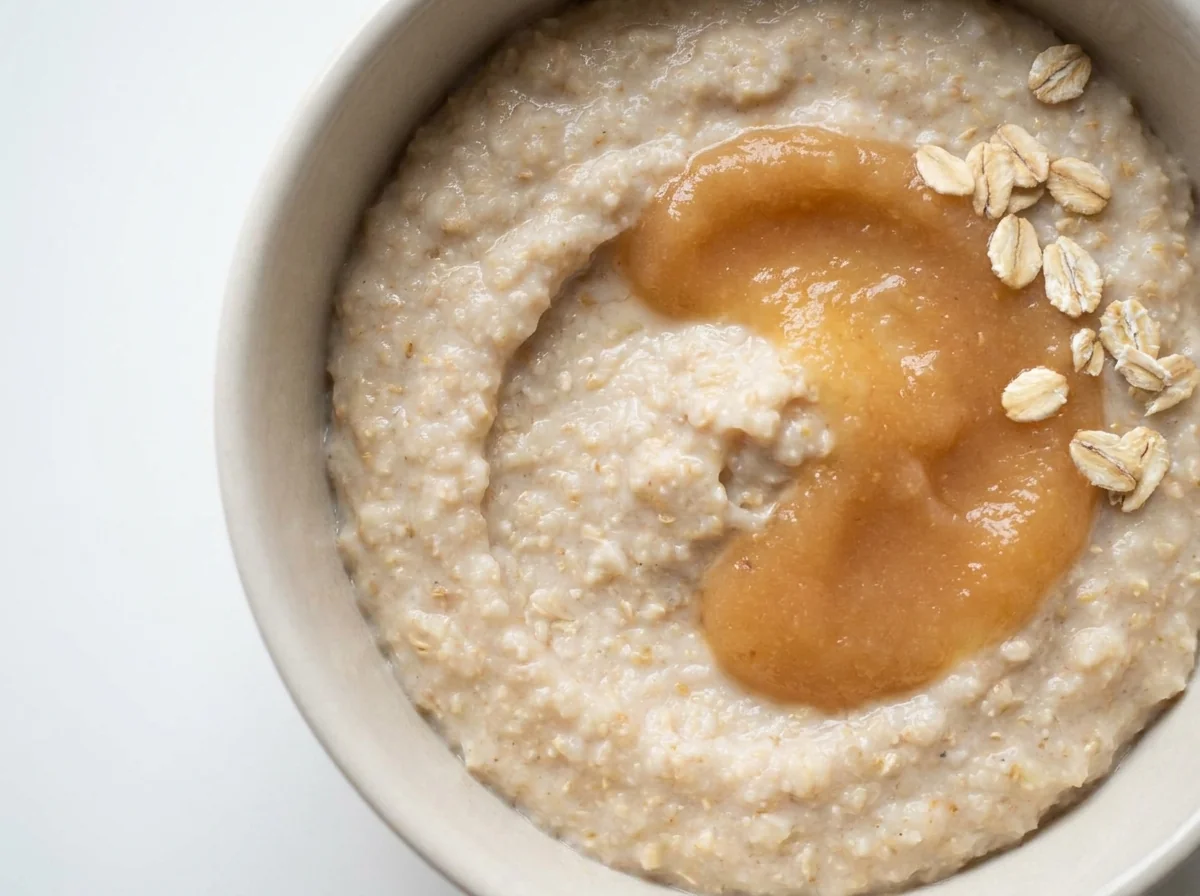
Ground baby oatmeal is a homemade cereal from a single ingredient, and an alternative to commercial cereal boxes at about a quarter of the price and with no additives.
A whole grain with its iron and fiber, ground once a month, is enough for breakfast every morning.
Preparation Steps
Grind the oats into a fine flour
Grind the whole oats in a spice grinder or food processor until they become a fine flour, and keep it in a sealed jar that lasts a month. This is a homemade baby cereal from a single known ingredient.
Cook two spoonfuls with water for five minutes
Cook two tablespoons of the ground oats with the water over low heat, stirring constantly, and it thickens into a smooth porridge within minutes.
Thin with the baby's usual milk
Off the heat, add spoonfuls of the baby's usual milk to reach the texture suited to its age, since the familiar taste eases acceptance.
No sugar, no honey, no salt
The same rule applies to all baby food, and the sweetness comes later from mashed fruit cubes, not from sugar.
A breakfast that evolves with the child's age
It is served plain first, then with an apple or sweet potato cube melted into it, and as the months progress the oats are ground gradually coarser until the child eats the family's own oatmeal near the end of the first year.
Blood Sugar Impact
The glycemic index (GI) measures how quickly a food raises blood sugar, while the glycemic load (GL) measures how much a full serving raises it. Together they give the complete picture.
Glycemic Index
GI
55Low
Low0–55Medium56–69High70+
A low value (≤55) means a gradual rise in blood sugar — the most suitable range for diabetes and insulin resistance.
Glycemic Load
GL
8Low
Low0–10Medium11–19High20+
Glycemic load reflects the impact of the full serving. To lower it: take half a serving, or pair the recipe with a source of protein and fiber.
Nutritional Information
Per ServingMakes 6 servings · one serving is about 60 g of raw ingredients
Calories97 kcal5%of Daily Value*
Protein4 g8%of Daily Value*
Carbohydrates17 g6%of Daily Value*
Fat2 g3%of Daily Value*
Fiber3 g11%of Daily Value*
Sodium0 mg0%of Daily Value*
Potassium107 mg2%of Daily Value*
Phosphorus131 mg10%of Daily Value*
* Percent Daily Values are based on a 2,000-calorie diet per FDA food-label reference values — your daily needs may be higher or lower. Values are derived from the recipe's ingredients via the USDA database.
Troubleshooting
The most common problems when preparing Homemade Ground Baby Oatmeal Cereal (6 Months+), and how to fix them:
The porridge formed lumps
The ground oats were added to hot water. Start with cold water and stir from the very first moment, as this is the general rule for cooking starch.
It came out sticky
It was cooked too long over high heat. Stick to low heat and the five minutes, since overcooking makes the oats sticky.
Refusal of its plain taste
Its taste really is neutral. Melt an apple cube into it at the start, then reduce its share gradually, and do not add sugar however easy the solution seems.
Worry about gluten
Pure oats do not contain wheat gluten originally, but factory cross-contamination is possible. With a family history of celiac disease, consult the doctor before introducing it.
Storage and Make-Ahead
The dry ground oats
A sealed jar for a month, away from moisture.
The cooked porridge
Cooked fresh each time, and the day's leftover is kept in the fridge for that day only.
Combining with the purees
Frozen puree cubes are melted into the hot porridge, making a composite breakfast with no extra effort.
Tested Ingredient Substitutions
Original Ingredient
Tested Substitute
Ratio
Flavor Difference
The oats
Ground rice
~
Rice cereal is the alternative first grain
The cooking water
Half of it the baby's milk from the start
~
Richer and closer to its familiar taste
Combining
Fresh mashed apple, pear, or banana
~
Any fruits the child has accepted work
Upgrade at 9 months+
Coarser grind with soft banana pieces in it
~
Chewing practice begins with the coarser grind
How Much Does It Make? Scaling Guide
Ingredient
Month's jar (~20 meals)
0.5 jar
2 jars
Oats
150 g
75 g
300 g
Single meal
2 tbsp
~
~
Cooking the meal
5 min
5 min
5 min
EEINA Nutrition Tip
Grind a full month's batch and cook one meal each day: the porridge is cooked fresh every time because it takes only minutes, while the grinding is the bigger effort, so it is done once. And a spoonful of the ground oats thickens any thin puree instantly, making it the most suitable thickener in baby food.
Add This Recipe to Your Plan
The EEINA app saves your favorite recipes, calculates them from their real ingredients, and shows your daily numbers toward your goal. Try it free now.
A single known ingredient at about a quarter of the price, while some boxes add sugars and flavors the baby does not need in the stage when its palate is forming.
Where is the iron that fortified boxes mention?
A fair question: boxes are fortified with extra iron indeed, and the oats' natural iron is less than that. Discuss the child's full iron sources (mashed meats and legumes later) with the doctor, since what matters is the total diet, not a single item.
Why is oats the first grain suggested?
Because it is gentler on digestion than wheat, richer than white rice, and away from the arsenic concern raised around rice cereal, making it a good middle ground among the first grains.
A travel meal?
Yes, the dry ground oats are put in a small container and prepared with hot water anywhere: a light, instant homemade cereal.