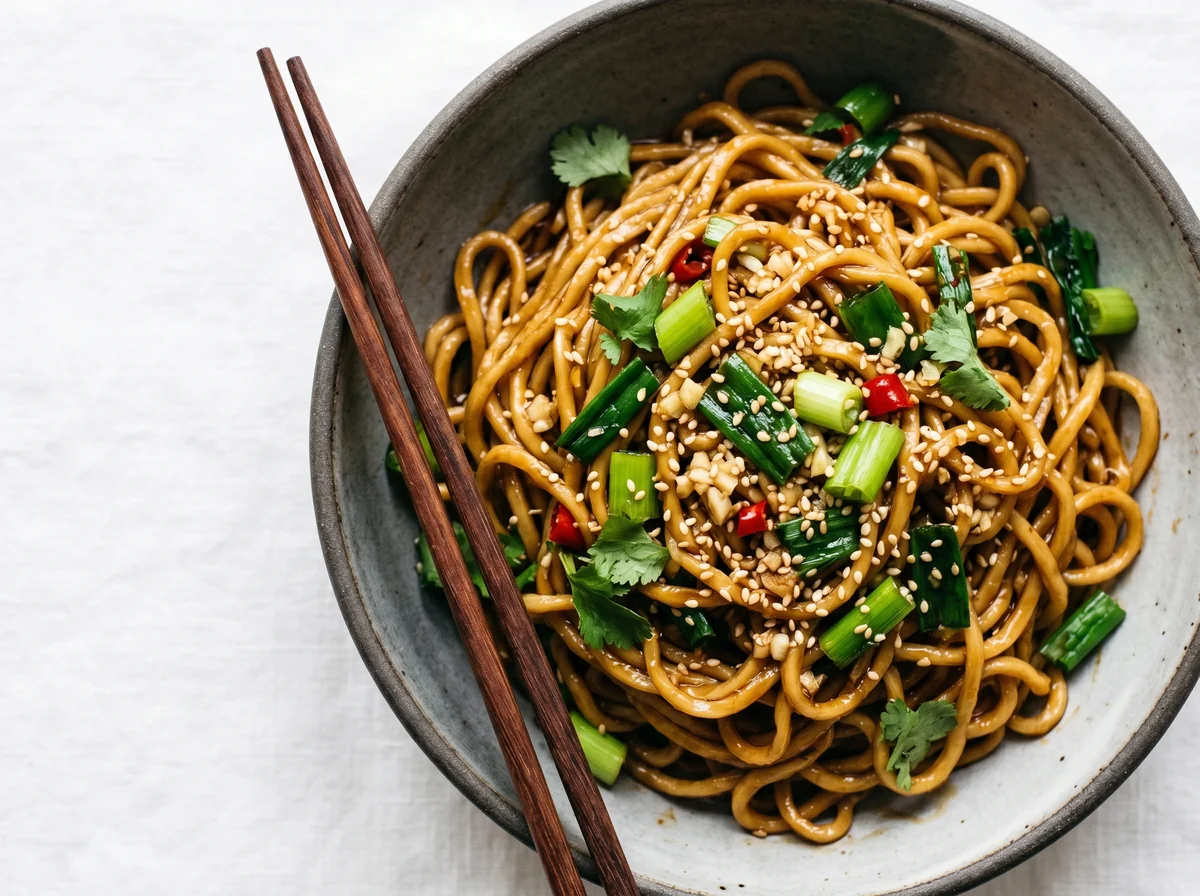
Thin spaghetti tossed in golden garlic butter with oyster sauce, soy sauce, and sesame oil, finished with green onion and Parmesan — a quick dish with deep garlic flavor that pairs Asian richness with everyday simplicity.
Asian garlic noodles are a quick, deeply satisfying dish built on garlic fried in butter with the depth of oyster sauce.
We chose whole-wheat spaghetti to boost fiber — a comforting bowl that comes together in 20 minutes.
Preparation Steps
Cook the spaghetti
Cook the spaghetti in generously salted boiling water until al dente. Reserve a small cup of pasta water, then drain. The pasta water helps bind the sauce later.
Make the garlic butter
Melt the butter over low heat, add the sliced garlic, and stir until golden and fragrant — do not let it burn. Golden garlic butter is the soul of this dish.
Mix the soy sauce blend
In a small bowl, combine the oyster sauce, soy sauce, sugar, and sesame oil. This mixture delivers the balanced sweet-salty Asian flavor.
Combine the noodles
Add the drained spaghetti to the garlic butter, pour in the soy sauce blend and a pinch of turmeric, and toss with a splash of pasta water until the noodles are fully coated and glossy.
Lightly caramelize
Leave the noodles over the heat for one minute, tossing to absorb the flavor — allow the bottom to lightly char for deeper taste. Taste and adjust salt.
Serve
Transfer the noodles to plates and top with sliced green onion and grated Parmesan. Serve hot — a fast garlic noodle dish full of rich flavor.
Blood Sugar Impact
The glycemic index (GI) measures how quickly a food raises blood sugar, while the glycemic load (GL) measures how much a full serving raises it. Together they give the complete picture.
Glycemic Index
GI
46Low
Low0–55Medium56–69High70+
A low value (≤55) means a gradual rise in blood sugar — the most suitable range for diabetes and insulin resistance.
Glycemic Load
GL
28High
Low0–10Medium11–19High20+
Glycemic load reflects the impact of the full serving. To lower it: take half a serving, or pair the recipe with a source of protein and fiber.
Nutritional Information
Per ServingMakes 4 servings · one serving is about 135 g of raw ingredients
Calories441 kcal22%of Daily Value*
Protein15 g30%of Daily Value*
Carbohydrates68 g25%of Daily Value*
Fat15 g19%of Daily Value*
Fiber8 g29%of Daily Value*
Sodium418 mg18%of Daily Value*
Potassium450 mg10%of Daily Value*
Phosphorus356 mg28%of Daily Value*
* Percent Daily Values are based on a 2,000-calorie diet per FDA food-label reference values — your daily needs may be higher or lower. Values are derived from the recipe's ingredients via the USDA database.
Troubleshooting
The most common problems when preparing Asian Garlic Noodles, and how to fix them:
Noodles stuck to the pan
Too little oil or a cold pan. Heat the pan and add enough oil before adding ingredients, and avoid overcrowding.
Vegetables wilted and watery
Heat too low or cooked too long. Stir-fry over high heat for a short time to keep vegetables crisp and vibrant.
Flavor tastes flat
Not enough salt or seasoning. Season well and taste, then add a fresh herb or a squeeze of lemon to lift all the flavors.
Storage and Make-Ahead
Refrigerator (4°C)
2 days in an airtight container after cooling. Reheat thoroughly before serving.
Freezer (-18°C)
1 to 2 months in individual portions. Thaw in the refrigerator before reheating.
Meal prep
Prep and chop ingredients ahead and store in the fridge — assembly and cooking takes only minutes at serving time.
Reheating
Over low heat with a splash of water, or in a moderate oven until hot. Do not leave out of the fridge for more than 2 hours [2].
Tested Ingredient Substitutions
Original Ingredient
Tested Substitute
Ratio
Flavor Difference
Seafood
Salmon or shrimp
Same weight
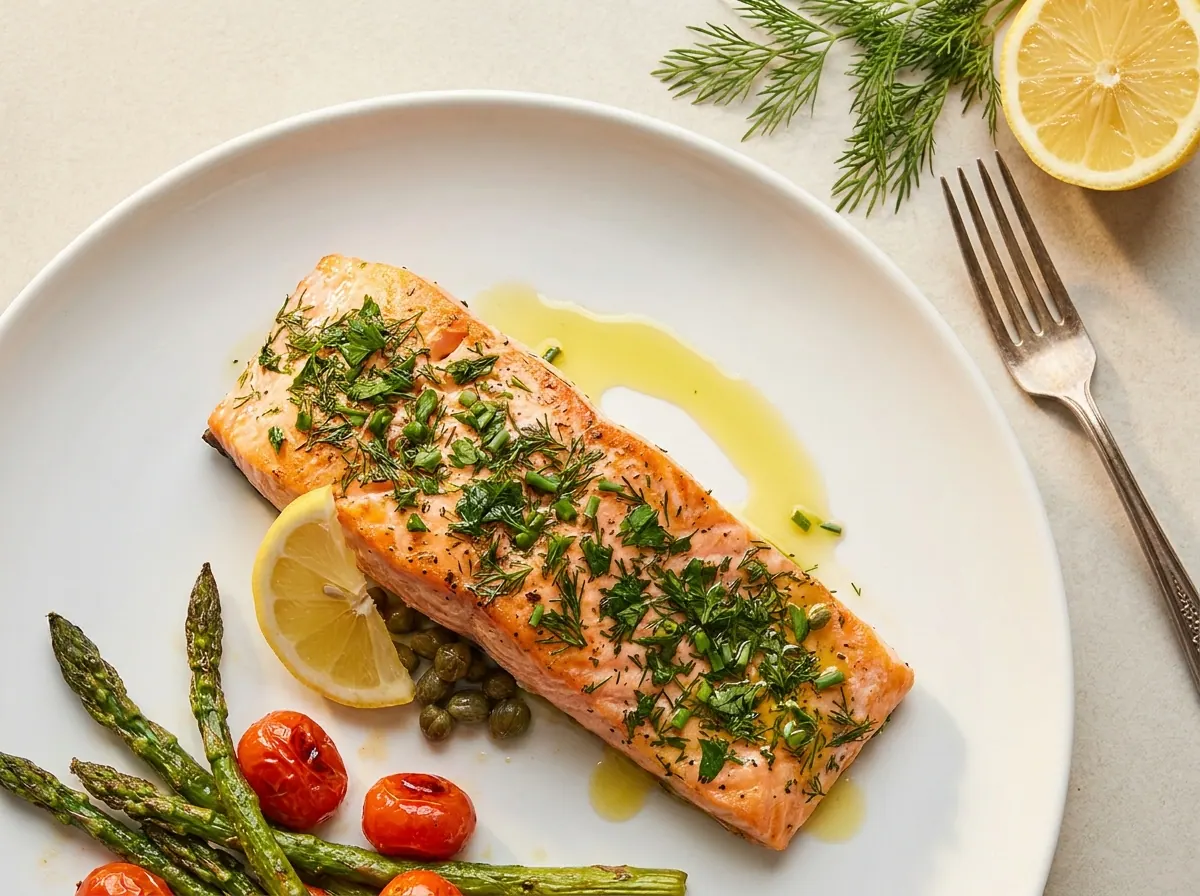
A seafood variation rich in omega-3
Dairy (cheese)
Low-fat cheese or a plant-based alternative
Same quantity
To reduce fat or for a dairy-free version
Wheat component
Gluten-free alternative (rice, lentil, or whole-grain pasta as appropriate)
Same quantity
For those sensitive to gluten
Oil or fat
Extra-virgin olive oil
Same quantity
Monounsaturated fats that are more heart-friendly
Salt
Herbs, spices, and lemon juice
To taste
Reduces sodium while maintaining plenty of flavor
How Much Does It Make? Scaling Guide
Number of servings
Ratio
2 (individual × 2)
Half the quantities
4 (base)
Quantities as listed
6 (family)
1.5×
8 (entertaining)
Double the quantities
EEINA Nutrition Tip
Choose whole-wheat spaghetti to raise fiber and lower the glycemic load, and keep your noodle portion moderate. Use low-sodium soy sauce, and consider reducing the butter slightly. Balance the bowl with a protein and some vegetables.
Add This Recipe to Your Plan
The EEINA app saves your favorite recipes, calculates them from their real ingredients, and shows your daily numbers toward your goal. Try it free now.
With moderation — the glycemic index is low and protein and fiber slow sugar absorption. Stick to a moderate portion and pair it with vegetables or a salad, avoiding excess refined starches alongside.
How do I store leftovers?
In an airtight container in the fridge for a few days, or in the freezer for later portions (seafood dishes have a shorter shelf life). Reheat to piping hot once only.
Can I adapt this to fit my diet?
Yes — check the substitutions table: you can swap the protein, make it dairy-free or gluten-free, or reduce salt and fat without losing the flavor.
Sources: USDA · University of Sydney · Gulf GSO · Our methodology · Updated on