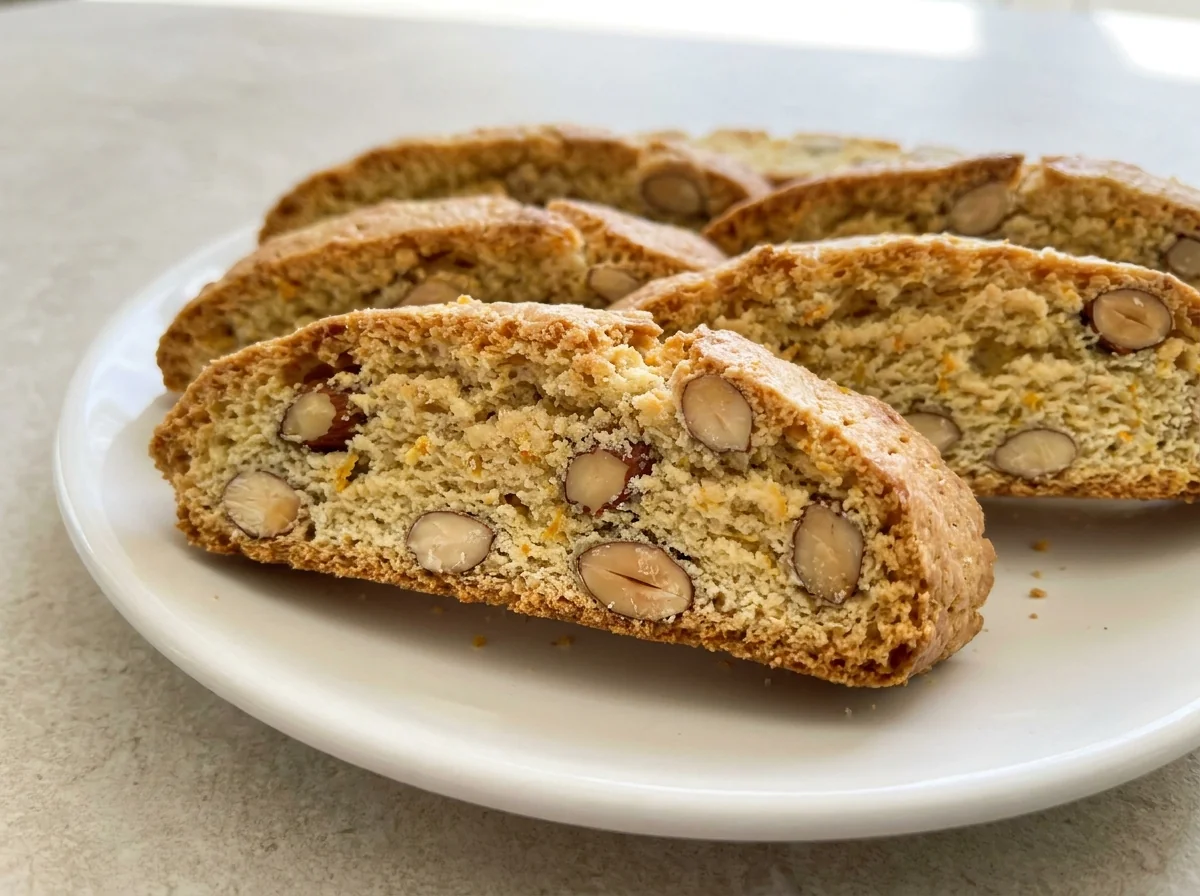
Biscotti is an old Italian sweet from Tuscany; its name means twice-baked, and this double baking is the secret of its dryness that lets it keep for a long time and be dipped in coffee or tea.
Preparation Steps
Prepare the oven
Heat the oven to 170 degrees Celsius and line a tray with parchment paper, so the dough does not stick and bakes with gentle, even heat.
Mix the dry ingredients
Mix the flour, baking powder, and salt in a bowl, so the leavener distributes well and the biscotti rise evenly.
Cream the sugar and butter
Beat the sugar with the soft butter for two minutes until the mixture is creamy and pale, so some air enters and gives a softer texture.
Add the eggs
Add the eggs, vanilla, and orange zest and beat until smooth, so the dough comes together and takes on a pleasant citrus aroma.
Fold in the almonds
Add the dry mixture and the almonds and knead by hand until a slightly sticky dough forms, without overkneading so it does not turn tough.
Shape the logs
Shape the dough on the tray into two rectangular logs about 6 centimeters wide, so the slices of the second bake come out even.
First bake
Bake for 25 minutes until the surface sets and turns light golden; this bake cooks the center before slicing.
Cool and slice
Let the two logs cool for 10 minutes, then cut them into diagonal slices one centimeter thick, so they do not crumble while hot.
Second bake
Return the slices to the tray on their side and bake for 12 minutes, flipping them halfway through, until they dry out and turn crunchy on both sides.
Final cooling
Let the biscotti cool completely on a rack; the crunch completes after it cools and sets.
Blood Sugar Impact
The glycemic index (GI) measures how quickly a food raises blood sugar, while the glycemic load (GL) measures how much a full serving raises it. Together they give the complete picture.
Glycemic Index
GI
68Medium
Low0–55Medium56–69High70+
A low value (≤55) means a gradual rise in blood sugar — the most suitable range for diabetes and insulin resistance.
Glycemic Load
GL
37High
Low0–10Medium11–19High20+
Glycemic load reflects the impact of the full serving. To lower it: take half a serving, or pair the recipe with a source of protein and fiber.
Nutritional Information
Per ServingMakes 6 servings · one serving is about 110 g of raw ingredients
Calories414 kcal21%of Daily Value*
Protein11 g22%of Daily Value*
Carbohydrates58 g21%of Daily Value*
Fat16 g21%of Daily Value*
Fiber4 g14%of Daily Value*
Sodium432 mg19%of Daily Value*
Potassium217 mg5%of Daily Value*
Phosphorus275 mg22%of Daily Value*
* Percent Daily Values are based on a 2,000-calorie diet per FDA food-label reference values — your daily needs may be higher or lower. Values are derived from the recipe's ingredients via the USDA database.
Troubleshooting
The most common problems when preparing Almond Biscotti, and how to fix them:
The biscotti are soft, not crunchy
Usually the second bake was too short; extend it a little and make sure the slices are thin and even.
The slices crumble when cutting
You cut them too hot; let them cool for ten minutes and use a serrated knife with a gentle sawing motion.
The dough is too sticky to shape
Wet your hands with a little water or sprinkle a little flour, and do not add too much flour so it does not turn tough.
The almonds burn
Toast the almonds only lightly before mixing, as the two bakes will complete their toasting.
Storage and Make-Ahead
Room temperature
In an airtight container away from humidity for up to two weeks; this is the best place for it to stay crunchy.
Freezer
Withstands freezing for up to three months in a sealed bag, and let it return to room temperature before serving.
Tested Ingredient Substitutions
Original Ingredient
Tested Substitute
Ratio
Flavor Difference
Almonds
Hazelnuts or pistachios
Same weight
Changes the flavor while the texture stays crunchy
Orange zest
Lemon zest
Same amount
A tarter, fresher flavor
White sugar
Brown sugar
Same weight
Darker color and a light caramel flavor
Butter
Light vegetable oil
20 ml instead of 30 g
Becomes dairy-free with a closer texture
How Much Does It Make? Scaling Guide
Ingredient
2 servings
4 servings (base)
8 servings
All-purpose white flour
85 g
170 g
340 g
Sugar
45 g
90 g
180 g
Almonds
40 g
80 g
160 g
Butter
15 g
30 g
60 g
EEINA Nutrition Tip
Baking twice drives the moisture out of the dough, which is why biscotti last longer on the shelf compared to ordinary cookies. Let them cool completely before storing so they do not sweat and soften.
Add This Recipe to Your Plan
The EEINA app saves your favorite recipes, calculates them from their real ingredients, and shows your daily numbers toward your goal. Try it free now.