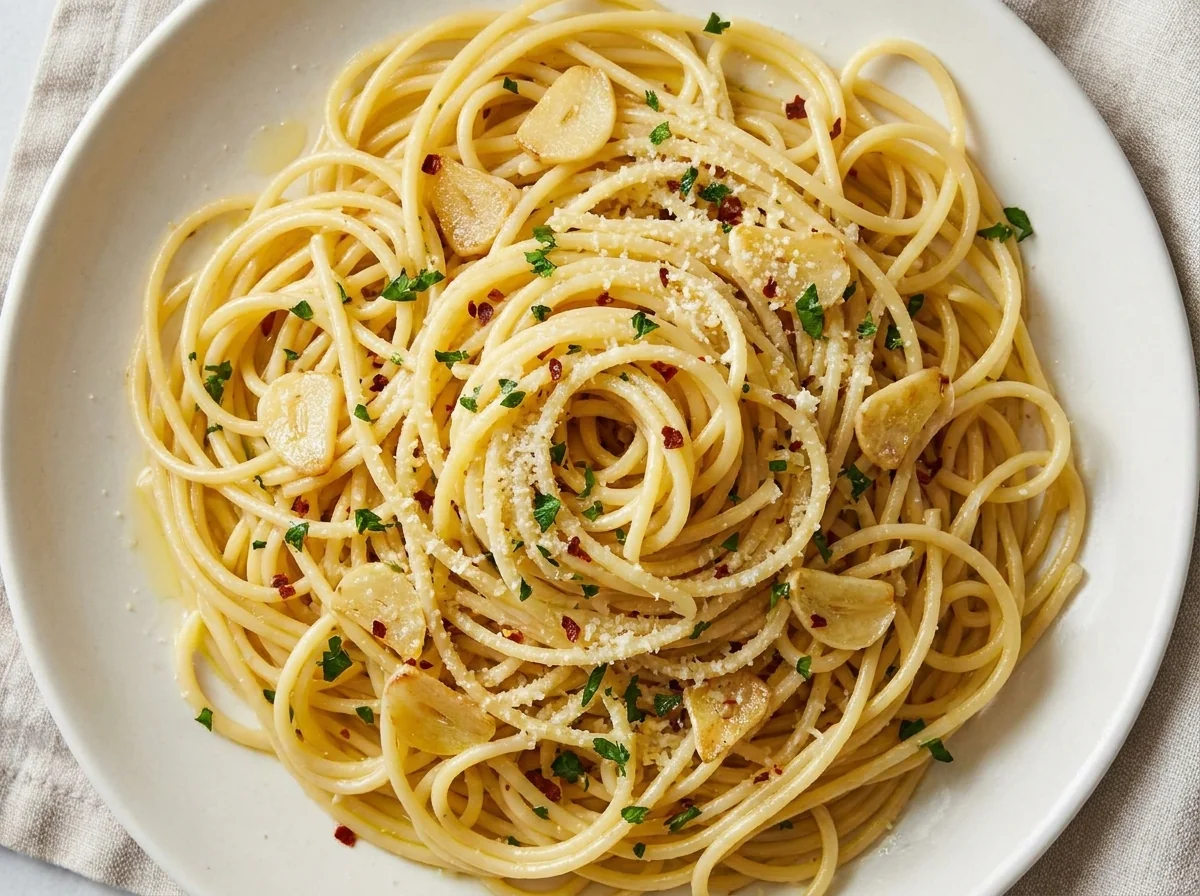
Aglio e olio means garlic and oil in Italian, and it is one of the most famous and simplest dishes of Italian cuisine: four ingredients available in any home make a quick dinner that became famous in Naples.
Cooks are tested on it because its success depends entirely on getting the browning of the garlic and the mixing of the sauce right.
Preparation Steps
Boil the spaghetti in well-salted water
Bring a large pot of water to a boil with plenty of salt, as the boiling water is the only seasoning for the pasta from the inside. Boil the spaghetti one minute less than the time written on the package, because it finishes cooking with the sauce, and reserve a cup of the boiling water before draining because you need it to build the sauce.
Brown the garlic over low heat
Peel the garlic and cut it into thin slices. In a wide pan over low heat, put the olive oil and the garlic slices together from the start, so the garlic browns slowly and the oil takes on its flavor without burning. You want a light golden color, not brown, because burnt garlic gives a bitterness that ruins the whole dish. Add the crushed pepper in the final seconds.
Toss the pasta with the oil and pasta water
Move the drained spaghetti to the pan with half a cup of the reserved pasta water, and toss and shake the pan vigorously for a full minute. The starch in the water blends with the oil to form a smooth sauce that coats every strand of pasta, and this vigorous tossing is the most important step in the dish.
Add the parsley and serve immediately
Wash the parsley and chop it finely. Turn off the heat and toss in the chopped parsley, add a squeeze of lemon if you like, and serve immediately with a sprinkle of parmesan. The dish is ready within fifteen minutes from four basic ingredients.
Blood Sugar Impact
The glycemic index (GI) measures how quickly a food raises blood sugar, while the glycemic load (GL) measures how much a full serving raises it. Together they give the complete picture.
Glycemic Index
GI
47Low
Low0–55Medium56–69High70+
A low value (≤55) means a gradual rise in blood sugar — the most suitable range for diabetes and insulin resistance.
Glycemic Load
GL
36High
Low0–10Medium11–19High20+
Glycemic load reflects the impact of the full serving. To lower it: take half a serving, or pair the recipe with a source of protein and fiber.
Nutritional Information
Per ServingMakes 2 servings · one serving is about 170 g of raw ingredients
Calories603 kcal30%of Daily Value*
Protein16 g32%of Daily Value*
Carbohydrates80 g29%of Daily Value*
Fat25 g32%of Daily Value*
Fiber3 g11%of Daily Value*
Sodium377 mg16%of Daily Value*
Potassium345 mg7%of Daily Value*
Phosphorus245 mg20%of Daily Value*
* Percent Daily Values are based on a 2,000-calorie diet per FDA food-label reference values — your daily needs may be higher or lower. Values are derived from the recipe's ingredients via the USDA database.
Troubleshooting
The most common problems when preparing Garlic, Oil, and Chili Pasta (Aglio e Olio), and how to fix them:
The garlic burned and the taste turned bitter
The garlic went into hot oil or over high heat. The correct way is to put the garlic with cold oil together over low heat until a light golden color, then remove it from the heat immediately.
The sauce did not form and the oil stayed separated
The cause is missing pasta water or weak tossing. Add half a cup of pasta water and toss vigorously for a full minute until the starch blends with the oil and a creamy sauce forms.
The dish is low on flavor despite the garlic
The pasta water was low on salt. Salt the pasta water generously, as it is the only internal seasoning for the pasta and cannot be made up for after boiling.
It dried out on the plate within minutes
This is the nature of the dish because its sauce is light. Eat it as soon as it is made, and a spoon of the reserved pasta water re-moistens it if it dries.
Storage and Make-Ahead
Immediately
Eaten as soon as it is made.
Not stored
The sauce separates when chilled, so cook it fresh each time within fifteen minutes.
Make ahead
Nothing is prepared ahead here, as its ingredients are pantry staples and the whole preparation takes fifteen minutes.
Tested Ingredient Substitutions
Original Ingredient
Tested Substitute
Ratio
Flavor Difference
White spaghetti
Whole-wheat spaghetti
1:1
Higher fiber with a flavor that suits the garlic
Crushed pepper
Reduce it or omit it
~
A version suitable for children, though the pepper is part of the original dish
Adding protein
Garlic shrimp or tuna
200 g
Turns the dish into a complete dinner
Parmesan
Omit it
~
The original Neapolitan version has no cheese at all
How Much Does It Make? Scaling Guide
Ingredient
2 servings
1 serving
4 servings
Spaghetti
200 g
100 g
400 g
Olive oil
45 ml
25 ml
90 ml
Garlic
15 g
8 g
30 g
EEINA Nutrition Tip
Reserve a cup of the pasta water before draining, as the starch in it is what turns the oil into a sauce that clings to the pasta strands. Without it the oil stays separated at the bottom of the plate and the pasta comes out dry.
Add This Recipe to Your Plan
The EEINA app saves your favorite recipes, calculates them from their real ingredients, and shows your daily numbers toward your goal. Try it free now.
It is a carbohydrate dish with good oil, and it is rounded out with shrimp, tuna, or a side egg salad, or left as a light dinner as it is served in Italy.
Why are cooks tested on it?
Because its mistakes show up directly: burnt garlic, a separated sauce, or missing salt, since there are not many ingredients to cover up the error.
The amount of olive oil is large, is it acceptable?
It is the only fat in the dish, and most of it is monounsaturated fat. A serving has about two and a quarter spoons, which is a reasonable amount for someone who makes the dish their main meal within a balanced day.
What is the secret to pasta restaurants' creaminess without cream?
The same method: starchy pasta water with oil and vigorous tossing. This method works for any pasta with an oil-based sauce.