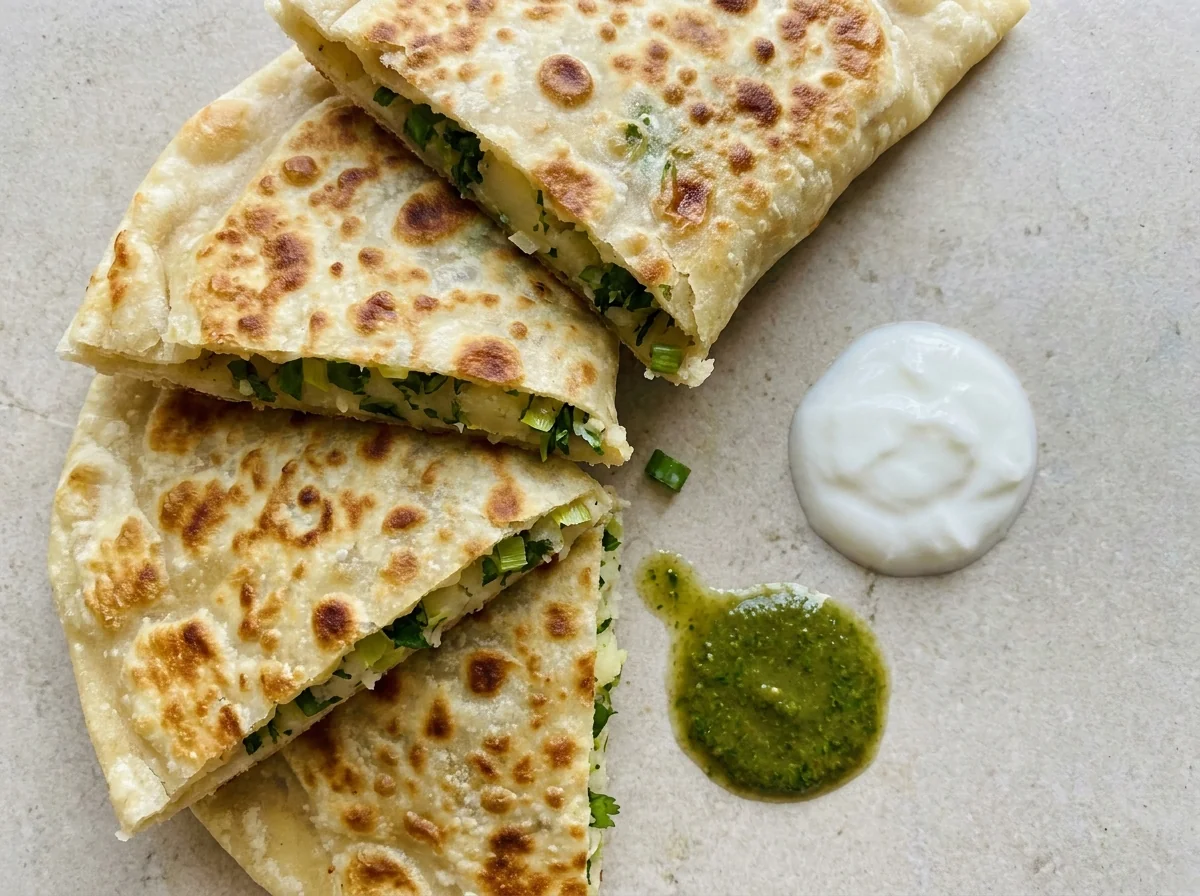
Bolani is a traditional Afghan pastry made of thin flatbread stuffed with potatoes or leek and herbs, folded into a half-moon and shallow-fried until crisp.
In Afghanistan it is served as an appetizer or a light meal with yogurt or coriander sauce, and it is one of the most famous dishes of the Afghan table at occasions and during the fasting month.
Preparation Steps
Knead the dough and let it rest
In a large bowl, mix the flour and salt, then add the warm water and oil and knead for five minutes until it becomes a soft, cohesive dough. Cover it and let it rest for thirty minutes until it relaxes and becomes easy to roll out thin.
Prepare the potato and leek filling
In a bowl, mix the mashed potatoes with the leek, the green onion, the fresh coriander, the hot pepper, the dried coriander, the salt, and the black pepper, and combine them well until the flavors blend. Leek (a type of long green onion) is the traditional filling for Afghan bolani along with potatoes.
Roll out the dough and fill it
Divide the dough into four balls, and roll each ball into a very thin circle about twenty centimeters in diameter. Spread a thin layer of the filling over half the circle, leaving an empty rim, then fold the empty half over the filling and press the edges well with your fingers or a fork until they seal into a half-moon shape.
Shallow-fry the bolani
Heat a thin layer of oil in a wide pan over medium heat, and fry each bolani piece about three minutes per side until it turns golden and crisp on both sides. Shallow frying in just enough oil to cover the bottom of the pan is what gives the even crisp crust.
Serving
Cut the bolani into triangles and serve it hot with yogurt or coriander sauce in the Afghan style.
Blood Sugar Impact
The glycemic index (GI) measures how quickly a food raises blood sugar, while the glycemic load (GL) measures how much a full serving raises it. Together they give the complete picture.
Glycemic Index
GI
73High
Low0–55Medium56–69High70+
A low value (≤55) means a gradual rise in blood sugar — the most suitable range for diabetes and insulin resistance.
Glycemic Load
GL
57High
Low0–10Medium11–19High20+
Glycemic load reflects the impact of the full serving. To lower it: take half a serving, or pair the recipe with a source of protein and fiber.
Nutritional Information
Per ServingMakes 4 servings · one serving is about 285 g of raw ingredients
Calories478 kcal24%of Daily Value*
Protein10 g20%of Daily Value*
Carbohydrates83 g30%of Daily Value*
Fat11 g14%of Daily Value*
Fiber5 g18%of Daily Value*
Sodium400 mg17%of Daily Value*
* Percent Daily Values are based on a 2,000-calorie diet per FDA food-label reference values — your daily needs may be higher or lower. Values are derived from the recipe's ingredients via the USDA database.
Troubleshooting
The most common problems when preparing Afghan Stuffed Bolani, and how to fix them:
The dough tears when rolling
The dough is dry or has not rested enough. Add a little water until it softens, and leave it covered for thirty minutes before rolling so the gluten relaxes.
The filling comes out of the edges
There is too much filling or the edges are not sealed well. Spread only a thin layer, leave an empty rim, and press the edges with a fork to seal tightly.
The bolani is not crisp
The heat is low or the oil is too little. Use medium heat and a thin layer of oil covering the bottom of the pan, and leave each side until it turns golden.
It came out soaked in oil
The heat was low so the dough absorbed the oil. Raise the heat to medium, and drain the pieces on absorbent paper after frying.
Storage and Make-Ahead
Immediately
It is served hot and crisp with yogurt or coriander sauce.
In the fridge
It keeps for two days in a closed container, and is reheated in a dry pan to return crisp.
Freezing
Bolani can be frozen raw and stuffed between sheets of parchment, and fried straight without thawing.
Tested Ingredient Substitutions
Original Ingredient
Tested Substitute
Ratio
Flavor Difference
Leek
Green onion only
1:1
A close flavor when leek is unavailable
Potato filling
Seasoned mashed lentils
~
A well-known alternative Afghan filling
Hot pepper
Omit it
~
For children or those who do not like heat
White flour
Partly whole-wheat flour
Up to half the amount
To increase fiber while keeping the dough rollable
How Much Does It Make? Scaling Guide
Ingredient
4 servings
2 servings
8 servings
Flour
300 g
150 g
600 g
Mashed potatoes
400 g
200 g
800 g
Leek
120 g
60 g
240 g
EEINA Nutrition Tip
Leek and green onion are vegetables that belong to the garlic and onion family, and they are a source of fiber and organic sulfur compounds. The World Health Organization's healthy diet guidance recommends eating plenty of vegetables as part of the daily meal.
Add This Recipe to Your Plan
The EEINA app saves your favorite recipes, calculates them from their real ingredients, and shows your daily numbers toward your goal. Try it free now.
Both are stuffed dough, but bolani is a large thin flatbread folded into a half-moon and shallow-fried in a little oil, while samosa is smaller and usually deep-fried in oil.
Can it be cooked without frying?
Yes, bolani can be cooked on a griddle or a dry pan brushed with a little oil until it browns on both sides, making it lighter in fat.
What is bolani served with?
It is traditionally served with yogurt or green coriander sauce, and it can be served with a green salad as a light meal.