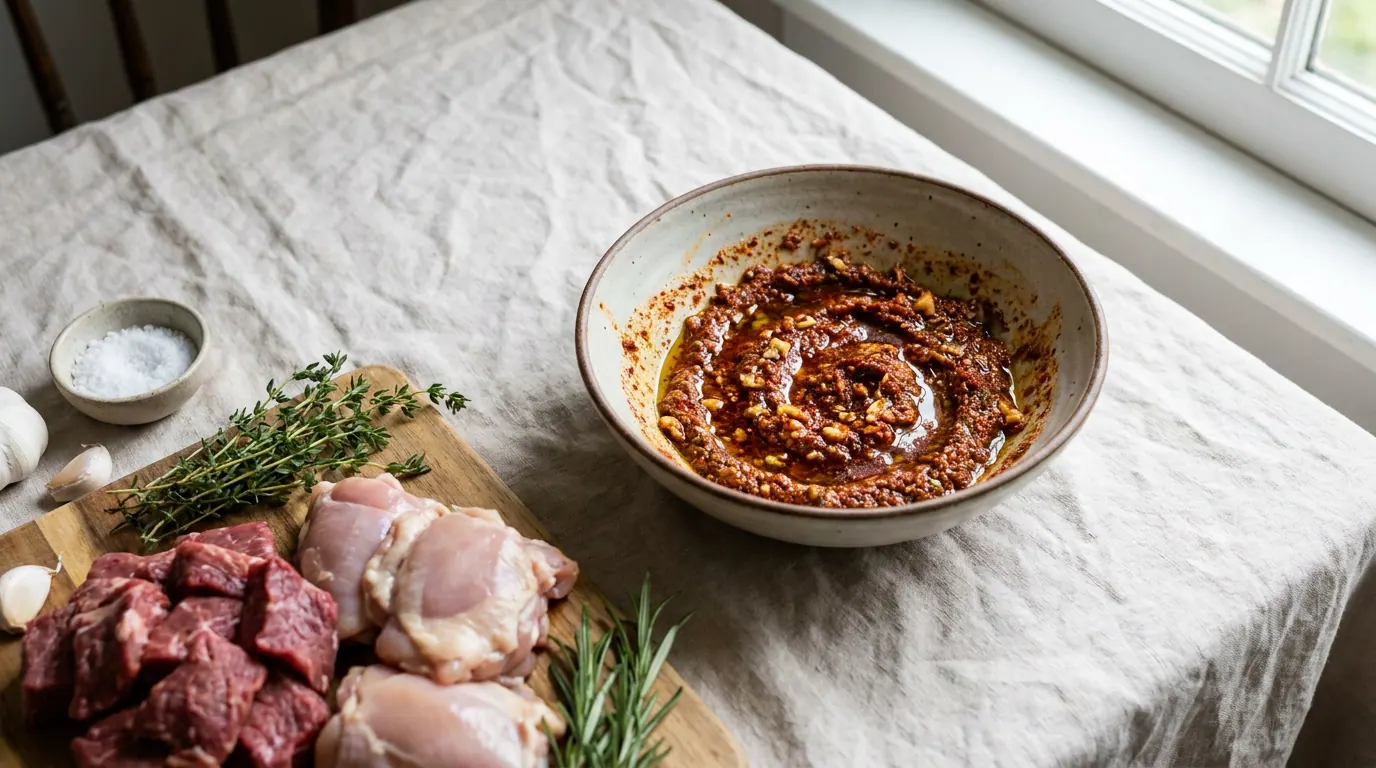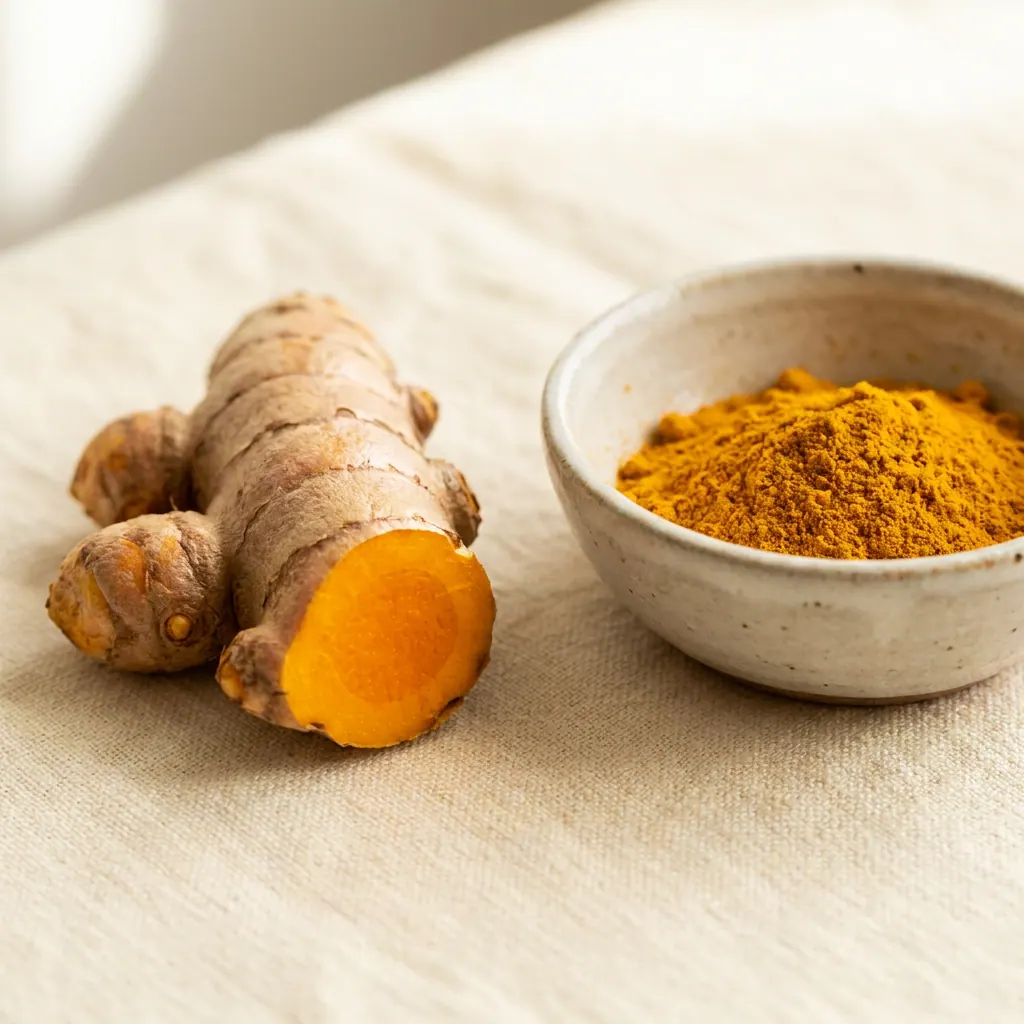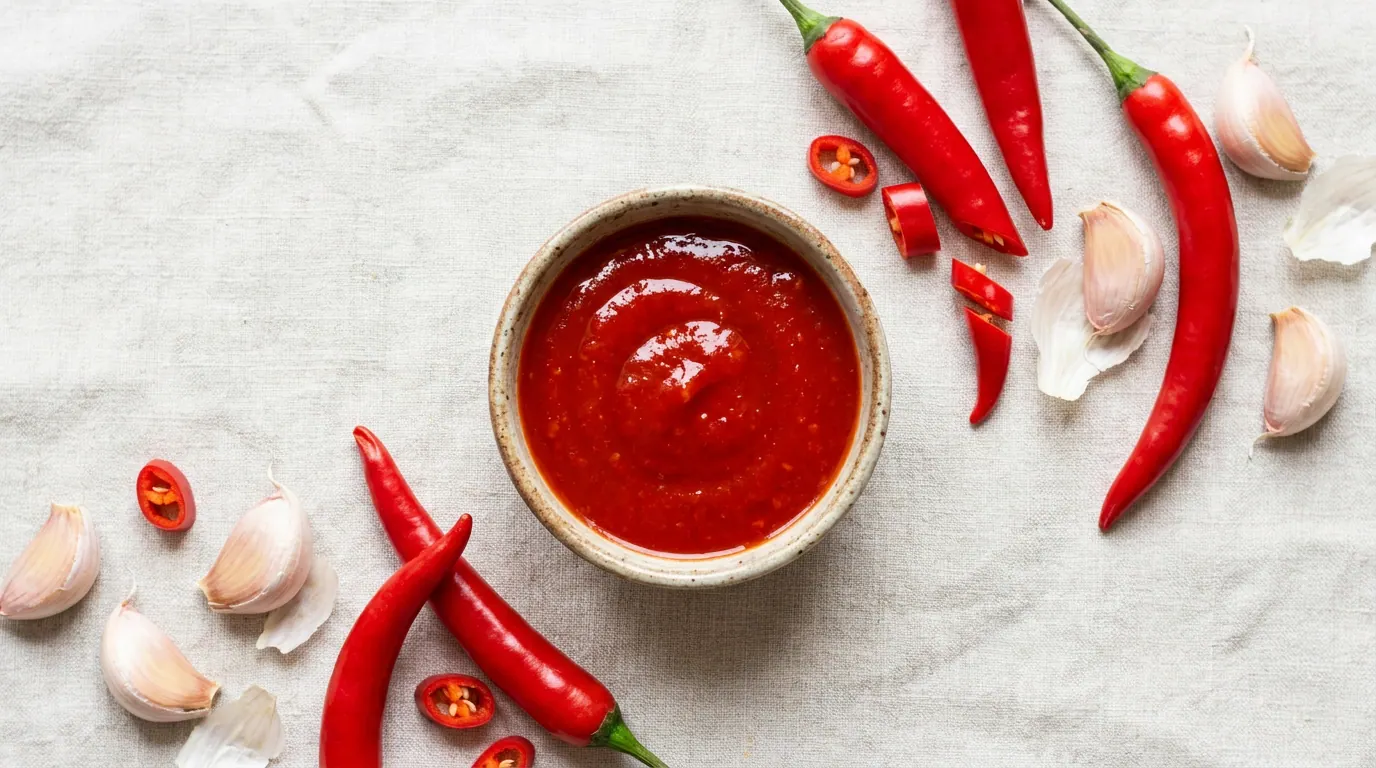
Ingredients and Preparation
Shatta is a flexible companion on the table, added directly to the dish or served on the side. Its simplest version is the fresh acidified one that's ready in minutes:
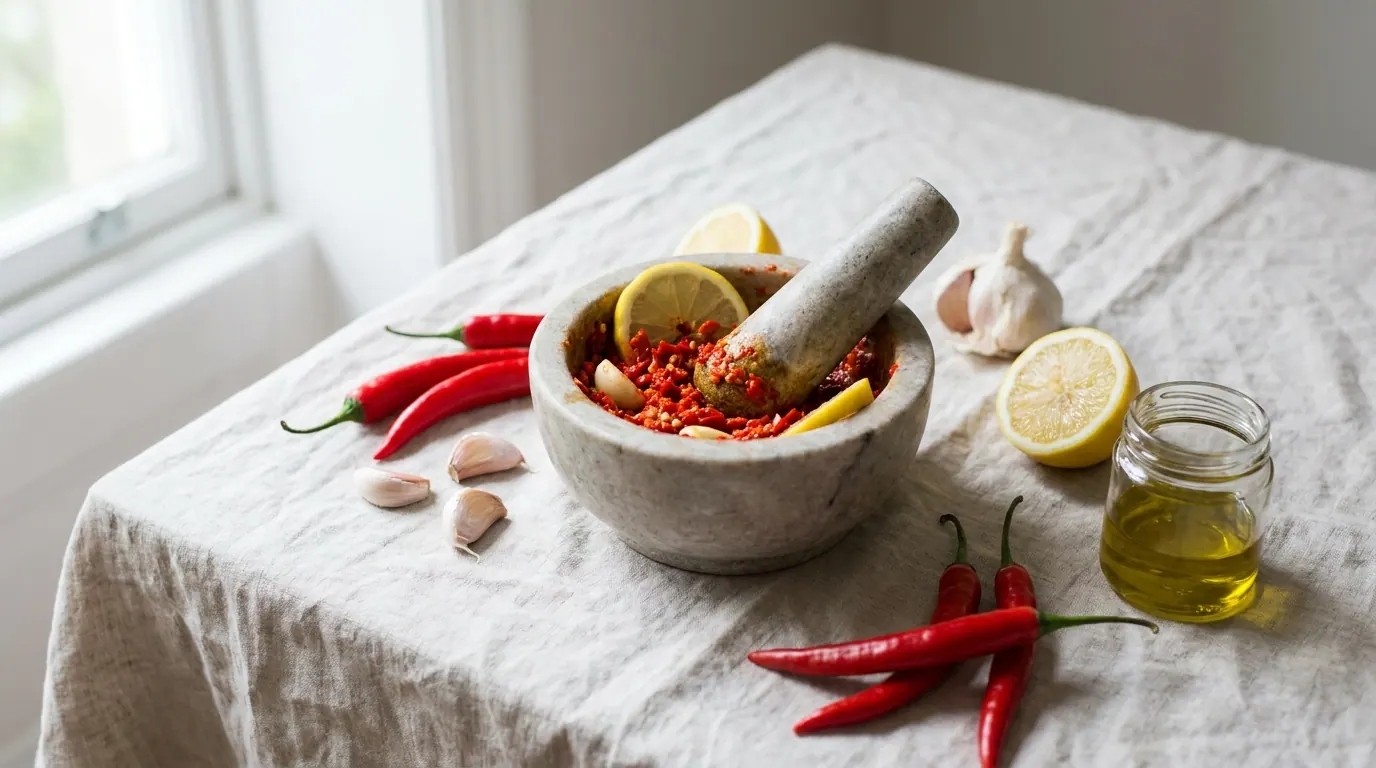
Fresh Acidified Shatta
Ingredients and Ratios:
- Fresh red or green chili (Base 70–80% by weight)
- Commercial vinegar with 5% acidity (do not dilute) or lemon juice
- Garlic to taste
- Salt for balance
- Olive oil to cover the surface and seal out air
Step-by-Step Method
- Wear gloves, wash and clean the peppers
- Mash the peppers with garlic and salt until you get a consistent texture
- Add 5% vinegar or lemon juice to lower acidity immediately (do not reduce the acid ratio)
- Pack it in a clean jar, and cover the surface with a layer of olive oil to seal out air
- Keep refrigerated in the fridge, and consume within weeks
What is Hot Saudi Shatta?
Hot Shatta is a chili sauce based on fresh red or green peppers (or fermented) mashed with salt, garlic, acid (vinegar or lemon juice), and oil. The word "Shatta" is an Arabic word in its own right meaning heat and spices, and it is widespread across the Middle East with origins attributed to Yemen, the Levant, and Egypt. It differs from North African Harissa, which is based on dried peppers and more complex spices.
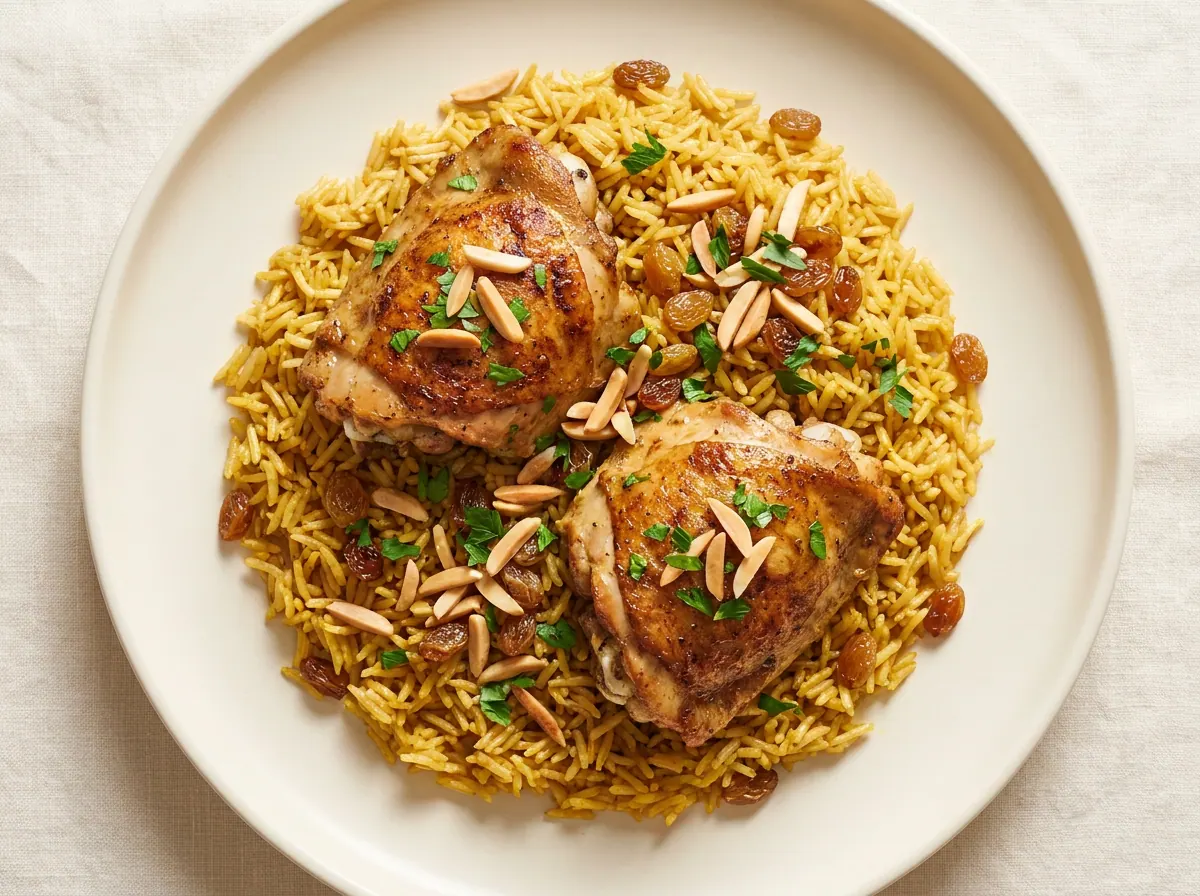
In Saudi cuisine, Shatta is served as a spicy companion for rice, BBQ, Fava beans, Mandi, and Kabsa. Its flavor has two faces: clean heat from fresh peppers, or deep, sharp acidity from the fermented version where lactic acid bacteria multiply, turning the one-note sharpness of the chili into a complex, sour flavor.
Sauce Profile
- Type
- Hot chili sauce (fresh, fermented, or cooked)
- Base
- Fresh red or green chili (70–80%)
- Core Ingredients
- Peppers, salt, garlic, acid (5% vinegar or lemon), olive oil
- Prep Time
- Fresh: minutes, Fermented: 5–14 days
- Top Use
- Companion for rice, Mandi, BBQ, and Fava beans
- Safety Limit
- Acidity pH under 4.6 to prevent botulism
- Allergens
- Free from major allergens in pure form (check the label)
- Lasts
- Fermented/Acidified in fridge: months, Fresh: weeks
- Origin
- Middle East (Yemen, Levant, Egypt)
Origin and Tradition
Shatta is not the product of a single kitchen, but a spicy companion that has crossed all the tables of the region and taken a different form in each country:
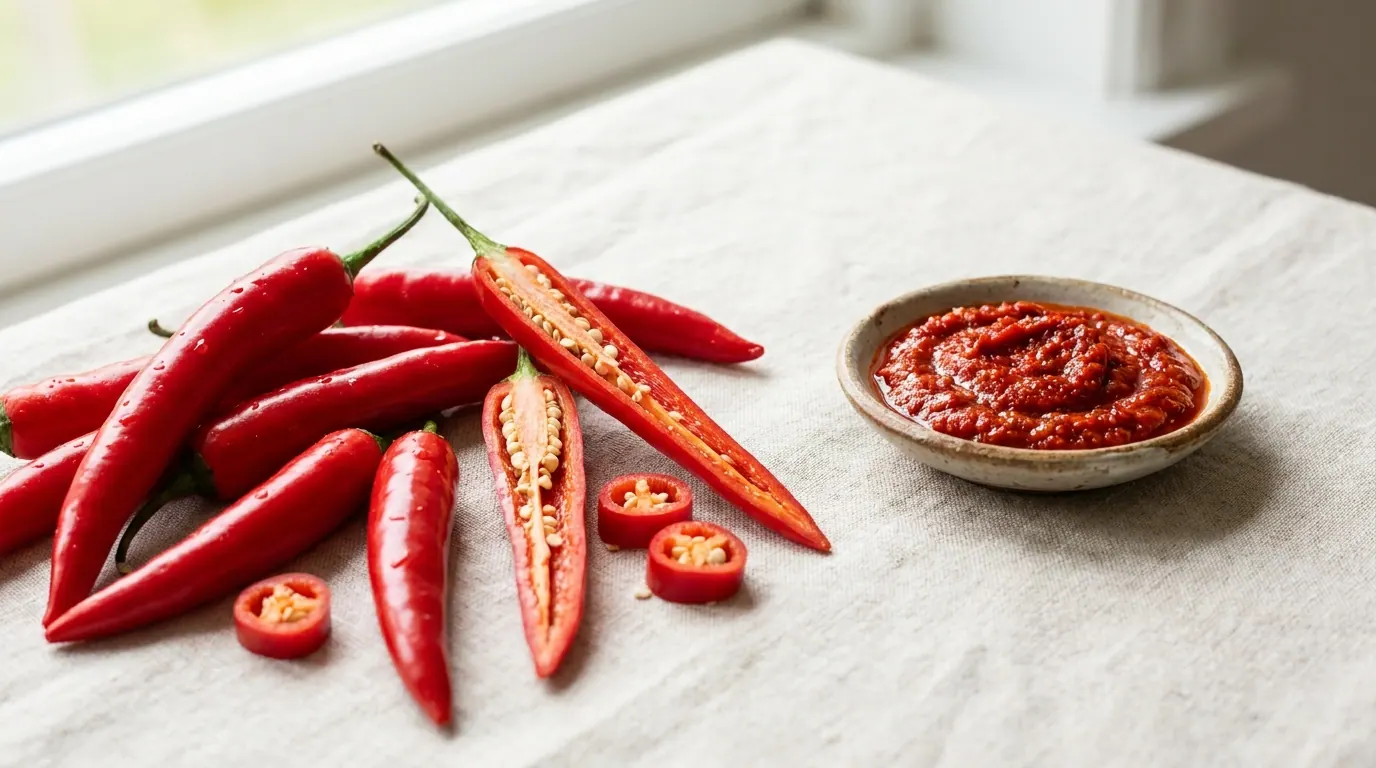
Etymology: "Shatta" is an Arabic word meaning spices and sharpness. The name itself carries a description of the sensation it leaves on the tongue.
Origin: Its origin is attributed to Yemen, the Levant, and Egypt, and it is common in Palestinian, Syrian, Jordanian, Lebanese, Egyptian, and Gulf kitchens. Each kitchen adjusts its heat and acidity to its taste.
Difference from Harissa: Shatta differs from North African Harissa, which is based on dried peppers and more complex spices. Shatta in its core is fresh peppers, acid, and salt—simpler in composition and brighter in heat.
The Two Versions: Chefs of old knew two versions. The fresh one acidified with vinegar or lemon for immediate, clean heat, and the fermented one left for days under a brine solution so its acidity matures and its flavor deepens.
On the Saudi Table: Shatta has become a constant companion for rice, Mandi, Kabsa, BBQ, and Fava beans, added to the dish or served on the side for each to take their share of fire as they like.
Shatta Variations
Shatta takes forms that differ in method, flavor, and life. Know the differences before you choose:
| Type | Method | Flavor | Shelf Life & Storage |
|---|---|---|---|
| Fresh Acidified | Mashed peppers with 5% vinegar or lemon | Immediate clean heat | Fridge only, weeks |
| Fermented | Peppers under 2–3.5% brine, 5–14 days | Deep complex acidity | Fridge, several months |
| Cooked | Cooked with acid to fix color | Deeper depth, less freshness | Longer, with approved recipe |
| Red vs. Green | Mature red or green peppers | Red is sweeter, green is brighter | Depends on acidification/fermentation |
Fresh non-heat-treated Shatta must be kept in the fridge only, not on the shelf. Fresh Shatta relies on added acid to lower the pH, but without heat processing, it remains prone to spoilage outside the cold. For long-term shelf storage, follow an approved acidification and canning recipe from a reliable source; do not invent your own ratios.
The Science of the Mix: How Capsaicin Tricks Your Brain
The sensation of heat in Shatta is not a taste but a pain signal. The compound capsaicin binds to a receptor called TRPV1 in the mouth and throat, the same receptor activated by actual heat above approximately 43°C, tricking the brain into perceiving a thermal burn without any actual temperature rise. This is why a spicy bite "burns" without fire.
Four keys that explain Shatta's heat
Capsaicin is an alkaloid that binds to the TRPV1 receptor responsible for the sensation of actual heat. It tricks the brain into perceiving a thermal burn without a real rise in temperature. The sensation is a pain signal, not a taste.
Created by pharmacist Wilbur Scoville in 1912 by diluting pepper extract with sugar water until the heat disappeared from a tasting panel. Jalapeño: 2,500–10,000 units, Cayenne: 25,000–50,000.
Since the 1980s, the HPLC liquid chromatography device has replaced human tasting to accurately measure capsaicinoids. Pure capsaicin is approximately 16 million Scoville units.
Capsaicin is fat-soluble, not water-soluble; water spreads it and increases the burn. The casein protein in milk catches the capsaicin and displaces it from the receptor. A 2023 study found that protein, not fat alone, is the most important factor.
In fermented Shatta, lactic acid bacteria naturally present on the pepper surface multiply in a low-oxygen brine, turning pepper sugars into lactic acid. This lowers the pH to below 4.6 within 48–72 hours at room temperature, stopping pathogens and turning the sharp sting into a complex, sour flavor. Fresh Shatta depends on directly adding acid to lower the pH immediately, so it must be kept refrigerated and has a shorter shelf life.
Where It's Used
Six uses for Shatta
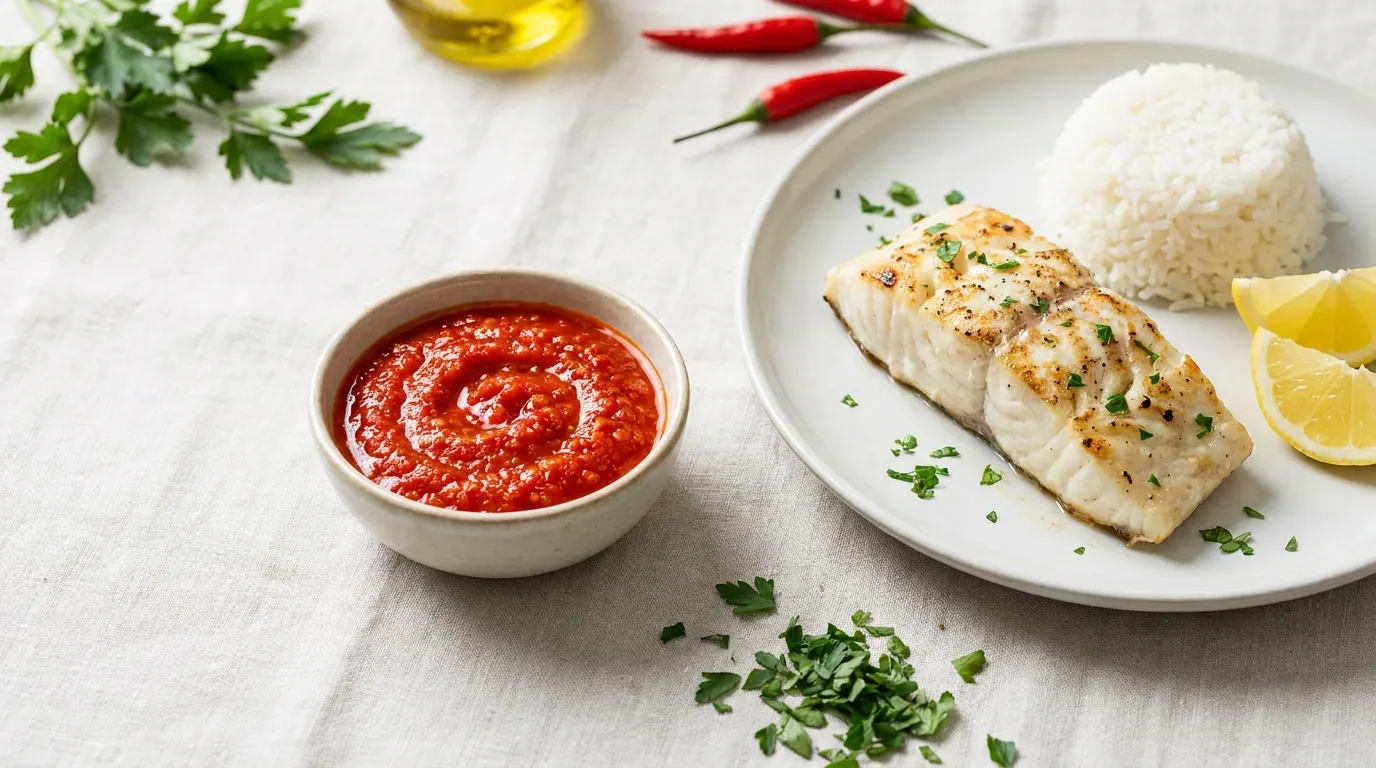
A spoonful of Shatta raises rice, Kabsa, Mandi, and Bukhari a degree of fire. It is served on the side for each to take their share as they like.
A sprinkle of Shatta over Fava beans, Hummus, and Shakshuka breaks their richness with refreshing heat. A classic companion for popular breakfast tables.
Shatta refreshes BBQ, grilled chicken, and Kebabs. Its acidity and heat balance the fat of the meat and open the appetite.
A thin layer of Shatta gives sandwiches and Shawarma heat and depth. Use it sparingly to balance the rest of the filling.
Mixing Shatta with yogurt or tahini makes a mild hot sauce. The protein in yogurt soothes its sharpness, suiting those who can't handle the full fire.
A small addition of Shatta raises the heat of soups and broths and deepens their flavor. Add it gradually until you reach the desired sharpness.
Expert Technique
The secret to safe, delicious Shatta is in balancing acid, salt, and oxygen. These are the rules professionals follow:
| Version | Method | Critical Control | Best For |
|---|---|---|---|
| Fresh Acidified | Mashing peppers and adding 5% vinegar or lemon | Do not reduce acid ratio, keep refrigerated | Immediate clean heat |
| Fermented | 2–3.5% brine, fully submerging peppers | pH drop below 4.6, full submersion | Complex sour flavor |
| Cooked | Cooking with acid to fix color | Approved acidification and processing recipe | Fixed color and longest life |
| Heat Reduction | Serving with Laban or yogurt | Casein, not water | Soothing sharpness when serving |
For any Shatta stored outside the fridge, the pH must be below 4.6 (ideally 4.2 or lower) to prevent botulism. Do not guess; use pH strips or a meter. In fermented versions, submerge the peppers completely under the solution; what floats, rots. In fresh versions, never reduce the acid ratio in an approved recipe.
Six Common Mistakes and Corrections
Most Shatta problems concern safety before taste. These are the most frequent mistakes and how to avoid them:
Leaving peppers above the brine.
Adding water to vinegar or using unknown vinegar.
Non-acidified Shatta kept outside the fridge.
Not measuring pH.
Quenching the burn with water.
Salt below 2%.
For long-term shelf storage, strictly follow an approved acidification and canning recipe. Public health authorities have recorded botulism cases associated with homemade hot sauces without documented acidification or processing, so pH measurement is not optional. For soothing heat at serving, offer Laban or yogurt, not water.
Health Benefits with Evidence
Chili pepper has properties studied by science, some with moderate evidence and some with inconsistent results. We present them honestly with the level of evidence for each:
Capsaicin may increase metabolic rate and activate thermogenesis in brown fat via the TRPV1 receptor, with potential metabolic benefits in insulin sensitivity and body fat. Human and animal evidence is mixed.
Red pepper supplements may give a modest benefit in lowering total cholesterol and diastolic blood pressure, but a systematic review found results inconsistent due to few studies and small sample sizes. Take with caution.
Capsaicin may trigger reflux symptoms in GERD patients. Esophageal symptoms appeared in 90% of reflux patients and 35% of healthy individuals after exposure, as it stimulates TRPV1 and relaxes the lower esophageal sphincter.
Milk relieves mouth burn more than water, and casein protein, not fat alone, is the most important factor in displacing capsaicin from mouth receptors. A 2023 controlled sensory trial found this.
Chili pepper is a supportive food, not a medicine. Most metabolic benefits are mixed, and the cholesterol and blood pressure benefit is low quality and inconsistent. Conversely, the reflux effect in GERD patients is human-documented. Know your body, and consult your doctor if you suffer from colon or reflux issues.
Food Safety: The Unbreakable Safety Limit
Safety in stored Shatta starts with one number: pH under 4.6. In acidic foods, botulism bacteria cannot grow; this limit is the divider between a safe sauce and a dangerous one. Do not guess acidity—measure it. For shelf storage, follow an approved acidification and canning recipe, and do not invent acid ratios yourself.
Acidity under 4.6 prevents the growth of botulism bacteria. In acidic foods, these bacteria cannot grow. This limit is not a suggestion but a safety barrier.
Canning vinegar must be at least 5% acidity and not diluted or replaced with vinegar of unknown acidity. Dilution raises the pH above the safe limit and opens the door for pathogens.
Fermentation with 2–3% salt brings the pH below 4.6 within 48–72 hours at 30°C, stopping pathogens. Salt tips the scale for lactic acid bacteria over spoilage bacteria.
Fresh non-heat-treated Shatta must be kept in the fridge only, not on the shelf. For long-term storage, use an approved acidification and canning recipe from a reliable source.
Limits and Allergy Alerts
- Botulism: The greatest risk in homemade hot Shatta stored without controlled acidification. Adhere to a pH under 4.6, follow approved canning recipes, and measure—do not guess.
- Colon and Reflux: Hot chili may irritate the digestive system in those with IBS or GERD; esophageal symptoms often appear after exposure to capsaicin.
- Allergens in Commercial Additives: The pure formula (pepper, salt, garlic, vinegar, oil) is free from the 13 major allergens, but some commercial recipes may contain sesame, tahini, nuts, or soy. Check the product label.
- Cutting Peppers: Do not touch your eyes after cutting hot chili. Wash your hands thoroughly or use gloves.
- Submersion and Mold: Keep peppers completely submerged under the brine or oil to seal out oxygen. Discard the product at any sign of unwanted mold, foul smell, or bloating of the container.
The pure formula is safe for most people in moderate quantities. Caution concerns uncontrolled home storage and those with digestive conditions.
Frequently Asked Questions about Shatta
What is the difference between Shatta and Harissa?
Why does milk soothe the burn but water does not?
Do I really need to measure the pH?
What is the difference between fresh and fermented Shatta?
What is the salt ratio for fermentation?
Why did my peppers float and mold during fermentation?
Can I dilute the vinegar in Shatta?
How long does homemade Shatta last?
Does Shatta cause heartburn for reflux patients?
Does Shatta contain allergens?
How do I soothe Shatta that became too hot?
Does hot chili help with weight loss?
Add Shatta to your plan in Eeina
Eeina app connects your sauces to your calculated Saudi recipes, from Kabsa to Mandi. Start for free.