Zucchini pasta is one of the classics of the Italian summer, when the gardens overflow with zucchini.
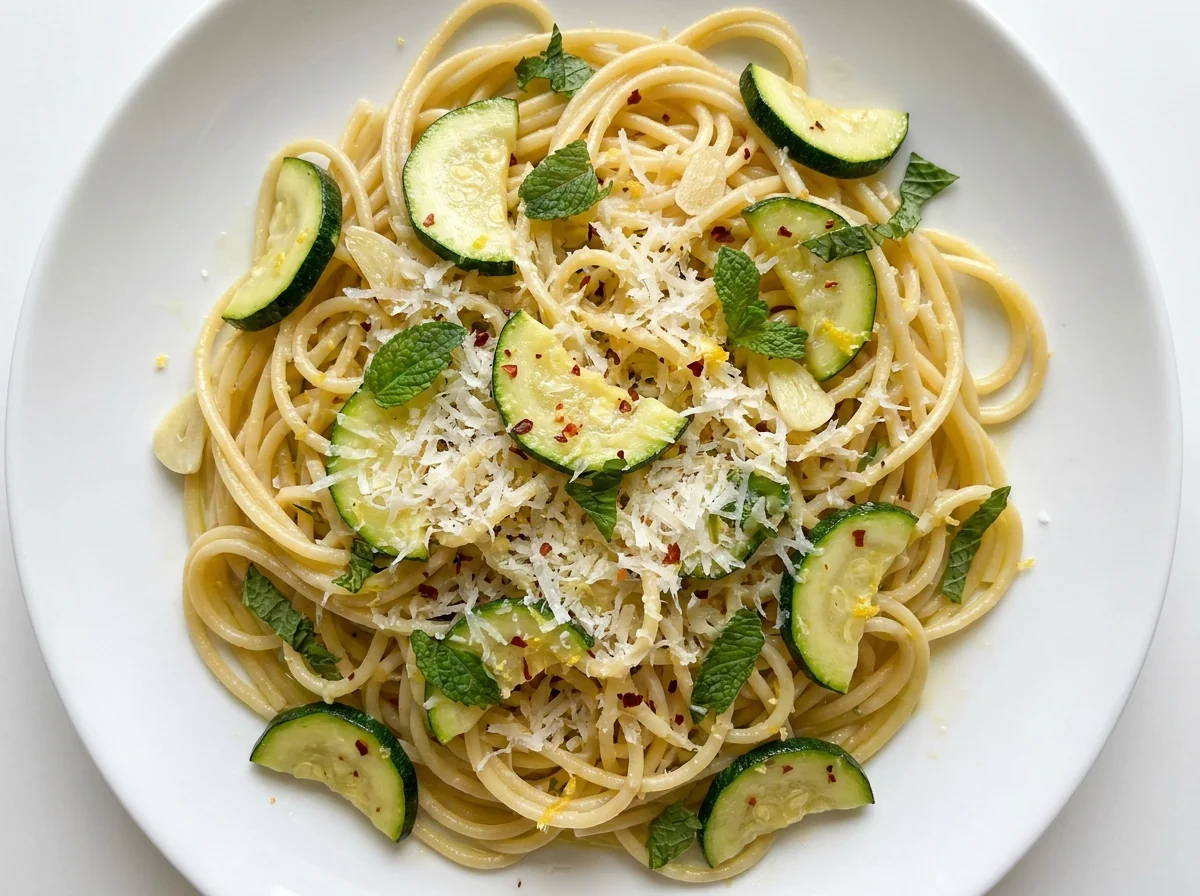
Golden slices, a third of which is mashed into a sauce while two-thirds stay as texture, with lemon, Parmesan, and mint. The dish that reconciled whole generations with zucchini.
Preparation Steps
Boil and reserve the treasure
The pasta in salted water, one minute short, with a cup of its boiling water reserved. The rule that no longer needs explaining.
Brown the zucchini over bold heat
In a wide pan with the olive oil over medium-high heat, spread the zucchini slices and toss them every two minutes for eight minutes until their edges turn golden and their centers soften. Browned zucchini is sweet and nutty, while pale boiled zucchini is the reason for its unjust reputation.
Scent with garlic and pepper
Lower the heat and add the garlic and crushed pepper for a fragrant minute, then mash a third of the zucchini with the back of the spoon in the pan. The mashed builds the sauce's body and the whole stays as texture.
Marry with the familiar shake
The pasta and half a cup of the boiling water and a minute's shake. The oil emulsifies with the starch and the mashed zucchini into a light green sauce that coats.
Finish with the trio of brightness
Off the heat, the zest, juice, fresh Parmesan, and torn mint. The Italian summer pasta that makes a kilo of zucchini a wish, not a burden.
Blood Sugar Impact
The glycemic index (GI) measures how quickly a food raises blood sugar, while the glycemic load (GL) measures how much a full serving raises it. Together they give the complete picture.
Glycemic Index
GI
47Low
Low0–55Medium56–69High70+
A low value (≤55) means a gradual rise in blood sugar — the most suitable range for diabetes and insulin resistance.
Glycemic Load
GL
37High
Low0–10Medium11–19High20+
Glycemic load reflects the impact of the full serving. To lower it: take half a serving, or pair the recipe with a source of protein and fiber.
Nutritional Information
Per ServingMakes 2 servings · one serving is about 365 g of raw ingredients
Calories650 kcal32%of Daily Value*
Protein21 g42%of Daily Value*
Carbohydrates83 g30%of Daily Value*
Fat26 g33%of Daily Value*
Fiber5 g18%of Daily Value*
Sodium367 mg16%of Daily Value*
Potassium760 mg16%of Daily Value*
Phosphorus359 mg29%of Daily Value*
* Percent Daily Values are based on a 2,000-calorie diet per FDA food-label reference values — your daily needs may be higher or lower. Values are derived from the recipe's ingredients via the USDA database.
Troubleshooting
The most common problems when preparing Zucchini Pasta with Lemon and Parmesan, and how to fix them:
The zucchini came out watery and pale
Gentle heat or a crowded pan. Boldness and space, and salt after the browning, not before, so it doesn't draw out its water.
The sauce didn't come together
The third was forgotten unmashed. The back of the spoon on a third of the slices. It's the green body of the sauce.
The Parmesan curdled
It went in over live heat. Off the heat is its eternal law, and grated from the block, not the bags.
It tastes bland
Timid boiling salt or missing lemon. Sea-level saltiness and the full finishing trio.
Storage and Make-Ahead
Immediately
With its bright greenery.
In the fridge
A day, modestly. The zucchini softens further but stays acceptable.
Not suitable for freezing
Cooked zucchini dissolves.
Tested Ingredient Substitutions
Original Ingredient
Tested Substitute
Ratio
Flavor Difference
Zucchini
Small eggplant cubes
1:1
Nearly Sicilian pasta alla Norma. The deeper neighbor
Add protein
Quick shrimp or roasted chickpeas
to taste
A complete meal
Mint
Basil
1:1
The two Italian summer schools
White pasta
Whole wheat
1:1
Fiber on top of the zucchini's fiber
How Much Does It Make? Scaling Guide
Ingredient
2 servings
1 serving
4 servings
Pasta
200 g
100 g
400 g
Zucchini
400 g
200 g
800 g
Parmesan
50 g
25 g
100 g
EEINA Nutrition Tip
Brown the zucchini, don't just soften it. The difference between hated and adored zucchini is the gold: bold heat caramelizes its hidden sugars so it turns sweet and nutty; gentle heat boils it into a watery sponge, the root of its unjust reputation.
Add This Recipe to Your Plan
The EEINA app saves your favorite recipes, calculates them from their real ingredients, and shows your daily numbers toward your goal. Try it free now.