A classic fried sweet — fermented liquid batter piped into interlocking rings or shapes and deep-fried until golden and crispy, then dipped in sugar syrup. A Ramadan and festive treat, high glycaemic load, contains gluten.
Zalabia is an ancient fried sweet found across the Arab and Islamic world (known as jalebi in India), mentioned in Arabic cookbooks since the Abbasid era. It is a fermented liquid batter piped into interlocking rings or shapes, deep-fried and dipped in syrup.
It has been associated with Ramadan, Eid celebrations, and popular markets, sold hot from street sweet carts. Its golden interlocking shapes and crispness soaked in fragrant syrup have made it one of the most beloved traditional street sweets.
Preparation Steps
Prepare cold syrup
Boil the sugar and water, add the lemon juice (prevents crystallisation), and let it simmer for ten minutes until slightly thickened, then add the rose water. Leave it to cool completely. Cold syrup poured over hot freshly fried zalabia preserves the crispness.
Prepare the liquid batter
Mix the flour, cornstarch, yeast, sugar, salt, and turmeric, then gradually add the warm water and whisk until you have a sticky pourable batter (slightly thicker than pancake batter). The starch gives crispness and the right consistency is the foundation of the shape.
Ferment
Cover the batter and leave it in a warm place for one hour until it doubles and bubbles appear on the surface. Fermentation gives zalabia its lightness and hollow interior. Stir gently before frying.
Shape the zalabia
Fill a piping bag (or a funnel or a bottle with a small opening) with the batter. Heat the oil over medium heat and squeeze the batter into it in a circular motion to form interlocking rings or spiral shapes. The interlocking shape is the traditional look of zalabia.
Fry
Fry the zalabia over medium heat until golden and crispy on both sides, turning once. Medium heat crisps the outside and cooks the inside without burning. Drain on absorbent paper.
Dip and serve
Dip the hot zalabia in the cold syrup for a few seconds until absorbed, then lift and drain. Serve immediately while crispy and fragrant with syrup. Zalabia is a Ramadan and festive street sweet known for its golden interlocking shapes, eaten right after dipping.
Blood Sugar Impact
The glycemic index (GI) measures how quickly a food raises blood sugar, while the glycemic load (GL) measures how much a full serving raises it. Together they give the complete picture.
Glycemic Index
GI
69Medium
Low0–55Medium56–69High70+
A low value (≤55) means a gradual rise in blood sugar — the most suitable range for diabetes and insulin resistance.
Glycemic Load
GL
20High
Low0–10Medium11–19High20+
Glycemic load reflects the impact of the full serving. To lower it: take half a serving, or pair the recipe with a source of protein and fiber.
Nutritional Information
Per ServingMakes 8 servings · one serving is about 145 g of raw ingredients
Calories264 kcal13%of Daily Value*
Protein4 g8%of Daily Value*
Carbohydrates32 g12%of Daily Value*
Fat14 g18%of Daily Value*
Fiber3 g11%of Daily Value*
Sodium303 mg13%of Daily Value*
* Percent Daily Values are based on a 2,000-calorie diet per FDA food-label reference values — your daily needs may be higher or lower. Values are derived from the recipe's ingredients via the USDA database.
Troubleshooting
The most common problems when preparing Zalabia (Fried Dough Fritters), and how to fix them:
Zalabia is not crispy
Insufficient starch, hot syrup on hot fritter, or soaked too long. Add cornstarch to the batter (gives crispness), dip in cold syrup quickly, and serve immediately. A long soak softens them.
Zalabia is heavy and dense
Batter did not ferment or is too thick. Leave it to ferment for a full hour until doubled with visible bubbles, and adjust the consistency to a sticky pourable batter. Fermentation gives lightness and the hollow interior.
Shape does not hold in the oil
Batter is too thin or oil is cold. Adjust the batter to be slightly firm (thicker than pancake batter) and ensure the oil is hot before piping. Thin batter spreads and cold oil breaks the shape.
Outside burned while inside is raw
Oil is too hot. Fry over medium not high heat — excessive heat burns the surface before the inside cooks. Test the oil with a drop of batter: it should float and turn golden gradually.
Zalabia is greasy
Oil is too cold. Make sure the oil is hot before frying (the zalabia floats and bubbles surround it), and do not crowd the pan or the temperature drops.
Storage and Make-Ahead
Room temperature
Zalabia is eaten right after frying and dipping while crispy. It loses its crispness quickly after dipping, so do not prepare long before serving. Undipped, it stays crispy for hours.
Freezer
Fried undipped zalabia can be frozen for one month and reheated in an oven or air fryer to restore crispness, then dipped fresh. Fresh is always better.
Batter
Fermented batter keeps in the refrigerator for one day and can be fried after warming slightly. The syrup keeps in the refrigerator for two weeks.
Reheating
Reheat the zalabia (undipped) in a 180°C oven or air fryer to restore crispness, then dip in the syrup. Avoid the microwave which softens them.
Tested Ingredient Substitutions
Original Ingredient
Tested Substitute
Ratio
Flavor Difference
Deep frying in oil
Air fryer
light oil spray
Reduces fat significantly, but the interlocking shape is harder to achieve and crispness is less than traditional deep frying.
Sugar syrup
Date molasses or honey
to taste
Date molasses carries some mineral content from dates; honey is sweeter. Both are sugars that raise the glycaemic load.
Full syrup dip
Drizzle syrup instead of dipping
to taste
Reduces sugar significantly while keeping sweetness, a lighter option.
How Much Does It Make? Scaling Guide
Number of servings
Flour
Yeast
Sugar (syrup)
4 (half recipe)
1 cup
0.5 tbsp
1 cup
8 (base)
2 cups
1 tbsp
2 cups
16 (gathering)
4 cups
2 tbsp
4 cups
EEINA Nutrition Tip
Zalabia is a fried syrup-dipped festive sweet, so its glycaemic load is high and its calories are concentrated. Moderation is the key: one or two small pieces with coffee or after iftar. To lighten it: dip in thin syrup rather than a long soak, or drizzle instead of dipping. For diabetics: among the highest glycaemic sweets, so only a very small amount on a special occasion with close attention.
Add This Recipe to Your Plan
The EEINA app saves your favorite recipes, calculates them from their real ingredients, and shows your daily numbers toward your goal. Try it free now.
What is the difference between zalabia and luqaimat?
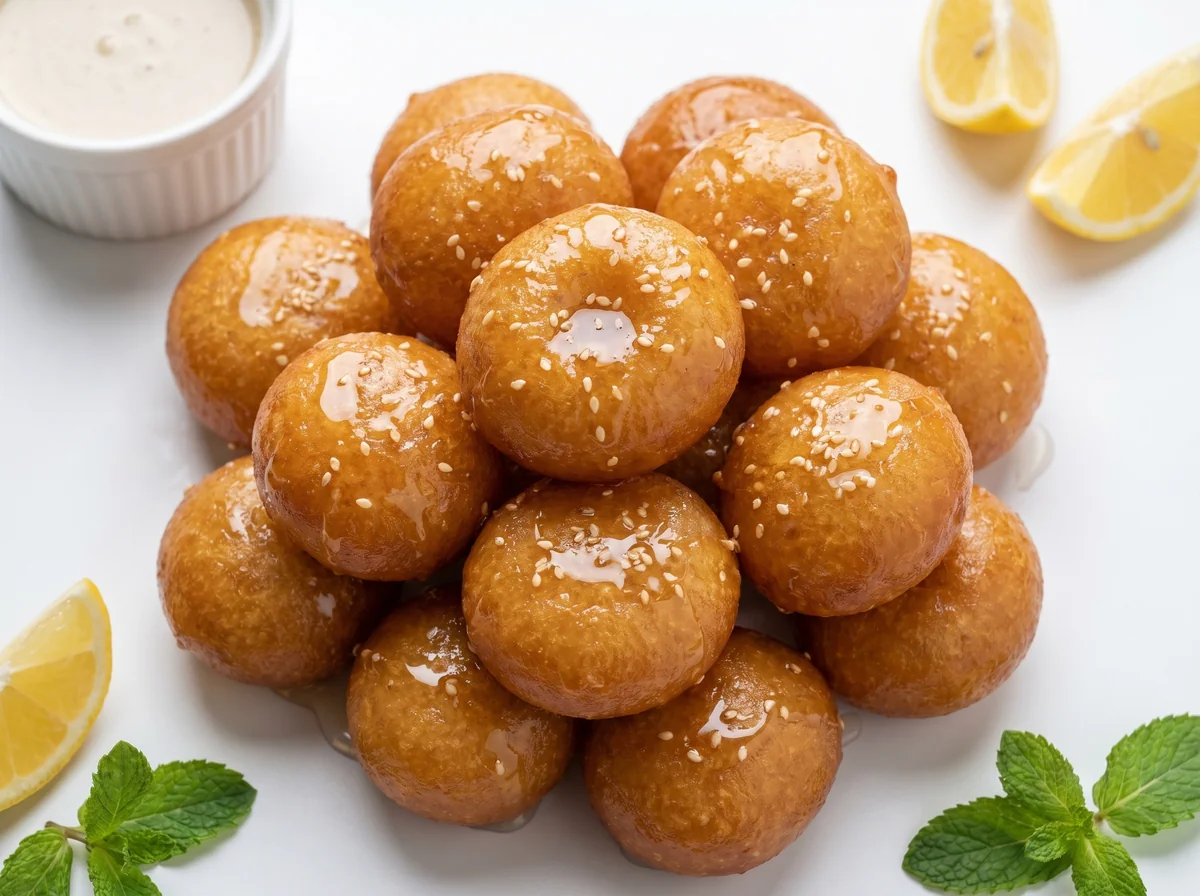
Zalabia is a liquid batter piped into the oil in interlocking rings or shapes and dipped in syrup. Luqaimat are balls of dough that are fried and dipped. Zalabia is flat and interlocking; luqaimat are round balls. Both are fermented fried dough dipped in syrup.
What does the cornstarch do?
Cornstarch adds crispness to the zalabia and makes it lighter and crunchier. Together with the flour and fermentation it gives the characteristic crispy exterior and hollow interior of zalabia.
How do I shape the zalabia?
Fill a piping bag, a bottle with a small opening, or a funnel with the batter and squeeze it into the oil in a circular motion to form interlocking rings. This interlocking shape is the traditional look and takes some practice.
Is zalabia suitable for diabetics?
It is among the highest glycaemic sweets (fried dough dipped in sugar syrup), so it is not a suitable choice for them except in a very small amount with thin syrup on a rare occasion with close attention.