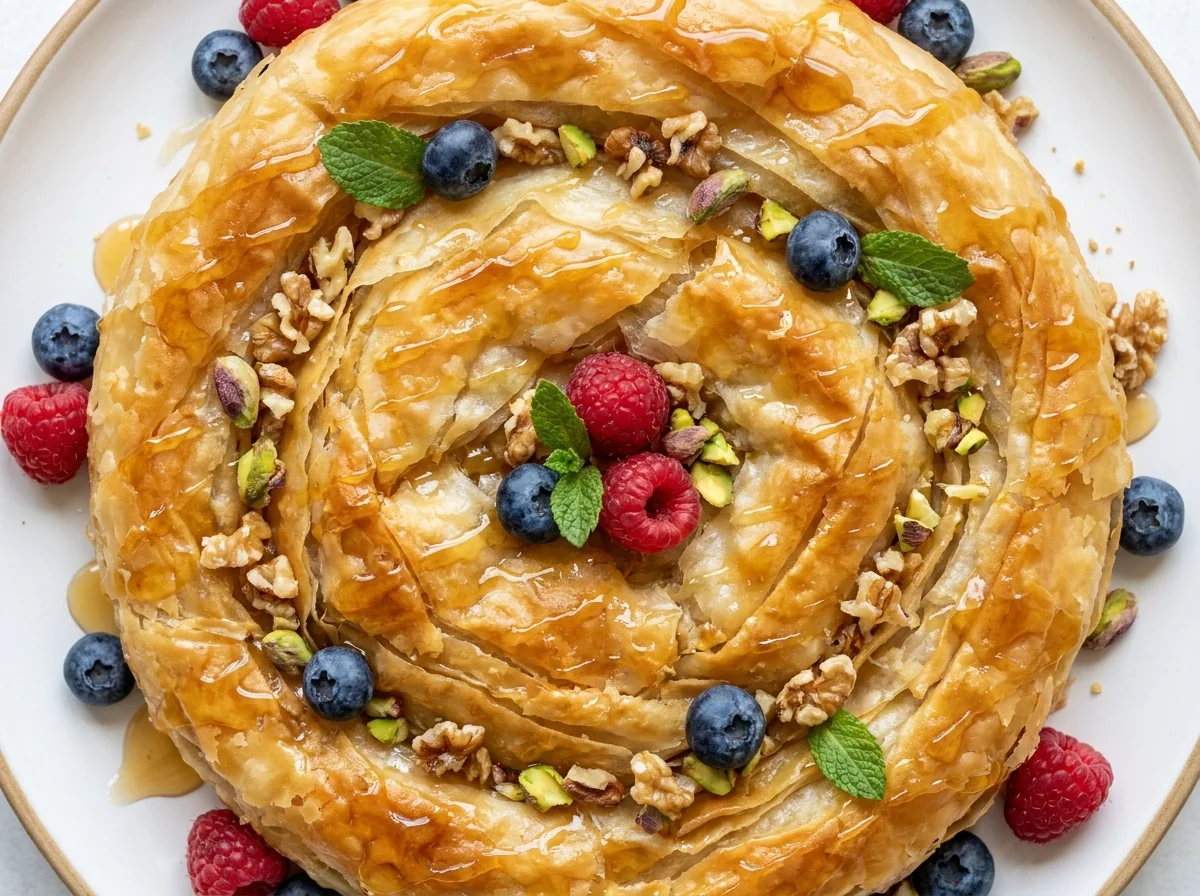
Yemeni Sabaya · thin dough rolled into layers, brushed with ghee and baked until golden and crisp, then served with honey and black seed. A rich Yemeni breakfast with nutrition values from the University of Aden lab analysis.
Sabaya is a time-honored Yemeni breakfast resembling layered pastry, made of dough rolled thin and brushed with ghee in layers, then baked and soaked in honey. It is popular in Sanaa and across Yemen at breakfast and on special occasions.
Its secret is the very thin rolling and the ghee between the layers that gives it its flakiness. EEINA's version keeps the method, and its values are from the University of Aden lab analysis; it is rich in fat and eaten in moderate portions.
Preparation Steps
Knead
Mix the flour and salt, add the warm water gradually, and knead into a soft, smooth dough. Let it rest for fifteen minutes so it is easy to roll out.
Roll thin and brush
Divide the dough into balls and roll each one out very thin on an oiled surface, then brush it with ghee. Rolling thin and the ghee between layers are the secret to Sabaya being flaky.
Fold and layer
Fold each sheet over itself after brushing it so layers form, and arrange them in a ghee-greased tray.
Bake
Bake in a preheated oven at 200 degrees for twenty to twenty-five minutes until the edges turn golden and crisp.
Serve with honey
Serve the Sabaya hot, drizzled with honey and sprinkled with black seed. A rich, high-fat sweet eaten in moderate portions.
Blood Sugar Impact
The glycemic index (GI) measures how quickly a food raises blood sugar, while the glycemic load (GL) measures how much a full serving raises it. Together they give the complete picture.
Glycemic Index
GI
60Medium
Low0–55Medium56–69High70+
A low value (≤55) means a gradual rise in blood sugar — the most suitable range for diabetes and insulin resistance.
Glycemic Load
GL
15Medium
Low0–10Medium11–19High20+
Glycemic load reflects the impact of the full serving. To lower it: take half a serving, or pair the recipe with a source of protein and fiber.
Nutritional Information
Per ServingMakes 6 servings · one serving is about 65 g of raw ingredients
Calories370 kcal18%of Daily Value*
Protein2 g4%of Daily Value*
Carbohydrates25 g9%of Daily Value*
Fat29 g37%of Daily Value*
* Percent Daily Values are based on a 2,000-calorie diet per FDA food-label reference values — your daily needs may be higher or lower. Values are derived from the recipe's ingredients via the USDA database.
Troubleshooting
The most common problems when preparing Yemeni Sabaya, and how to fix them:
The Sabaya is hard, not flaky
The dough is thick or low on fat between layers. Roll it very thin and brush it generously with ghee between the layers.
It does not turn golden
The oven temperature is low. Bake at 200 degrees and watch until the edges turn golden and crisp.
Heavy and greasy
Too much ghee, or it was not drained. Adjust the amount of ghee, and let it rest after baking to firm up.
The dough tears while rolling
It is dry or did not rest. Add a little water and let the dough rest before rolling.
Storage and Make-Ahead
Refrigerator (4°)
Two days in an airtight container; reheat in the oven to restore crispness.
Freezer (-18°)
One month baked. Reheat from frozen in a moderate oven.
Make ahead
Roll out the brushed dough and freeze it between sheets of parchment, then bake when needed.
Tested Ingredient Substitutions
Original Ingredient
Tested Substitute
Ratio
Flavor Difference
Ghee
Vegetable oil
same amount
Lowers saturated fat, with a lighter flavor
White flour
Partly whole-wheat flour
half
Adds fiber
Honey
A smaller amount, or date molasses
half
Lowers added sugar
Black seed
Toasted sesame
same amount
Alternative garnish
How Much Does It Make? Scaling Guide
Number of servings
Flour
Ghee
Honey
3 (half recipe)
150 g
50 g
as desired
6 (base)
300 g
100 g
as desired
12 (gathering)
600 g
200 g
as desired
EEINA Nutrition Tip
Sabaya is high in fat and calories because of the ghee, so it is eaten in small portions on occasions. Replacing part of the ghee with vegetable oil and reducing the honey lightens it while keeping its character.
Add This Recipe to Your Plan
The EEINA app saves your favorite recipes, calculates them from their real ingredients, and shows your daily numbers toward your goal. Try it free now.