Yemeni Malooj · a soft Yemeni bread usually baked in a tandoor where it sticks to the wall and comes out thin and puffed. The everyday bread of Yemen at breakfast and lunch, with nutrition values from the University of Aden lab analysis.
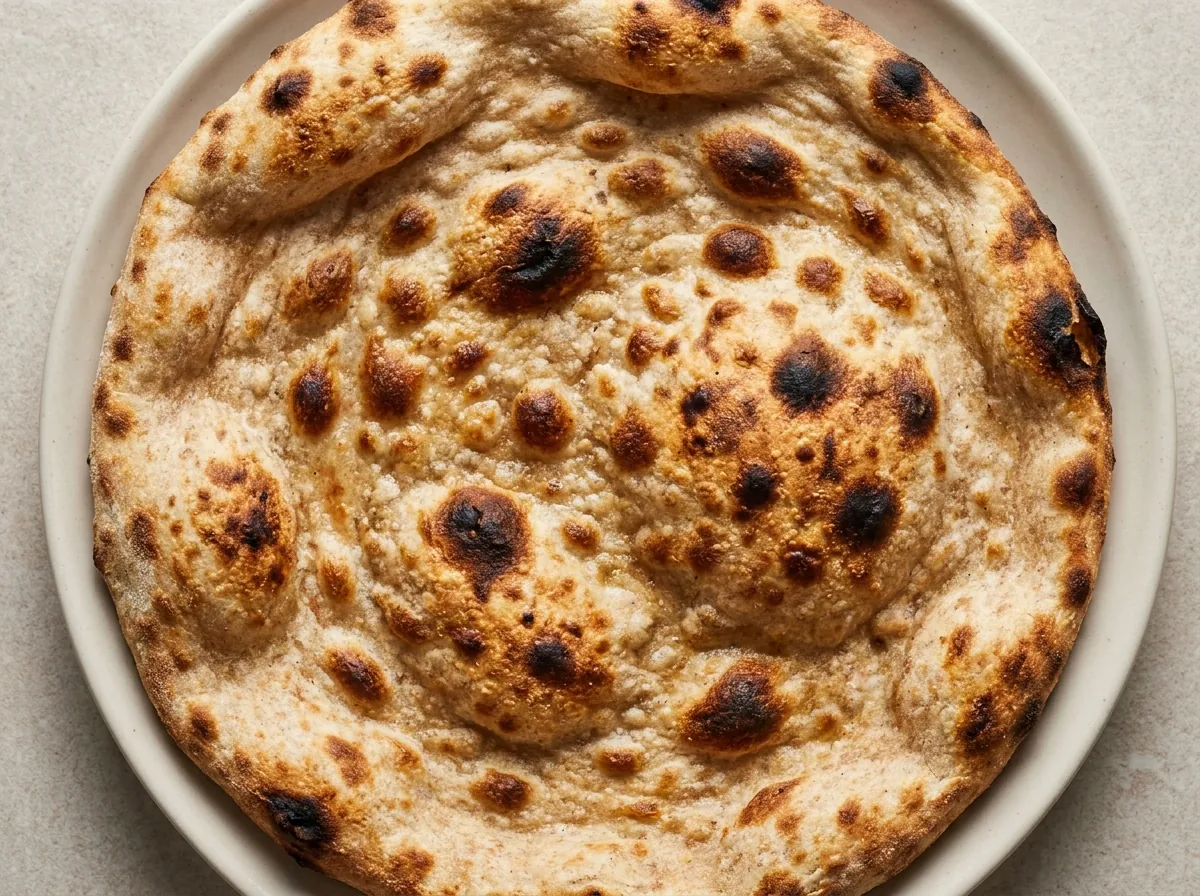
Malooj is a daily Yemeni bread, baked in a clay tandoor where it sticks to the hot wall and comes out thin, puffed, and spotted. It accompanies the Yemeni table from breakfast to dinner and is dipped in broth, Fahsa, and honey.
Its secret is a soft dough and a very hot tandoor. EEINA's version keeps the method, and its values are from the University of Aden lab analysis.
Preparation Steps
Activate the yeast
Dissolve the yeast in a little warm water and leave it until it froths, about ten minutes.
Knead
Mix the flour and salt with the activated yeast, add the warm water gradually, and knead into a soft, slightly sticky dough; the soft dough gives Malooj its lightness.
Proof
Cover the dough and leave it in a warm place until it doubles, about an hour.
Shape into discs
Divide the dough into balls and flatten them into discs with a wet hand; Malooj is shaped by hand, not with a rolling pin.
Bake on high heat
Bake in a tandoor, on a very hot griddle, or in an oven preheated to its highest setting until it puffs and spots appear, about five to eight minutes. Serve hot.
Blood Sugar Impact
The glycemic index (GI) measures how quickly a food raises blood sugar, while the glycemic load (GL) measures how much a full serving raises it. Together they give the complete picture.
Glycemic Index
GI
71High
Low0–55Medium56–69High70+
A low value (≤55) means a gradual rise in blood sugar — the most suitable range for diabetes and insulin resistance.
Glycemic Load
GL
36High
Low0–10Medium11–19High20+
Glycemic load reflects the impact of the full serving. To lower it: take half a serving, or pair the recipe with a source of protein and fiber.
Nutritional Information
Per ServingMakes 6 servings · one serving is about 70 g of raw ingredients
Calories250 kcal12%of Daily Value*
Protein4 g8%of Daily Value*
Carbohydrates50 g18%of Daily Value*
Fat4 g5%of Daily Value*
* Percent Daily Values are based on a 2,000-calorie diet per FDA food-label reference values — your daily needs may be higher or lower. Values are derived from the recipe's ingredients via the USDA database.
Troubleshooting
The most common problems when preparing Yemeni Malooj Bread, and how to fix them:
The Malooj does not puff
The yeast is weak or the oven is not hot enough. Activate the yeast and bake at the highest possible heat.
The bread is hard
The dough is dry or was over-baked. Keep it soft and slightly sticky, and lift it the moment it puffs and spots.
It sticks to the griddle
The griddle is cold. Heat it well before adding the dough, and dust with a little flour.
Strong yeast taste
Too much yeast or too long a proof. Reduce the yeast and keep to the proofing time.
Storage and Make-Ahead
Refrigerator (4°)
Two days in a sealed bag; reheat before serving.
Freezer (-18°)
One month in a sealed bag. Reheat straight from frozen.
Serving
Best eaten fresh and hot for softness, dipped in broth or honey.
Tested Ingredient Substitutions
Original Ingredient
Tested Substitute
Ratio
Flavor Difference
White flour
Whole-wheat flour
half
Adds fiber and lowers the glycemic index
Tandoor baking
Baking on a griddle or pan
same dough
A home alternative without a tandoor
Yeast
A previously fermented starter
as the recipe
A deeper, old-style flavor
Salt
Half the amount
half
Lowers sodium
How Much Does It Make? Scaling Guide
Number of loaves
Flour
Yeast
Salt
3 (half recipe)
200 g
half a teaspoon
half a teaspoon
6 (base)
400 g
1 teaspoon
1 teaspoon
12 (family)
800 g
2 teaspoons
2 teaspoons
EEINA Nutrition Tip
White bread has a high glycemic index, so it raises blood sugar quickly. Replacing part of the white flour with whole wheat adds fiber and slows absorption; it is usually paired with protein-rich dishes such as Fahsa.
Add This Recipe to Your Plan
The EEINA app saves your favorite recipes, calculates them from their real ingredients, and shows your daily numbers toward your goal. Try it free now.