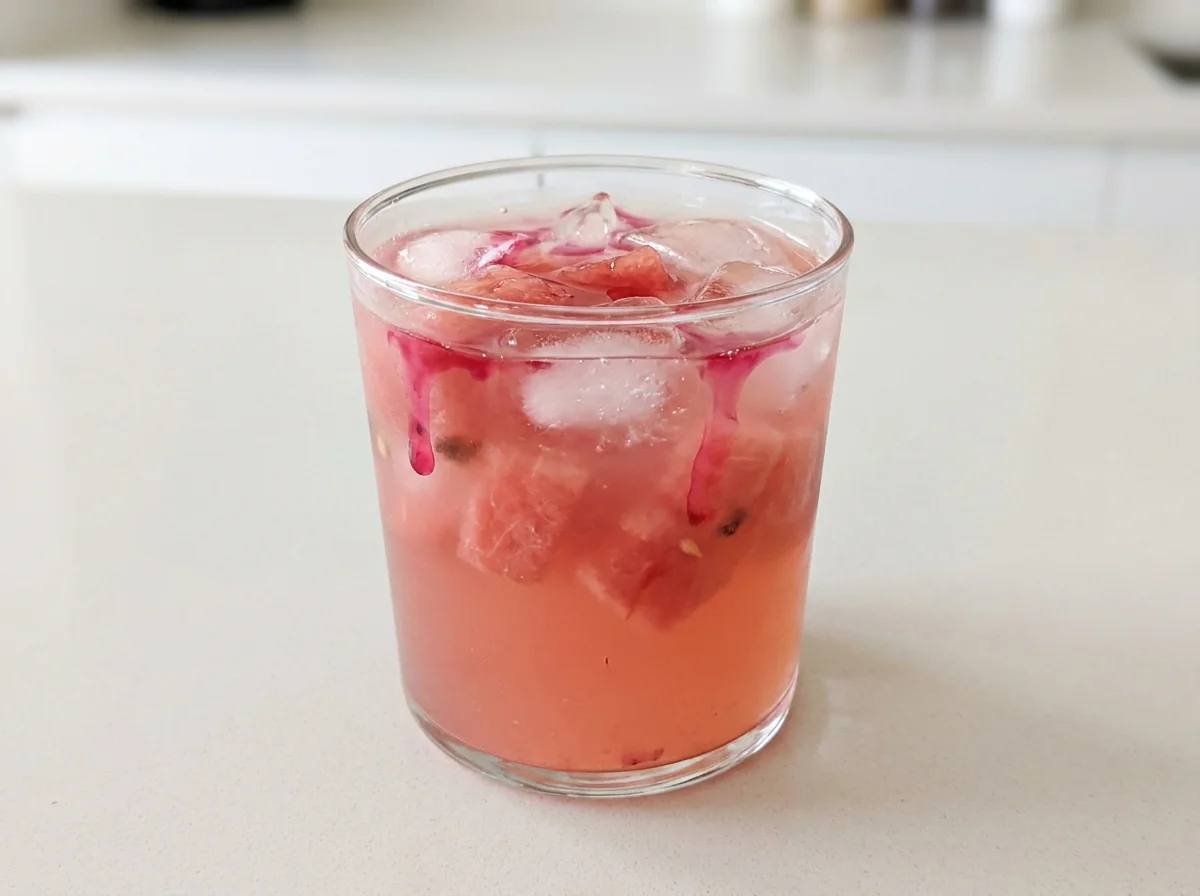
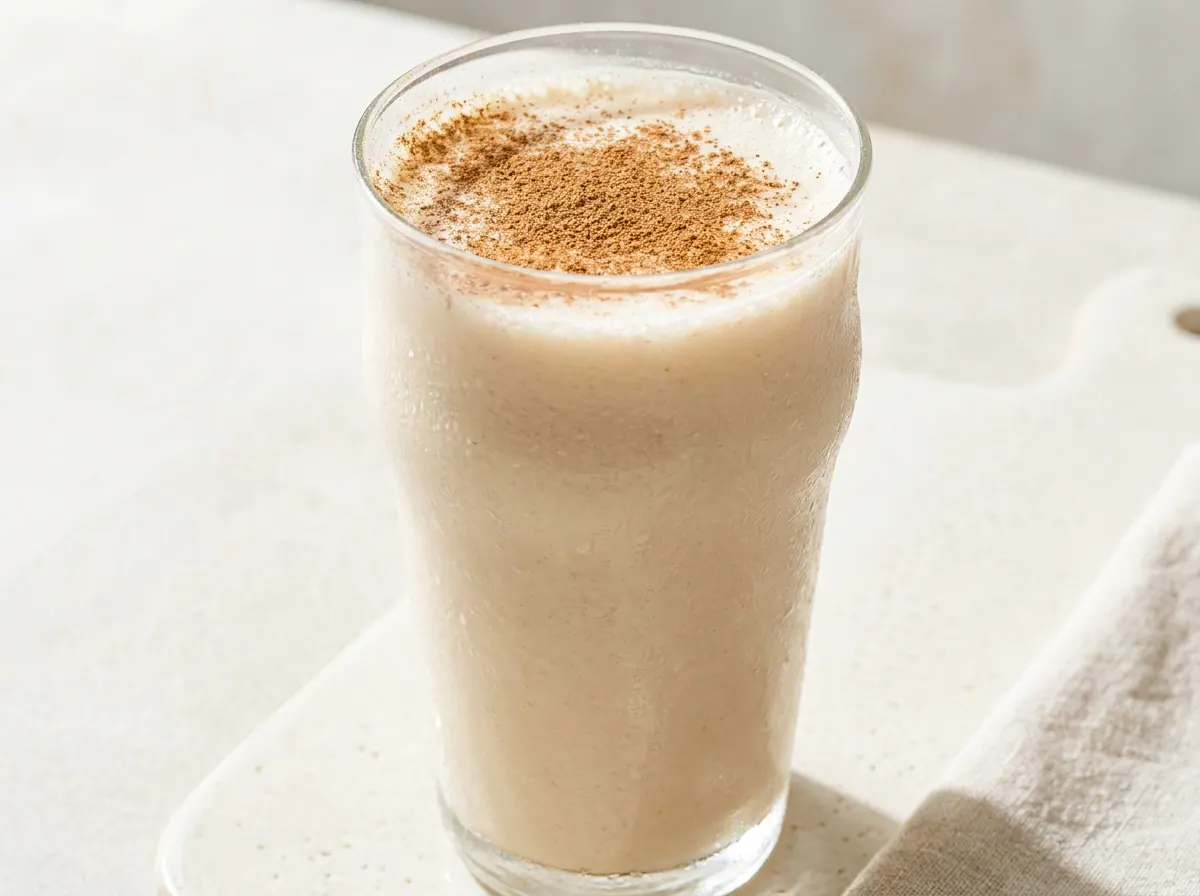
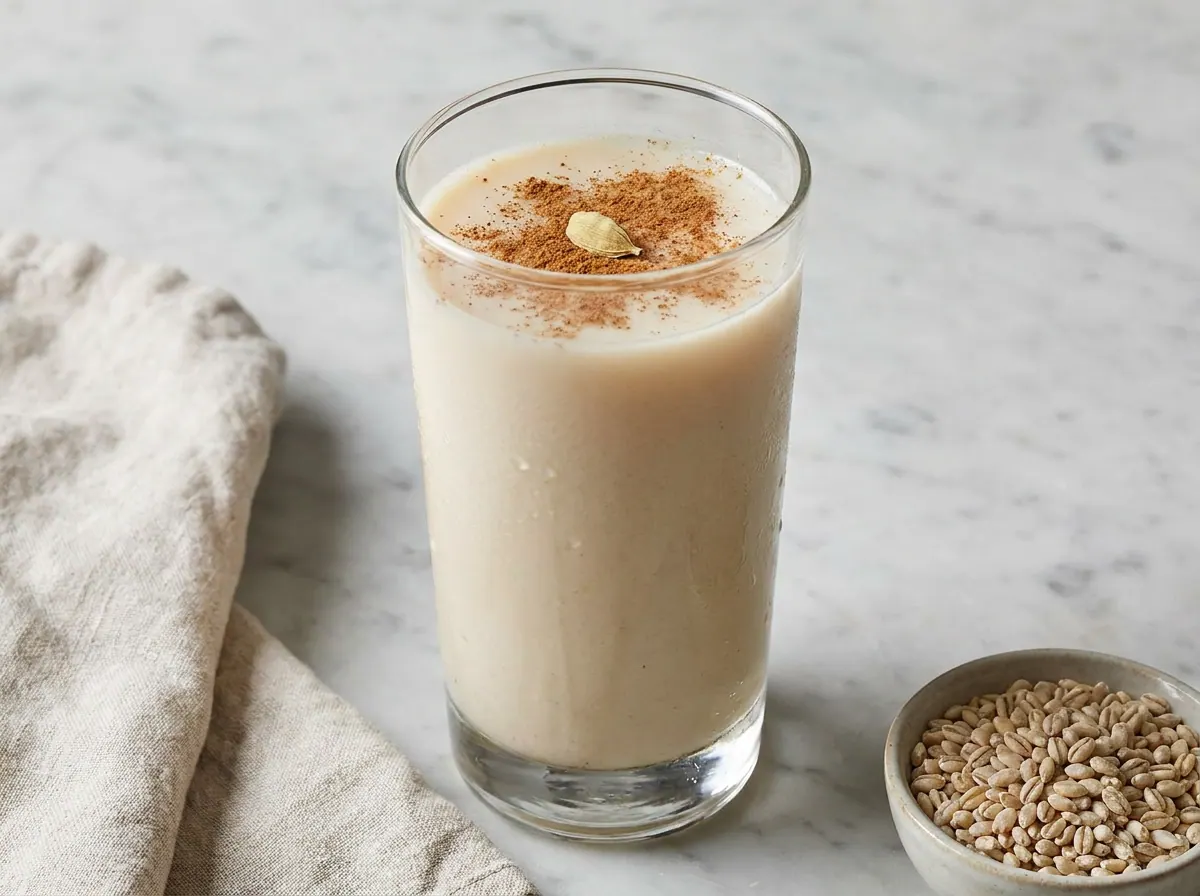
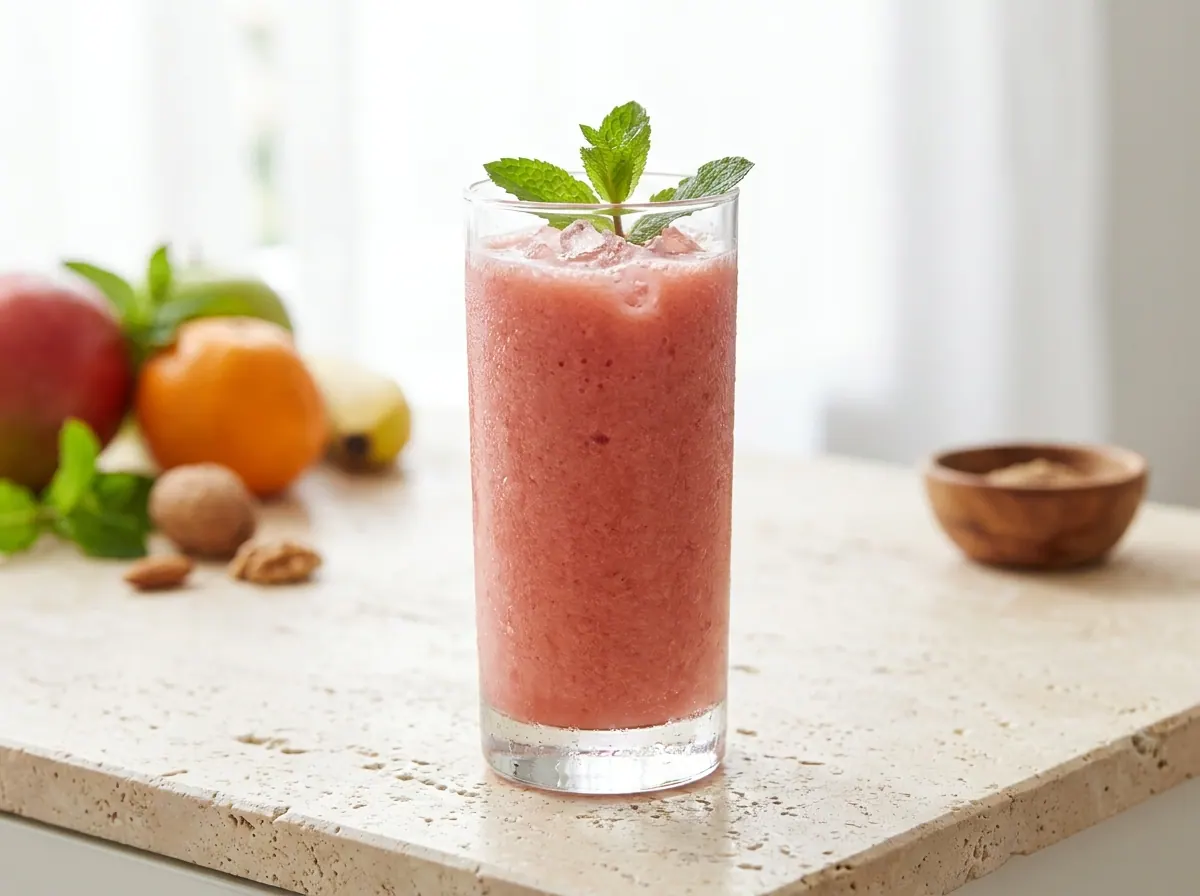
We combine abundant summer watermelon with rose water familiar in the Arab kitchen, producing a hydrating drink with a crimson color and a light floral note that suits the heat of the day.
The strained sharbat form makes it light on the stomach and easy to drink in family gatherings.
Preparation Steps
Blending the watermelon
Blend the seeded watermelon with the cold water in the blender until it becomes a smooth liquid, because blending it cold preserves its crimson color and fresh flavor.
Straining the pulp
Strain the blend through a fine sieve and press with the back of a spoon to separate the pulp and fibers, so we get a clear drink that is light on the tongue.
Adding the floral flavor
Add the rose syrup and rose water and stir well, then taste, and if we want more sweetness we add a little more rose syrup because its sweetness varies between brands.
Serving
Pour the drink into two glasses over the ice cubes and serve it right away while cold, as it loses its refreshment if it stands too long.
Blood Sugar Impact
The glycemic index (GI) measures how quickly a food raises blood sugar, while the glycemic load (GL) measures how much a full serving raises it. Together they give the complete picture.
Glycemic Index
GI
71High
Low0–55Medium56–69High70+
A low value (≤55) means a gradual rise in blood sugar — the most suitable range for diabetes and insulin resistance.
Glycemic Load
GL
22High
Low0–10Medium11–19High20+
Glycemic load reflects the impact of the full serving. To lower it: take half a serving, or pair the recipe with a source of protein and fiber.
Nutritional Information
Per ServingMakes 2 servings · one serving is about 370 g of raw ingredients
Calories126 kcal6%of Daily Value*
Protein1 g2%of Daily Value*
Carbohydrates32 g12%of Daily Value*
Fat0 g0%of Daily Value*
Fiber1 g4%of Daily Value*
Sodium3 mg0%of Daily Value*
Potassium254 mg5%of Daily Value*
Phosphorus25 mg2%of Daily Value*
* Percent Daily Values are based on a 2,000-calorie diet per FDA food-label reference values — your daily needs may be higher or lower. Values are derived from the recipe's ingredients via the USDA database.
Troubleshooting
The most common problems when preparing Watermelon Rose Sharbat, and how to fix them:
The drink is pale in color
We used unripe watermelon, so choose a deep red flesh, and reduce the added water so as not to pale the color.
The taste is watery
We diluted it with more water than needed, so restore the balance by adding more watermelon or reducing the water in the next blend.
The rose flavor is overpowering
We added too much rose water, so start with a smaller amount and add it drop by drop because rose water is highly concentrated.
Storage and Make-Ahead
The refrigerator
It keeps in a sealed container for up to one day, and we stir it before serving because the fine pulp may settle.
Serving
It is served fresh on the same day, as its taste and color are at their best when prepared right before serving.
Tested Ingredient Substitutions
Original Ingredient
Tested Substitute
Ratio
Flavor Difference
rose syrup
honey dissolved with a little rose water
30 g honey
A natural sweetening alternative when ready rose syrup is unavailable
rose water
orange blossom water
10 ml
Gives a different aromatic note familiar in the Gulf kitchen
watermelon
yellow cantaloupe
450 g
Another summer option with a lighter color and softer flavor for those who prefer it
ice cubes
frozen watermelon pieces
120 g
They chill the drink without diluting its flavor when they melt
How Much Does It Make? Scaling Guide
Ingredient
One glass
Two glasses (base)
Four glasses
seeded watermelon
225 g
450 g
900 g
cold water
60 ml
120 ml
240 ml
rose syrup
22 ml
45 ml
90 ml
rose water
5 ml
10 ml
20 ml
ice cubes
60 g
120 g
240 g
EEINA Nutrition Tip
Chill the watermelon in the refrigerator before blending so the drink comes out cold without the ice melting into it and diluting its flavor.
Add This Recipe to Your Plan
The EEINA app saves your favorite recipes, calculates them from their real ingredients, and shows your daily numbers toward your goal. Try it free now.