Watermelon is the king of our summer; we eat it cold in the afternoon to chase away the heat.
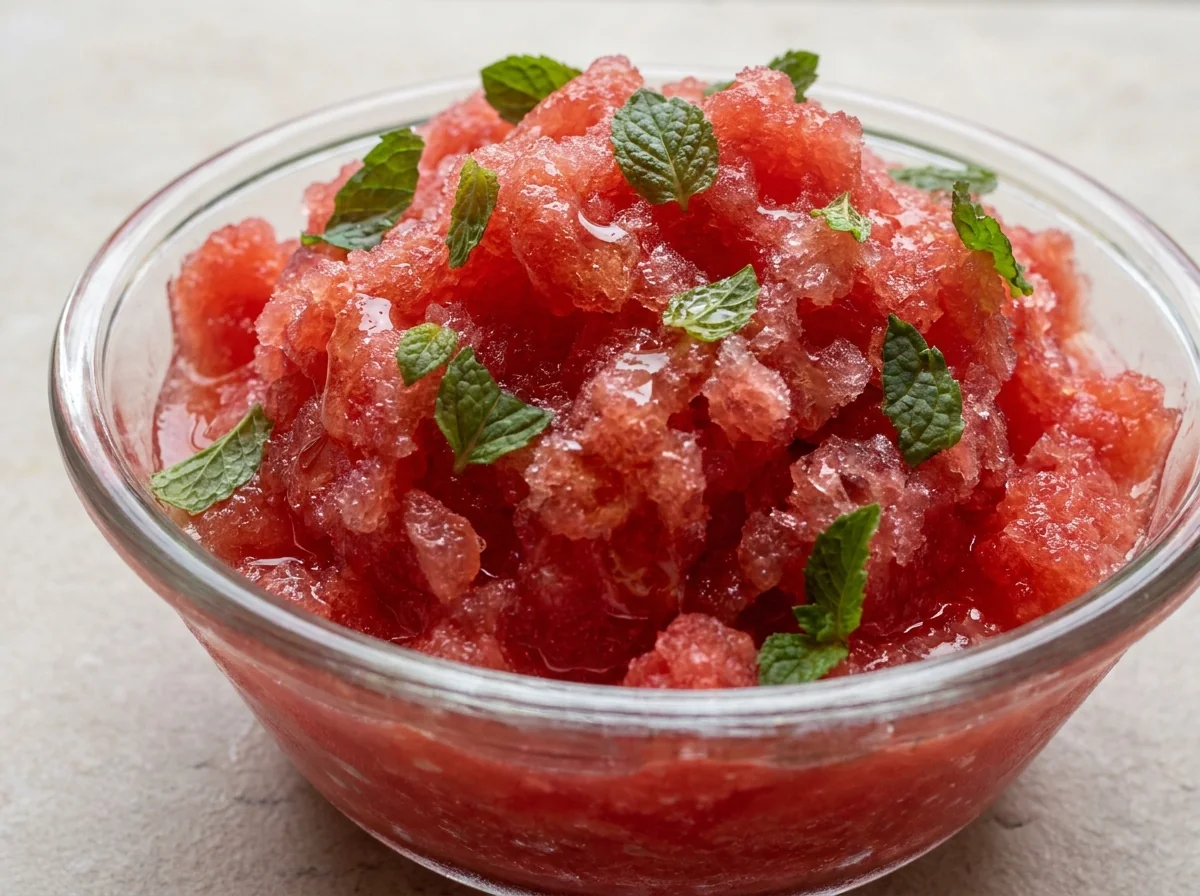
Here we turn it into granita, refreshing ice crystals that melt in the mouth and quench thirst.
Preparation Steps
Blend the watermelon
Blend the watermelon flesh in the blender until it becomes a smooth liquid. Remove the seeds first so they don't leave a bitter taste.
Strain
Pass the blended watermelon through a strainer to separate out any fibers or small seeds. Straining gives a smooth texture to the ice crystals.
Sweeten and acidify
Add the honey and lemon juice and stir well. The lemon brings out the sweetness of the watermelon and keeps the taste from turning flat. Watermelon is naturally sweet, so we use only a little honey.
Initial freeze
Pour the mixture into a wide, shallow-rimmed tray and place it in the freezer for an hour. A wide surface freezes the mixture faster and makes it easier to scrape.
Repeated scraping
Every half hour, take out the tray and scrape the frozen surface with a fork to turn it into ice crystals, then return it. The sign of readiness is that the whole mixture turns into separate ice crystals, not a solid block.
Repeat until frozen
Repeat the scraping three to four times over two to three hours until the entire mixture becomes even ice crystals.
Serve
Scoop the granita into chilled cups and garnish with mint leaves. Serve immediately before the crystals melt.
Blood Sugar Impact
The glycemic index (GI) measures how quickly a food raises blood sugar, while the glycemic load (GL) measures how much a full serving raises it. Together they give the complete picture.
Glycemic Index
GI
71High
Low0–55Medium56–69High70+
A low value (≤55) means a gradual rise in blood sugar — the most suitable range for diabetes and insulin resistance.
Glycemic Load
GL
9Low
Low0–10Medium11–19High20+
Glycemic load reflects the impact of the full serving. To lower it: take half a serving, or pair the recipe with a source of protein and fiber.
Nutritional Information
Per ServingMakes 6 servings · one serving is about 140 g of raw ingredients
Calories51 kcal3%of Daily Value*
Protein1 g2%of Daily Value*
Carbohydrates13 g5%of Daily Value*
Fat0 g0%of Daily Value*
Fiber1 g4%of Daily Value*
Sodium2 mg0%of Daily Value*
Potassium156 mg3%of Daily Value*
Phosphorus15 mg1%of Daily Value*
* Percent Daily Values are based on a 2,000-calorie diet per FDA food-label reference values — your daily needs may be higher or lower. Values are derived from the recipe's ingredients via the USDA database.
Troubleshooting
The most common problems when preparing Watermelon Granita, and how to fix them:
A solid block of ice formed instead of crystals
Take it out and let it soften a little, then scrape it firmly with a fork, and stick to scraping every half hour next time.
The crystals melt quickly when served
Chill the cups in the freezer before serving and serve immediately after scooping.
The taste is flat and lifeless
Add another splash of lemon juice, as it wakes up the watermelon flavor.
Too much fiber in the texture
Strain the watermelon a second time through a finer sieve before freezing.
Storage and Make-Ahead
Freezer
It keeps covered in the tray for up to a week; scrape it with a fork before serving to restore the crystals.
Before serving
If it has set too firmly, leave it for a few minutes at kitchen temperature, then scrape it again.
Tested Ingredient Substitutions
Original Ingredient
Tested Substitute
Ratio
Flavor Difference
Honey
Mashed dates
Same weight
A natural alternative, or omit the sweetener entirely if the watermelon is very sweet.
Lemon juice
Lime juice
Same amount
A more fragrant acidity that suits watermelon.
Mint
Fresh basil
To taste
A different aromatic flavor but just as refreshing.
Red watermelon
Blended cantaloupe (melon)
Same weight
An orange granita with a sweeter, softer flavor.
How Much Does It Make? Scaling Guide
Ingredient
Two servings
Six servings (base)
Twelve servings
Blended watermelon
267 g
800 g
1600 g
Lemon juice
10 ml
30 ml
60 ml
Honey
7 g
20 g
40 g
EEINA Nutrition Tip
Watermelon is naturally rich in water, so it forms lovely ice crystals when scraped without needing much sugar.
Add This Recipe to Your Plan
The EEINA app saves your favorite recipes, calculates them from their real ingredients, and shows your daily numbers toward your goal. Try it free now.