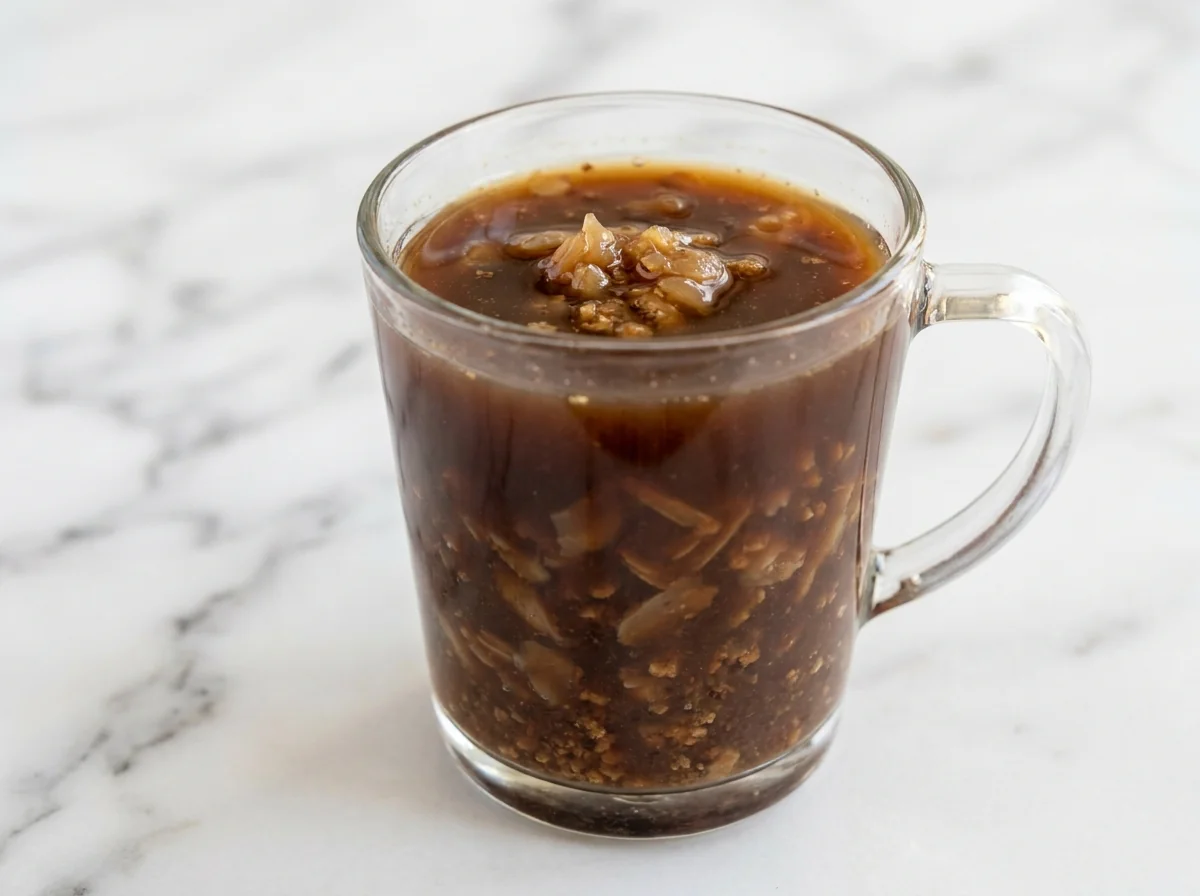
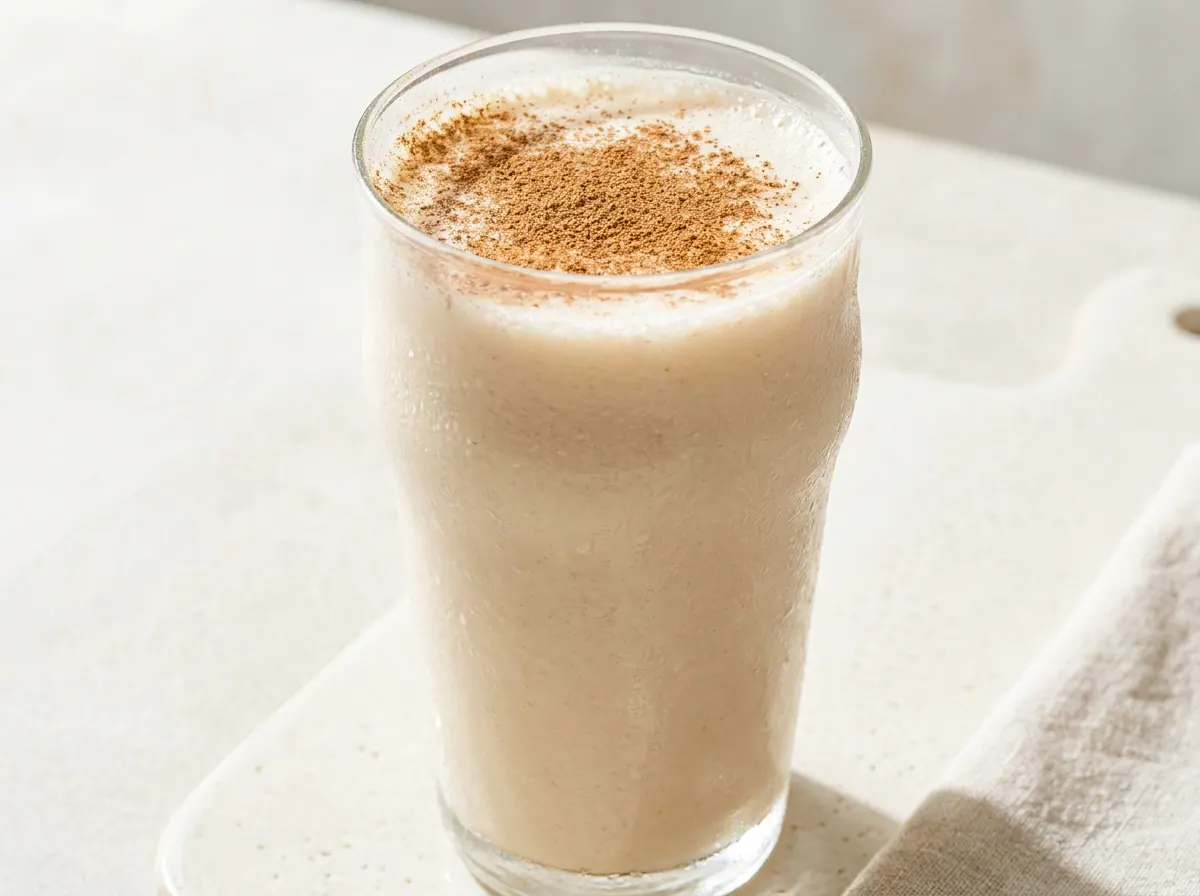
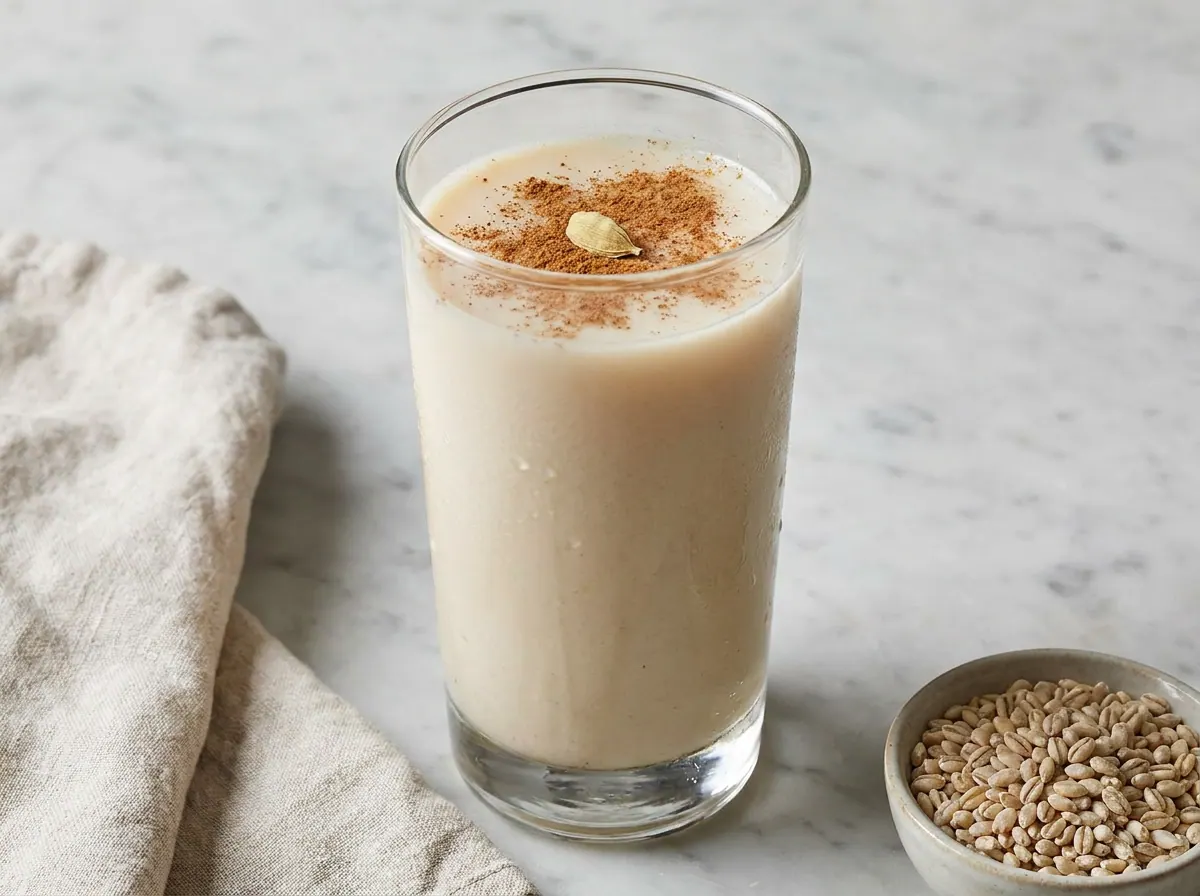
Hulumur, or abreh, is a venerable Sudanese Ramadan drink that families begin preparing weeks before Ramadan: red feterita sorghum is sprouted, then dried, ground, and cooked with cumin and fenugreek, and shaped into thin flakes on a hot griddle called awasa and stored dry.
In Ramadan the flakes are soaked, strained, and sweetened, and it is served as a cold drink that brings together the sweet and the bitter in a single flavor that sets it apart among the drinks of the world.
Preparation Steps
Soaking the flakes
Crumble the ready-made awasa flakes in a bowl and cover them with the cold water, and leave them to soak for twenty minutes until they soften completely and their edges dissolve. We soak because the flake was originally made to be stored dry before Ramadan, so the water restores its consistency and releases the flavor of the sprouted sorghum and the spices.
Mashing and straining
Mash the soaked mixture with a hand whisk until it becomes a thin porridge, then strain it through a fine sieve and press the pulp with the back of the spoon to extract all the liquid. We strain to separate the coarse sorghum husks from the drink so it stays smooth on the throat as it is served at Sudanese iftar tables.
Sweetening and serving
Dissolve the sugar in the strained drink and dilute it with the extra water until the consistency is balanced, then chill it and serve it in cold cups at iftar. We sweeten it moderately because the bitterness of the fenugreek and cumin is the identity of hulumur; it is a drink that brings together sweet and bitter, and excess sugar smothers this balance.
Blood Sugar Impact
The glycemic index (GI) measures how quickly a food raises blood sugar, while the glycemic load (GL) measures how much a full serving raises it. Together they give the complete picture.
Glycemic Index
GI
66Medium
Low0–55Medium56–69High70+
A low value (≤55) means a gradual rise in blood sugar — the most suitable range for diabetes and insulin resistance.
Glycemic Load
GL
14Medium
Low0–10Medium11–19High20+
Glycemic load reflects the impact of the full serving. To lower it: take half a serving, or pair the recipe with a source of protein and fiber.
Nutritional Information
Per ServingMakes 4 servings · one serving is about 345 g of raw ingredients
Calories89 kcal4%of Daily Value*
Protein1 g2%of Daily Value*
Carbohydrates21 g8%of Daily Value*
Fat0 g0%of Daily Value*
Fiber0 g0%of Daily Value*
Sodium58 mg3%of Daily Value*
* Percent Daily Values are based on a 2,000-calorie diet per FDA food-label reference values — your daily needs may be higher or lower. Values are derived from the recipe's ingredients via the USDA database.
Troubleshooting
The most common problems when preparing Sudanese Hulumur (Abreh), and how to fix them:
The drink is more bitter than it should be
Add water and sugar gradually while tasting, as the fenugreek's bitterness concentrates if there is too little water during soaking.
The consistency is too heavy
Thin it with extra cold water before serving so it flows easily in the cup.
Storage and Make-Ahead
The ready strained drink
It keeps covered in the refrigerator for up to two days, and is stirred before pouring because the pulp settles.
The dry awasa flakes
They keep in an airtight container away from moisture for months, and are the basis for preparing it throughout Ramadan.
Tested Ingredient Substitutions
Original Ingredient
Tested Substitute
Ratio
Flavor Difference
awasa flakes
sprouted sorghum flour
120 g
A close alternative when ready-made awasa is unavailable, with a light cooking first to cook the flour
sugar
strained mashed dates
80 g
A natural sweetener suited to iftar tables that adds depth of flavor
cumin in the traditional blend
anise
the same amount
A lighter aromatic flavor for those who do not like the sharpness of cumin
plain water
diluted rose water
the same amount
An optional aromatic touch suited to hospitality gatherings
How Much Does It Make? Scaling Guide
Ingredient
For two cups
For four (base)
For eight
awasa flakes
60 g
120 g
240 g
soaking water
450 ml
900 ml
1800 ml
sugar
30 g
60 g
120 g
diluting water
150 ml
300 ml
600 ml
EEINA Nutrition Tip
For a smoother drink, strain the soaked mixture twice through a clean cotton cloth instead of the sieve alone, as that traps the finest husks and leaves the liquid clear.
Add This Recipe to Your Plan
The EEINA app saves your favorite recipes, calculates them from their real ingredients, and shows your daily numbers toward your goal. Try it free now.
No, feterita (sorghum) is naturally free of gluten, but make sure the awasa flakes are made from pure sorghum without any wheat flour mixed in.
Why is it prepared weeks before Ramadan?
Because sprouting the sorghum, drying it, and forming the flakes is a process that spans days, so the flakes are prepared in advance and soaked quickly each day in Ramadan.
Can it be served hot?
Traditionally it is served cold at iftar to quench thirst, but there is no harm in serving it at room temperature.