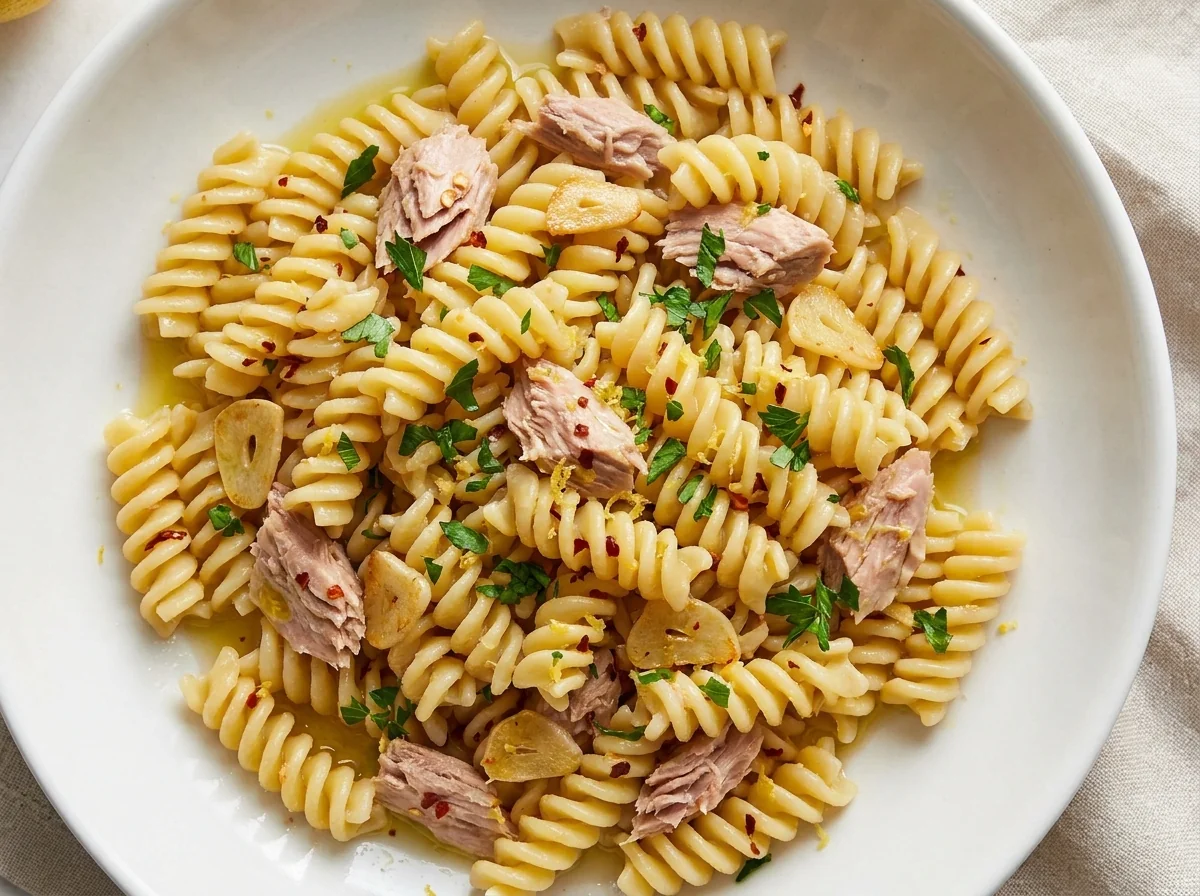
Tuna pasta is one of the everyday classics of southern Italian cuisine.
A shelf can of tuna meets garlic oil and lemon to give birth to a complete twenty-minute dinner. The southern fishermen's dish that proves the finest pasta can come from the simplest shelves.
Preparation Steps
Boil and reserve the starchy gold
Boil the pasta in honestly salted water one minute short of done and reserve a cup of its cooking water. The habit of pasta houses that never fall flat.
Build the garlic-and-pepper oil
In a wide pan over low heat, gild the garlic slices in the olive oil with the crushed pepper. The aroma and the heat settle into the oil.
Warm the tuna with its dignity
Add the tuna in large pieces and the capers or olives, and stir for just one warm minute. Oil-packed tuna is already cooked and noble; it wants warmth to wake it, not cooking that dries it out.
Marry with a shake of the emulsion
Add the drained pasta and half a cup of the cooking water to the pan, then shake and stir for a minute. The oil emulsifies with the starch into a light sauce that glistens on every piece.
Finish with lemon and greenery
Turn off the heat and stir in the lemon zest, juice, and parsley. Fresh acidity over the warmth of garlic: the quick sea pasta from a shelf can and twenty minutes.
Blood Sugar Impact
The glycemic index (GI) measures how quickly a food raises blood sugar, while the glycemic load (GL) measures how much a full serving raises it. Together they give the complete picture.
Glycemic Index
GI
49Low
Low0–55Medium56–69High70+
A low value (≤55) means a gradual rise in blood sugar — the most suitable range for diabetes and insulin resistance.
Glycemic Load
GL
36High
Low0–10Medium11–19High20+
Glycemic load reflects the impact of the full serving. To lower it: take half a serving, or pair the recipe with a source of protein and fiber.
Nutritional Information
Per ServingMakes 2 servings · one serving is about 215 g of raw ingredients
Calories596 kcal30%of Daily Value*
Protein30 g60%of Daily Value*
Carbohydrates78 g28%of Daily Value*
Fat18 g23%of Daily Value*
Fiber4 g14%of Daily Value*
Sodium804 mg35%of Daily Value*
* Percent Daily Values are based on a 2,000-calorie diet per FDA food-label reference values — your daily needs may be higher or lower. Values are derived from the recipe's ingredients via the USDA database.
Troubleshooting
The most common problems when preparing Spicy Tuna Lemon Pasta, and how to fix them:
The tuna dried into crumbs
It was cooked instead of warmed. One minute with gentle stirring, and large pieces are a creed.
The sauce vanished. Just oil and pasta
The emulsion shake faltered or the cooking water was forgotten. Half a cup of the starchy water and the vigorous minute.
The garlic burned
The heat went past gentle. Pale gold is its ceiling, and lift it aside if it gets ahead of the pasta's readiness.
The saltiness of the capers surprised me
Capers are salty by nature. Rinse them before they go in, and account for them when salting the boiling water.
Storage and Make-Ahead
Right away
With its fresh acidity. A dish of the moment.
In the fridge
One day, eaten cold as a respectable tuna pasta salad.
Not suitable for freezing
The tuna and the emulsion both lose out.
Tested Ingredient Substitutions
Original Ingredient
Tested Substitute
Ratio
Flavor Difference
Oil-packed tuna
Water-packed tuna with an extra spoon of pan oil
to taste
A fair compensation when necessary
The capers
Chopped green olives or omit
to taste
The sea saltinesses take turns
The crushed pepper
Omit it
to taste
Gentle for the whole table
White pasta
Whole wheat
1:1
Its fiber suits olive oil and the sea
How Much Does It Make? Scaling Guide
Ingredient
2 servings
1 serving
4 servings
Pasta
200 g
100 g
400 g
Tuna
140 g
70 g
280 g
Olive oil
30 ml
15 ml
60 ml
EEINA Nutrition Tip
Oil-packed tuna, not water-packed, for this dish specifically. Its oil is part of the sauce and its flavor is deeper and moister; add it warm for one minute in large pieces: in Italian pasta the tuna is a lady, not crumbs melting into the oil.
Add This Recipe to Your Plan
The EEINA app saves your favorite recipes, calculates them from their real ingredients, and shows your daily numbers toward your goal. Try it free now.
That one is cold with vegetables and a light dressing for work lunchboxes; this one is hot with emulsified garlic oil and fresh lemon. The can is the same, but the two stations are two different meals.
Is one can of tuna enough for two servings?
With two hundred grams of pasta, yes. The sea protein is present and the plate is completed with a side green salad.
Why no cheese on top?
Italy's famous rule: no Parmesan on sea pasta. The fish flavor is respected, not covered; and rebels are free in their own homes.
Which pasta suits it?
Short ridged shapes (penne or fusilli) hold the pieces and the sauce, and spaghetti is a classic that never disappoints.