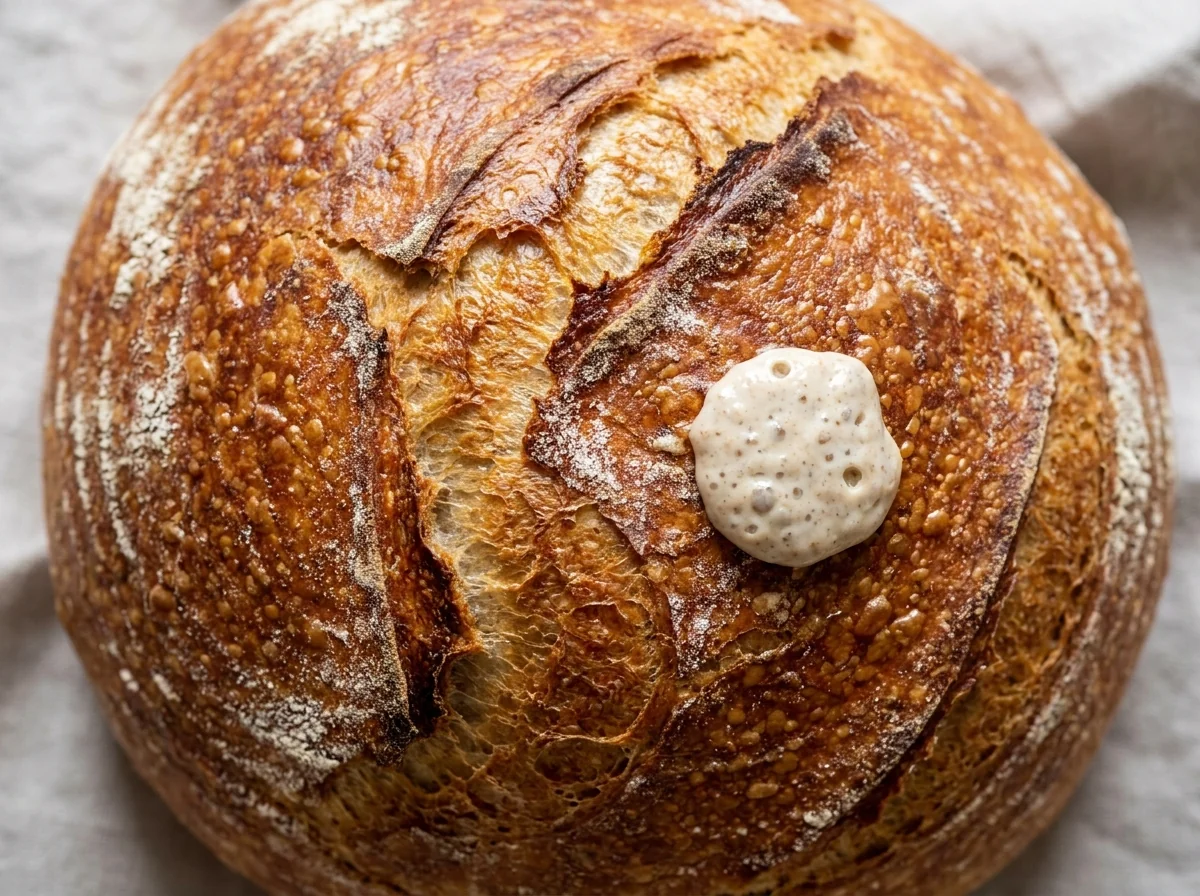
Sourdough is one of the oldest types of bread, relying on a natural leaven made from flour and water instead of commercial yeast, and it gives a gentle sour flavor and a crisp crust.
Preparation Steps
Combine the water and flour
Mix the flour with the water in a bowl until no dry flour remains, then let it rest for half an hour. This rest (autolyse) begins building the internal network, making the dough easier to shape later.
Add the starter and salt
Add the active starter dough and the salt and knead by hand until the mixture is homogeneous. We know the starter is active when it is bubbly and floats on the surface of water, which is proof that it can raise the dough.
Fold the dough at intervals
Over four hours, fold the dough onto itself every half hour (pull one edge and fold it toward the center four times per round). Folding strengthens the dough and traps gas so the loaf rises higher.
First fermentation
Leave the dough in a covered bowl until it puffs up by about a third and some bubbles appear on the surface. Slow fermentation gives the bread its distinctive sour flavor and a texture that is easier to digest.
Shaping and cold fermentation
Shape the dough into a taut ball and place it in a flour-dusted basket, then chill it in the fridge overnight. Chilling slows fermentation so the flavor deepens and the baking time becomes easier to control.
Heat the cast-iron pot
Heat the oven with a covered cast-iron pot at 230 degrees Celsius for twenty minutes. The preheated pot traps steam around the dough so a crisp crust forms.
Baking
Turn the loaf into the hot pot, score its surface with a blade in a single slash, cover and bake it for twenty-five minutes, then uncover and continue for twenty minutes until it browns. The slash directs the loaf's expansion so it does not crack randomly.
Cool before slicing
Lift the loaf onto a rack and let it cool for a full hour before slicing. Cooling finishes cooking the crumb inside, and slicing it hot makes it gummy.
Blood Sugar Impact
The glycemic index (GI) measures how quickly a food raises blood sugar, while the glycemic load (GL) measures how much a full serving raises it. Together they give the complete picture.
Glycemic Index
GI
68Medium
Low0–55Medium56–69High70+
A low value (≤55) means a gradual rise in blood sugar — the most suitable range for diabetes and insulin resistance.
Glycemic Load
GL
27High
Low0–10Medium11–19High20+
Glycemic load reflects the impact of the full serving. To lower it: take half a serving, or pair the recipe with a source of protein and fiber.
Nutritional Information
Per ServingMakes 8 servings · one serving is about 100 g of raw ingredients
Calories201 kcal10%of Daily Value*
Protein6 g12%of Daily Value*
Carbohydrates42 g15%of Daily Value*
Fat1 g1%of Daily Value*
Fiber2 g7%of Daily Value*
Sodium389 mg17%of Daily Value*
* Percent Daily Values are based on a 2,000-calorie diet per FDA food-label reference values — your daily needs may be higher or lower. Values are derived from the recipe's ingredients via the USDA database.
Troubleshooting
The most common problems when preparing Sourdough Bread, and how to fix them:
The loaf is dense and did not rise
The starter is usually weak; make sure it is bubbly and floats before use, and extend the first fermentation.
The crust is soft, not crisp
Bake inside a covered, preheated pot to trap steam, and extend the uncovered stage until it browns.
The dough is sticky and hard to shape
Dust your hands and the surface with a little flour and rest the dough, and avoid adding more water than the amount.
Too sour a taste
Shorten the cold fermentation time in the fridge and use a freshly fed starter.
Storage and Make-Ahead
Room temperature
Wrap the loaf in a cotton cloth and keep it for two days, with the cut side facing down to preserve moisture.
Freezing
Slice the loaf and freeze it in a sealed bag for up to three months, and toast a slice directly when needed.
Tested Ingredient Substitutions
Original Ingredient
Tested Substitute
Ratio
Flavor Difference
Starter dough
Instant yeast
One teaspoon per loaf
Saves time but loses the distinctive sour flavor
Bread flour
All-purpose flour
Same weight
The result is slightly less cohesive and rises a little less
Part of the white flour
Whole-wheat flour
Up to a quarter of the amount
Increases the fiber and gives a deeper flavor with a denser loaf
How Much Does It Make? Scaling Guide
Ingredient
2 servings
4 servings (base)
8 servings
Bread flour
100 g
200 g
400 g
Water
75 ml
150 ml
300 ml
Starter dough
25 g
50 g
100 g
Salt
2 g
4 g
8 g
EEINA Nutrition Tip
The starter dough is a living mix of flour and water left to ferment with its natural organisms over several days until it becomes active; feed it daily with flour and water. If unavailable, start a quick loaf with a teaspoon of instant yeast instead, shortening the fermentation time.
Add This Recipe to Your Plan
The EEINA app saves your favorite recipes, calculates them from their real ingredients, and shows your daily numbers toward your goal. Try it free now.