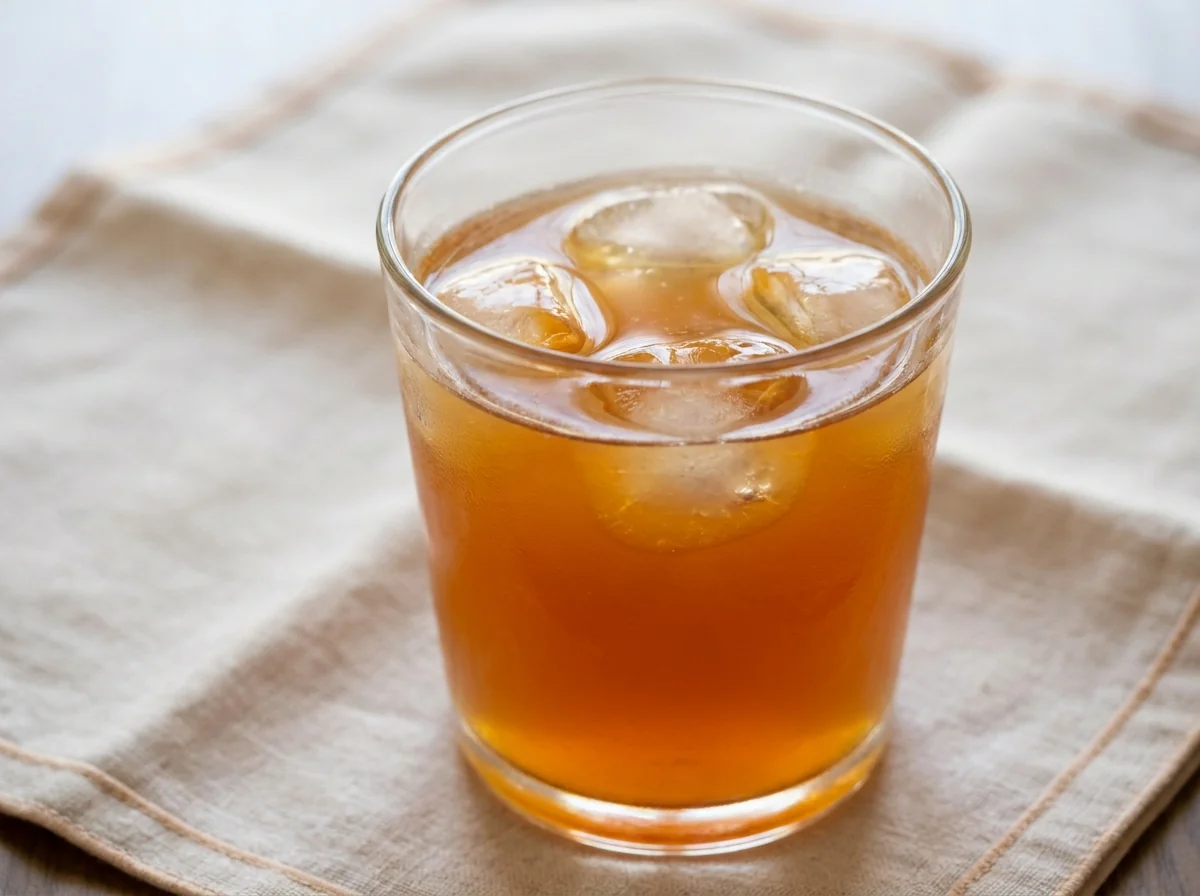
Naranj syrup, or Abu Sfeir, is one of the venerable Damascene cordials, made from the sour bitter orange that is juiced and boiled with sugar so it becomes a concentrated syrup kept in bottles.
Its distinctive acidity makes it one of the most refreshing cordials when diluted with cold water on hot days.
Preparation Steps
Juicing the naranj and straining it
Juice the naranj fruits and strain the juice well from the seeds and pulp, as naranj seeds carry a bitterness that passes into the syrup if they remain in it.
Dissolving the sugar
Combine the strained naranj juice with the sugar and water in a pot and stir while cold until the sugar begins to dissolve, because dissolving it before heating prevents it from clumping on the bottom.
Boiling until it thickens
Bring the pot to gentle heat and let the syrup boil until the sugar dissolves completely and it thickens to a light consistency that coats the spoon, being careful not to prolong the boiling so it does not turn into a heavy consistency.
Cooling and storing
Let the syrup cool, then bottle it concentrated in a sterilized airtight glass container, as bottling in glass preserves the acidity and flavor of the naranj longer than plastic.
Diluting at serving
Pour an amount of the concentrated syrup into the glass and top it with cold water and ice at a ratio of about one cup of syrup to four cups of water, as the syrup is a concentrated sour syrup that is diluted rather than drunk as is, adjusting it to taste.
Blood Sugar Impact
The glycemic index (GI) measures how quickly a food raises blood sugar, while the glycemic load (GL) measures how much a full serving raises it. Together they give the complete picture.
Glycemic Index
GI
63Medium
Low0–55Medium56–69High70+
A low value (≤55) means a gradual rise in blood sugar — the most suitable range for diabetes and insulin resistance.
Glycemic Load
GL
34High
Low0–10Medium11–19High20+
Glycemic load reflects the impact of the full serving. To lower it: take half a serving, or pair the recipe with a source of protein and fiber.
Nutritional Information
Per ServingMakes 10 servings · one serving is about 350 g of raw ingredients
Calories214 kcal11%of Daily Value*
Protein0 g0%of Daily Value*
Carbohydrates54 g20%of Daily Value*
Fat0 g0%of Daily Value*
Fiber0 g0%of Daily Value*
Sodium1 mg0%of Daily Value*
* Percent Daily Values are based on a 2,000-calorie diet per FDA food-label reference values — your daily needs may be higher or lower. Values are derived from the recipe's ingredients via the USDA database.
Troubleshooting
The most common problems when preparing Sour Orange Syrup, and how to fix them:
The syrup is more bitter than sour
Seeds or pulp remained in the juice, so strain it a second time through a fine sieve before reboiling.
The syrup did not thicken
It was taken off the heat too early, so return it to gentle heat until some of the water evaporates and the consistency thickens.
The syrup crystallized after cooling
The sugar concentration rose, so reheat it with a little water until the crystals dissolve again.
Storage and Make-Ahead
The refrigerator
Keep the concentrated syrup in an airtight glass bottle for up to three months, thanks to the natural acidity of the naranj.
Freezing
Freeze the concentrated syrup in molds for up to six months, and thaw the mold in water at serving.
Tested Ingredient Substitutions
Original Ingredient
Tested Substitute
Ratio
Flavor Difference
naranj juice
a mix of sweet orange juice and lemon juice
orange 400 ml and lemon 100 ml
A substitute that comes close to the acidity of bitter naranj when it is unavailable.
sugar
coconut sugar
same weight 500 g
A less refined substitute with a darker color and a light caramel flavor.
cold diluting water
carbonated water
same amount per glass
A substitute that gives a refreshing fizz suited to the acidity of the naranj.
ice
frozen naranj cubes
per glass
A substitute that chills the drink without diluting its flavor as it melts.
How Much Does It Make? Scaling Guide
Ingredient
Half the quantity
Base quantity (10 cups)
Double the quantity
naranj juice (ml)
250
500
1000
sugar (g)
250
500
1000
water (ml)
125
250
500
diluting water (ml)
1000
2000
4000
EEINA Nutrition Tip
Strain the naranj juice from the seeds carefully before boiling, as the seeds leave a lingering bitterness in the syrup.
Add This Recipe to Your Plan
The EEINA app saves your favorite recipes, calculates them from their real ingredients, and shows your daily numbers toward your goal. Try it free now.