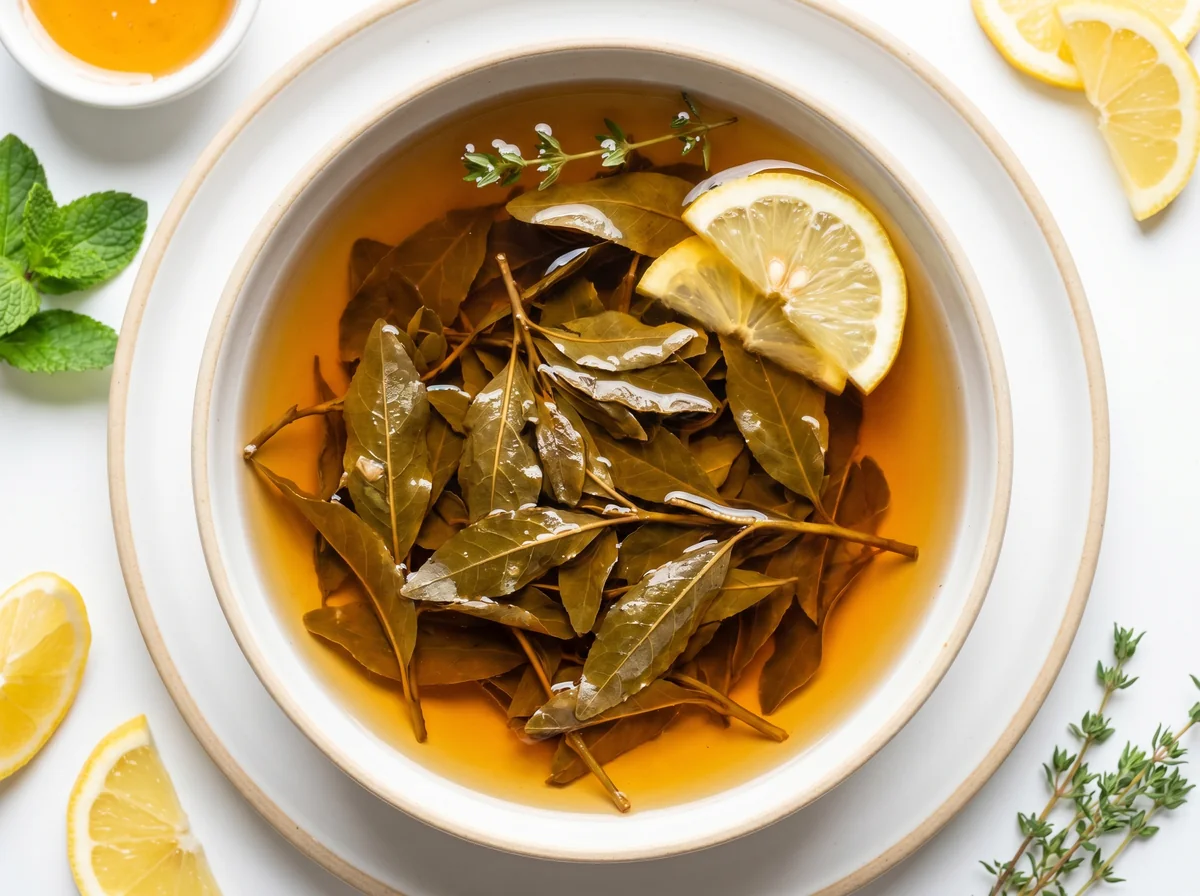
The sidr is a tree deeply embedded in the collective memory of the Arabian Peninsula, growing in valleys and farms from Tihamah to Najd, and from Asir to Hadramawt — its small, sweet nabq fruit is loved by young and old alike. In many Saudi and Yemeni homes, sidr leaves are dried and kept, then steeped in hot water as a calm evening drink with a faint herbal fragrance and a clear golden colour.
The sidr has long been associated with a warm domestic ritual: a cup sipped slowly after dinner or on cold winter nights. We present it here as it has been passed down through homes — a simple, almost calorie-free traditional drink we celebrate for its authenticity and warmth, not for any medicinal claim.
Preparation Steps
Rinse the leaves
Rinse the dried sidr leaves under cold running water for about half a minute to remove dust and impurities — dried leaves accumulate dust during drying and storage. Drain well.
Heat the water
Place the water in a kettle over medium heat until it begins to boil and continuous bubbles appear on the surface at around one hundred degrees Celsius — very hot water is needed to extract the flavour and colour of the leaves.
Steep the leaves
Add the rinsed leaves to the water, then lower the heat to gentle and leave to steep for about seven minutes until the water turns a pale golden colour and a faint herbal scent rises — long steeping draws out the flavour without making it astringent and bitter.
Strain
Strain the infusion into serving cups through a fine sieve to remove the leaves and any fragments, so the liquid is clear and ready to drink without sediment.
Sweeten and serve
Stir the honey into the cup while it is warm but not boiling if you want to sweeten it, and optionally add the lemon slice, then serve hot. Add the honey after the water cools slightly to preserve its flavour.
Blood Sugar Impact
The glycemic index (GI) measures how quickly a food raises blood sugar, while the glycemic load (GL) measures how much a full serving raises it. Together they give the complete picture.
Glycemic Index
GI
46Low
Low0–55Medium56–69High70+
A low value (≤55) means a gradual rise in blood sugar — the most suitable range for diabetes and insulin resistance.
Glycemic Load
GL
3Low
Low0–10Medium11–19High20+
Glycemic load reflects the impact of the full serving. To lower it: take half a serving, or pair the recipe with a source of protein and fiber.
Nutritional Information
Per ServingMakes 2 servings · one serving is about 285 g of raw ingredients
Calories24 kcal1%of Daily Value*
Protein0 g0%of Daily Value*
Carbohydrates7 g3%of Daily Value*
Fat0 g0%of Daily Value*
Fiber1 g4%of Daily Value*
Sodium1 mg0%of Daily Value*
Potassium43 mg1%of Daily Value*
Phosphorus5 mg0%of Daily Value*
* Percent Daily Values are based on a 2,000-calorie diet per FDA food-label reference values — your daily needs may be higher or lower. Values are derived from the recipe's ingredients via the USDA database.
Troubleshooting
The most common problems when preparing Hot Sidr Leaf Infusion (Nabq), and how to fix them:
The infusion has a faint, flavourless taste
The leaves were steeped too briefly or in water that was not hot enough. Re-steep in water near boiling point and leave for a full seven to eight minutes, and increase the quantity of leaves slightly if needed.
The taste is astringent and bitter
The steeping time was too long or there were too many leaves. Reduce the time to five minutes and use fewer leaves, and strain the infusion as soon as it reaches a pale golden colour without leaving the leaves in.
Sediment and fragments in the cup
Use a fine sieve or a paper tea filter when straining, and rinse the leaves thoroughly before steeping to remove any broken fragments.
The honey does not dissolve or lost its flavour
It was added to water that was too hot. Wait until the infusion cools slightly to become warm then stir in the honey — high heat destroys its aromatic flavour.
The infusion colour is too dark and dense
Dilute with additional hot water until it returns to a clear golden colour, and reduce the steeping time next time.
Storage and Make-Ahead
Dried leaves
Store the dried sidr leaves in a tightly sealed container away from light and moisture in a dry place — they keep for months retaining their flavour as long as they are completely dry and show no musty smell.
Infusion in the refrigerator
Store leftover strained infusion in a covered container in the refrigerator for up to two days, and drink it cold or gently reheat it. Discard it if its smell changes or any cloudiness appears.
Leaving infusion at room temperature
Do not leave the strained infusion out of the refrigerator for more than two hours (or one hour in hot weather), as microbes thrive in warm liquids left out — the safest option is to refrigerate it quickly or drink it fresh.
Tested Ingredient Substitutions
Original Ingredient
Tested Substitute
Ratio
Flavor Difference
Dried sidr leaves
Fresh sidr leaves
about double the amount (8 g)
Fresh leaves have higher moisture so a larger quantity is needed for equivalent flavour — wash them thoroughly before steeping.
Honey
Pitted date
1 to 2 pieces per cup
Steep the date with the leaves for light natural sweetening with a local flavour, with a slight increase in calories.
Honey
No sweetener
none
This option keeps the drink almost completely calorie-free and is the most suitable for those watching their weight and blood sugar.
Lemon slice
A thin slice of fresh ginger
1 thin slice
Steeped with the leaves it adds warmth and a gentle bite that suits cold winter nights.
Tap water
Low-mineral mineral water
the same amount
Some people find that gentler-tasting water allows the herbal flavour of the leaves to come through more clearly.
How Much Does It Make? Scaling Guide
Ingredient
2 cups (recipe)
4 cups
Pitcher (6 cups)
Water
500 ml
1 L
1.5 L
Dried sidr leaves
4 g
8 g
12 g
Honey (optional)
10 g
20 g
30 g
Steeping time
7 min
7 to 8 min
8 to 9 min
EEINA Nutrition Tip
If you are replacing a sweetened evening drink with this infusion, leave out the honey or reduce the sweetening gradually until your palate adjusts to the clean herbal flavour — that way you gain the benefit of cutting added sugar and keep the drink almost calorie-free. Drink it warm, not boiling hot, to protect your throat.
Add This Recipe to Your Plan
The EEINA app saves your favorite recipes, calculates them from their real ingredients, and shows your daily numbers toward your goal. Try it free now.
No, the infusion does not burn fat or slim by itself. Its benefit for weight is purely substitutive: when you replace a sweetened high-calorie drink with it, you reduce your daily calories. It is an almost calorie-free drink that helps with hydration and breaking the habit of sugary drinks — nothing more.
How many cups a day can I drink?
As a traditional drink, it is consumed in moderation — one or two cups a day for most healthy adults. Since the evidence on its health effects is limited, it is best not to make it an intensive daily drink without consultation, especially for those with chronic conditions.
Is it suitable for pregnant or breastfeeding women, or people with diabetes?
Herbal drinks may interact with certain medications or conditions, and the evidence on the safety of sidr during pregnancy and breastfeeding is insufficient. Pregnant and breastfeeding women and those taking diabetes or blood pressure medication should consult a doctor or pharmacist before adopting it as a regular drink.
What is the difference between sidr leaf and nabq?
Sidr is the tree name (Ziziphus spina-christi), and nabq is its small, sweet fruit. This recipe uses dried sidr leaves, not the fruit — the leaves are what is traditionally steeped as a hot herbal drink.
Can it be drunk cold?
Yes — the strained infusion can be chilled in the refrigerator and drunk cold and refreshing with ice and a lemon slice, especially in summer. Store it chilled for up to two days and drink it as fresh as possible.