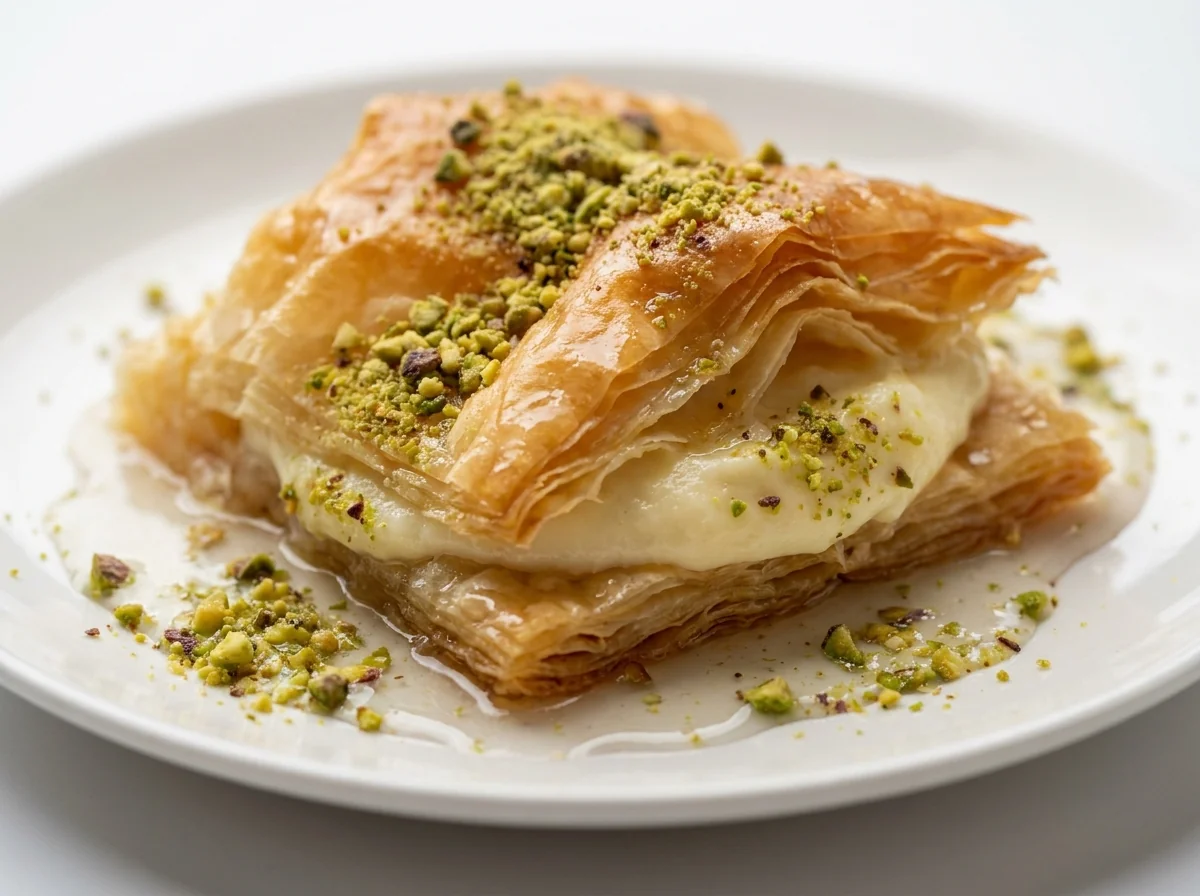
We make Shuaybiyat the way they are made in the homes of the Levant for holidays: a thin dough brushed with butter and folded several times until it flakes, then filled with ashta and baked until golden.
Their secret is drenching them with cold sugar syrup while they are hot so they stay crisp on the outside and soft in their filling, and we garnish them with pistachio to complete their grandeur on the hospitality table.
Preparation Steps
Kneading the dough
Mix the flour with the sodium bicarbonate, ghee, and sugar syrup, then add the water gradually and knead until you get a smooth, cohesive dough, and leave it to rest for fifteen minutes.
Dividing the dough
Shape the dough into a cylinder and cut it into equal-sized balls, and leave them to rest a little until they soften and are easy to roll out.
Layering
Roll out each ball thinly, brush it with the softened butter, then fold it and repeat the rolling and brushing several times until flaky layers form.
Filling and shaping
Place a spoonful of ashta on the edge of the rolled-out dough, fold it into a triangle or a cylinder, and seal its edges well so the filling does not leak.
Baking
Arrange them on a tray and bake them in an oven preheated to two hundred degrees for about twenty minutes until their tops turn golden and flaky.
Drenching and serving
Drench them with the cold sugar syrup as soon as they come out of the oven so they keep their crispness, garnish them with the crushed pistachio, and serve.
Blood Sugar Impact
The glycemic index (GI) measures how quickly a food raises blood sugar, while the glycemic load (GL) measures how much a full serving raises it. Together they give the complete picture.
Glycemic Index
GI
67Medium
Low0–55Medium56–69High70+
A low value (≤55) means a gradual rise in blood sugar — the most suitable range for diabetes and insulin resistance.
Glycemic Load
GL
34High
Low0–10Medium11–19High20+
Glycemic load reflects the impact of the full serving. To lower it: take half a serving, or pair the recipe with a source of protein and fiber.
Nutritional Information
Per ServingMakes 6 servings · one serving is about 140 g of raw ingredients
Calories443 kcal22%of Daily Value*
Protein9 g18%of Daily Value*
Carbohydrates53 g19%of Daily Value*
Fat22 g28%of Daily Value*
Fiber2 g7%of Daily Value*
Sodium62 mg3%of Daily Value*
* Percent Daily Values are based on a 2,000-calorie diet per FDA food-label reference values — your daily needs may be higher or lower. Values are derived from the recipe's ingredients via the USDA database.
Troubleshooting
The most common problems when preparing Shuaybiyat (Levantine Layered Cream Pastry with Ashta and Pistachio), and how to fix them:
The Shuaybiyat lost their crispness and turned soft
Make sure the syrup is cold and the pastries are hot when drenching, and do not submerge them in the syrup but sprinkle it lightly.
The layers did not flake
Brush each rolled sheet with softened butter and repeat the folding and rolling, and let the dough rest between folds so the layers set.
The filling leaks during baking
Use a firm ashta and seal the edges of the dough well, and do not overfill so it does not spill out.
Storage and Make-Ahead
Room temperature
Keep them without syrup in an airtight container for two days, and drench them with syrup at serving so they stay crisp.
Refrigerator
After drenching with syrup, they keep in the refrigerator for one day, but they lose some of their crispness, so it is best to eat them the same day.
Tested Ingredient Substitutions
Original Ingredient
Tested Substitute
Ratio
Flavor Difference
ashta (clotted cream)
homemade milk ashta or sweetened curd cheese
same weight, 200 g
Homemade ashta is lower in fat than store-bought
butter
traditional ghee
same weight, 100 g
Ghee gives a deeper Levantine flavor and a clearer aroma
pistachio
crushed walnuts or almonds
same weight, 20 g
The flavor differs while the garnish stays crunchy
sugar syrup
diluted syrup or thinned honey
to taste
Diluting the syrup reduces the sugar a little while keeping the sweet character
How Much Does It Make? Scaling Guide
Ingredient
Half the amount
Amount (base)
Double
White flour
125 g
250 g
500 g
Butter for layering
50 g
100 g
200 g
Ashta for filling
100 g
200 g
400 g
Cold sugar syrup
40 ml
80 ml
160 ml
Pistachios
10 g
20 g
40 g
EEINA Nutrition Tip
Drench the hot Shuaybiyat with cold, not hot, sugar syrup, for the temperature difference between the pastries and the syrup is what preserves their crispness and prevents them from soaking up too much.
Add This Recipe to Your Plan
The EEINA app saves your favorite recipes, calculates them from their real ingredients, and shows your daily numbers toward your goal. Try it free now.
Why do we drench them with cold syrup while they are hot?
Because the contrast between the hot pastries and the cold syrup makes the surface absorb a measured amount of syrup and stay crisp, whereas hot syrup saturates and softens them.
Can they be fried instead of baked?
Yes, Shuaybiyat are deep-fried until golden and flaky, but baking them in the oven is lower in fat and closer to a lighter style.
What is the difference between Shuaybiyat and warbat?
Both are flaky pastries with ashta, but warbat are usually made from ready thin dough and folded into triangles, while Shuaybiyat use a homemade dough layered with butter and folding.