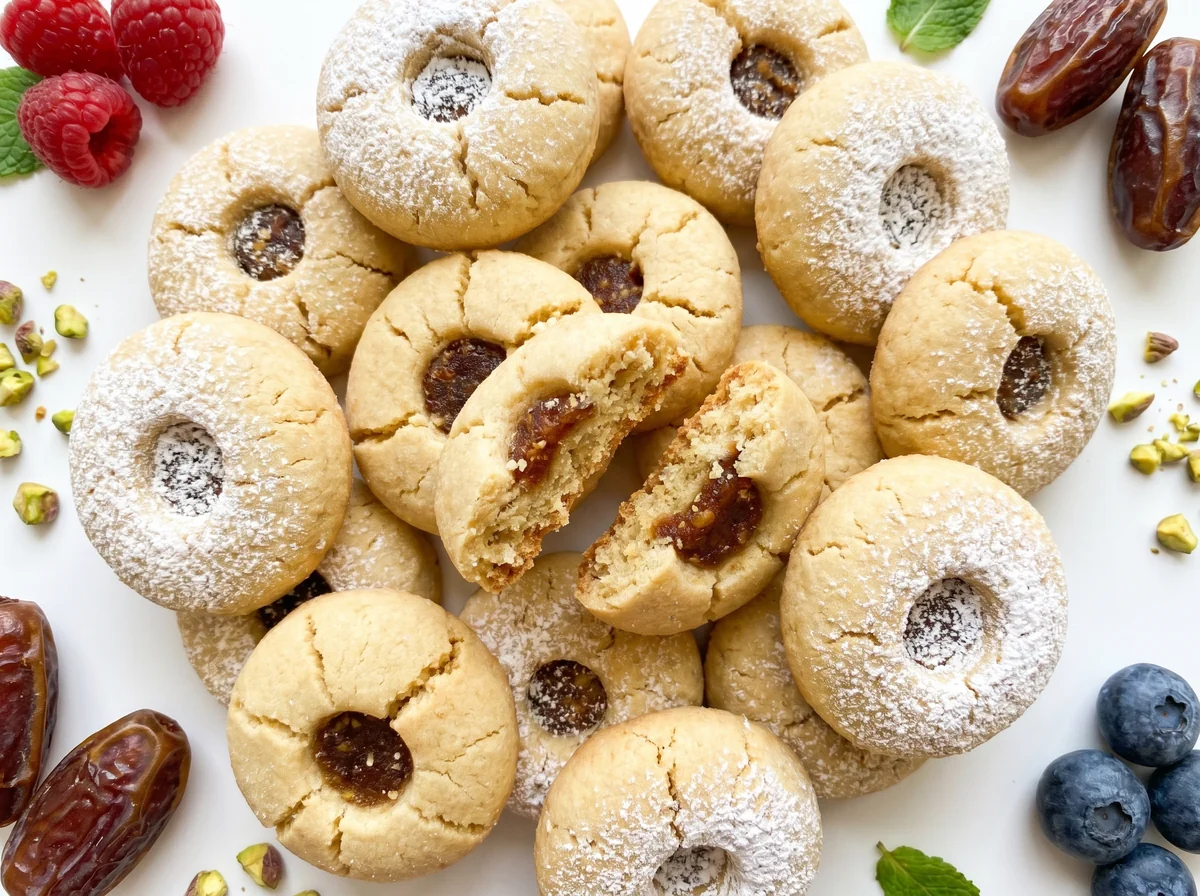
Melt-in-the-mouth Lebanese shortbread dusted with icing sugar — a three-ingredient classic made from semolina, butter, and a whisper of rose water, associated with the Saniora confectionery of Sidon.
Saniora cookies take their name from the legendary Saniora confectionery of Sidon, the ancient coastal city of Lebanon.
For generations, these melt-in-the-mouth semolina shortbreads have been the cookies of Lebanese hospitality — carried as gifts, served with bitter coffee, and made at Eid. Simple ingredients, a gentle hand, and patience with the oven are all they need.
Preparation Steps
Cream the butter and sugar
Beat the softened butter with the icing sugar until pale and fluffy. This step traps air and gives the cookies their characteristic melt-in-the-mouth lightness.
Add the semolina and flour
Mix in the fine semolina and plain flour with the rose water and a pinch of salt. Work gently until a soft, smooth dough forms. Do not over-knead — shortbread becomes tough if worked too much.
Rest the dough
Cover the dough and rest at room temperature for 15 minutes. Resting allows the semolina to hydrate fully and makes shaping easier.
Shape
Roll the dough into small balls (about 15 g each) and press gently to flatten slightly. For the classic Saniora look, press a fork pattern into the top or use a wooden mould.
Bake
Bake in a preheated oven at 160°C for 12 to 15 minutes until the cookies are set but still pale — they should not brown. They firm up as they cool.
Dust and serve
Once cool, dust generously with icing sugar. Store in an airtight tin. These are the cookies of Lebanese hospitality — offered with coffee or tea.
Blood Sugar Impact
The glycemic index (GI) measures how quickly a food raises blood sugar, while the glycemic load (GL) measures how much a full serving raises it. Together they give the complete picture.
Glycemic Index
GI
71High
Low0–55Medium56–69High70+
A low value (≤55) means a gradual rise in blood sugar — the most suitable range for diabetes and insulin resistance.
Glycemic Load
GL
11Medium
Low0–10Medium11–19High20+
Glycemic load reflects the impact of the full serving. To lower it: take half a serving, or pair the recipe with a source of protein and fiber.
Nutritional Information
Per ServingMakes 30 servings · one serving is about 25 g of raw ingredients
Calories141 kcal7%of Daily Value*
Protein1 g2%of Daily Value*
Carbohydrates16 g6%of Daily Value*
Fat8 g10%of Daily Value*
Fiber0 g0%of Daily Value*
Sodium0 mg0%of Daily Value*
Potassium13 mg0%of Daily Value*
Phosphorus13 mg1%of Daily Value*
* Percent Daily Values are based on a 2,000-calorie diet per FDA food-label reference values — your daily needs may be higher or lower. Values are derived from the recipe's ingredients via the USDA database.
Troubleshooting
The most common problems when preparing Saniora Lebanese Shortbread, and how to fix them:
Cookies are hard, not crumbly
Dough was overworked or too much flour was added. Handle the dough gently and stop mixing as soon as it comes together.
Cookies spread and flatten
Butter was too warm or too soft. Chill the shaped cookies for 15 minutes before baking.
Cookies are browning
Oven too hot. Saniora should remain pale. Reduce the temperature to 150°C and watch closely — they should look almost undone when you take them out.
Rose water flavour too strong
Start with half a tablespoon. Rose water varies in intensity by brand; Lebanese brands tend to be stronger.
Dough crumbles when shaping
Dough is too dry. Add a teaspoon of cold water or a little extra softened butter and work gently until it holds.
Storage and Make-Ahead
Room temperature
Up to two weeks in an airtight tin — they keep well and improve slightly over the first few days.
Refrigerator (4°C)
Not recommended — refrigeration makes shortbread absorb moisture and soften unpleasantly.
Freezer (-18°C)
Up to two months in a sealed container. Thaw at room temperature, then re-dust with icing sugar before serving.
Gifting
Layer between sheets of baking paper in a tin or box. Saniora travel well and are a traditional Lebanese gift.
Tested Ingredient Substitutions
Original Ingredient
Tested Substitute
Ratio
Flavor Difference
Fine semolina
All-purpose flour only
Same quantity
Loses the distinctive sandy texture; the result is a more conventional shortbread
Unsalted butter
Ghee
Same weight
More traditional; gives a richer, nuttier flavour
Rose water
Orange blossom water
Same quantity
Equally traditional Lebanese flavouring — slightly more floral
Icing sugar
Caster sugar
Same weight
Slightly less fine result; the cookies will be a little crisper
How Much Does It Make? Scaling Guide
Number of pieces
Flour
Ghee
Rose water
15 (small)
1.5 cups
0.5 cup
0.5 cup
30 (base)
3 cups
1 cup
1 cup
60 (Eid)
6 cups
2 cups
2 cups
EEINA Nutrition Tip
These are an occasional treat — high in refined carbohydrates. Keep to one or two cookies at a time alongside a cup of tea or coffee (without sugar). The semolina gives them a lower GI than all-flour shortbread, but the glycemic load is still significant per serving.
Add This Recipe to Your Plan
The EEINA app saves your favorite recipes, calculates them from their real ingredients, and shows your daily numbers toward your goal. Try it free now.
What makes Saniora cookies different from ordinary shortbread?
The fine semolina gives them a characteristic sandy, melt-in-the-mouth crumb that pure flour shortbread cannot replicate. The rose water adds a delicate floral note typical of Lebanese pastry.
Why should they remain pale after baking?
A pale colour means the interior is just set — soft and delicate. Browning overbakes the cookies and dries out the crumb. They look almost underdone in the oven, but firm up completely as they cool.
Where can I find semolina and rose water in Saudi Arabia?
Fine semolina (sometimes labelled 'smeed' or 'farina') and rose water are available in all supermarkets and any Lebanese or Middle Eastern grocery store across Saudi Arabia.
Sources: USDA · University of Sydney · Gulf GSO · Our methodology · Updated on