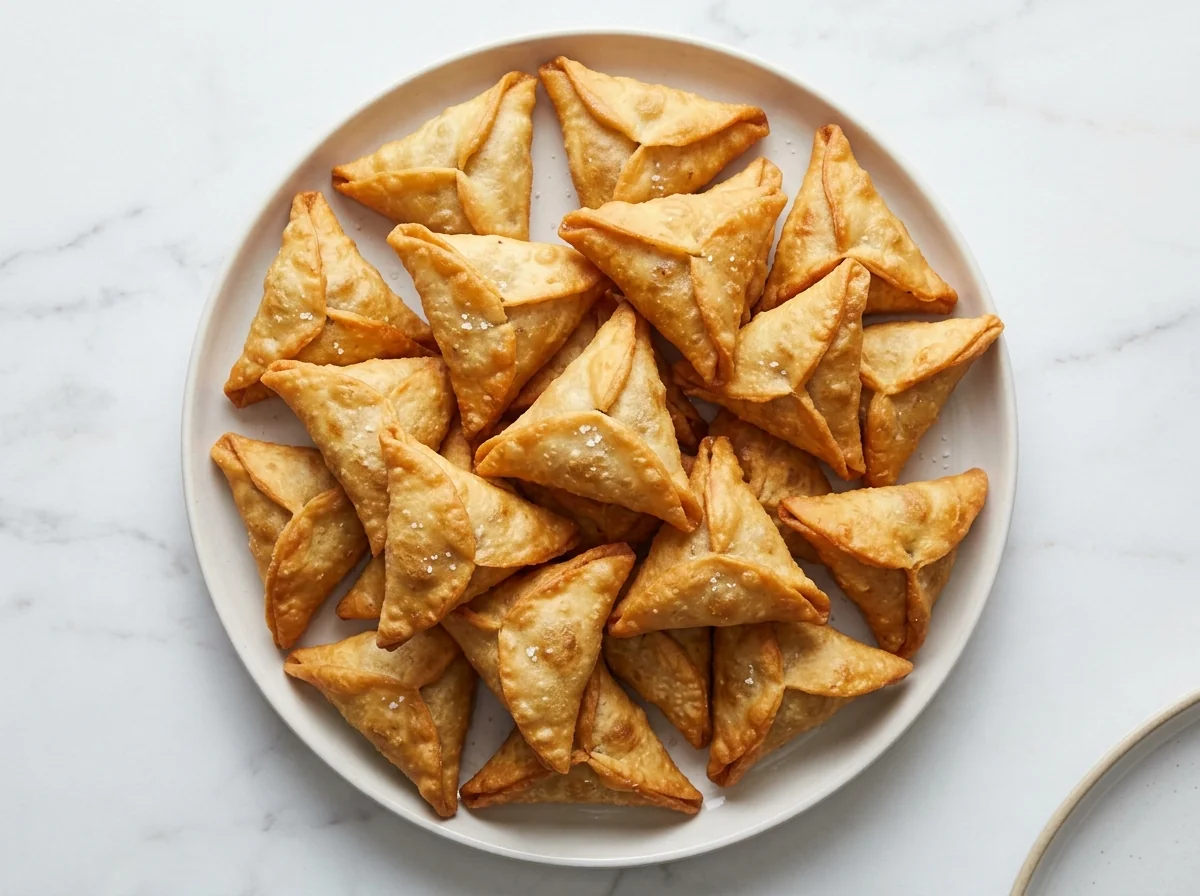
A simple Ramadan sambouska dough of flour, rice flour, and oil — rested 20 minutes, rolled thin, and cut into circles or squares for stuffing with cheese, meat, or spinach.
Sambouska dough was once made from just flour, water, and oil.
Adding rice flour is a modern touch, picked up by the Gulf kitchen in the 1980s to give the dough more crispness. Sambouska has become a Ramadan icon in every Gulf and Arab home.
Preparation Steps
Knead
Mix the flour with the rice flour and salt. Add the vegetable oil and rub with your fingers until the mixture is well combined. Pour in the water gradually and knead until a smooth, cohesive dough forms.
Rest
Cover the dough with a damp kitchen towel and let it rest for 20 minutes. Resting makes rolling easier and softens the dough.
Roll and cut
Roll the dough out with a rolling pin on a floured surface until it is 2 mm thick. Cut it into circles with a cutter or squares with a knife. Stuff and seal according to the recipe, then fry in oil at 170°C (340°F) or bake in the oven.
Blood Sugar Impact
The glycemic index (GI) measures how quickly a food raises blood sugar, while the glycemic load (GL) measures how much a full serving raises it. Together they give the complete picture.
Glycemic Index
GI
70High
Low0–55Medium56–69High70+
A low value (≤55) means a gradual rise in blood sugar — the most suitable range for diabetes and insulin resistance.
Glycemic Load
GL
16Medium
Low0–10Medium11–19High20+
Glycemic load reflects the impact of the full serving. To lower it: take half a serving, or pair the recipe with a source of protein and fiber.
Nutritional Information
Per ServingMakes 8 servings · one serving is about 45 g of raw ingredients
Calories157 kcal8%of Daily Value*
Protein3 g6%of Daily Value*
Carbohydrates24 g9%of Daily Value*
Fat5 g6%of Daily Value*
Fiber1 g4%of Daily Value*
Sodium146 mg6%of Daily Value*
* Percent Daily Values are based on a 2,000-calorie diet per FDA food-label reference values — your daily needs may be higher or lower. Values are derived from the recipe's ingredients via the USDA database.
Troubleshooting
The most common problems when preparing Ramadan Sambouska Dough, and how to fix them:
The dough tears when stuffing
It was not rested enough. Let it rest for 30 minutes and roll it to 2.5 mm thick — no thinner.
Storage and Make-Ahead
Dough in the refrigerator
Stays good for 3 days in a sealed bag.
Dough in the freezer
Lasts up to two months. Separate the layers with corn flour so they do not stick.
Tested Ingredient Substitutions
Original Ingredient
Tested Substitute
Ratio
Flavor Difference
Rice flour
Cornstarch
1:1
A slightly different result, a little less crisp.
EEINA Nutrition Tip
Rice flour is the secret to the dough's crispness. Do not substitute it with cornstarch except in extreme cases. The 20-minute rest is mandatory — the dough tears when rolled if rested less.
Add This Recipe to Your Plan
The EEINA app saves your favorite recipes, calculates them from their real ingredients, and shows your daily numbers toward your goal. Try it free now.