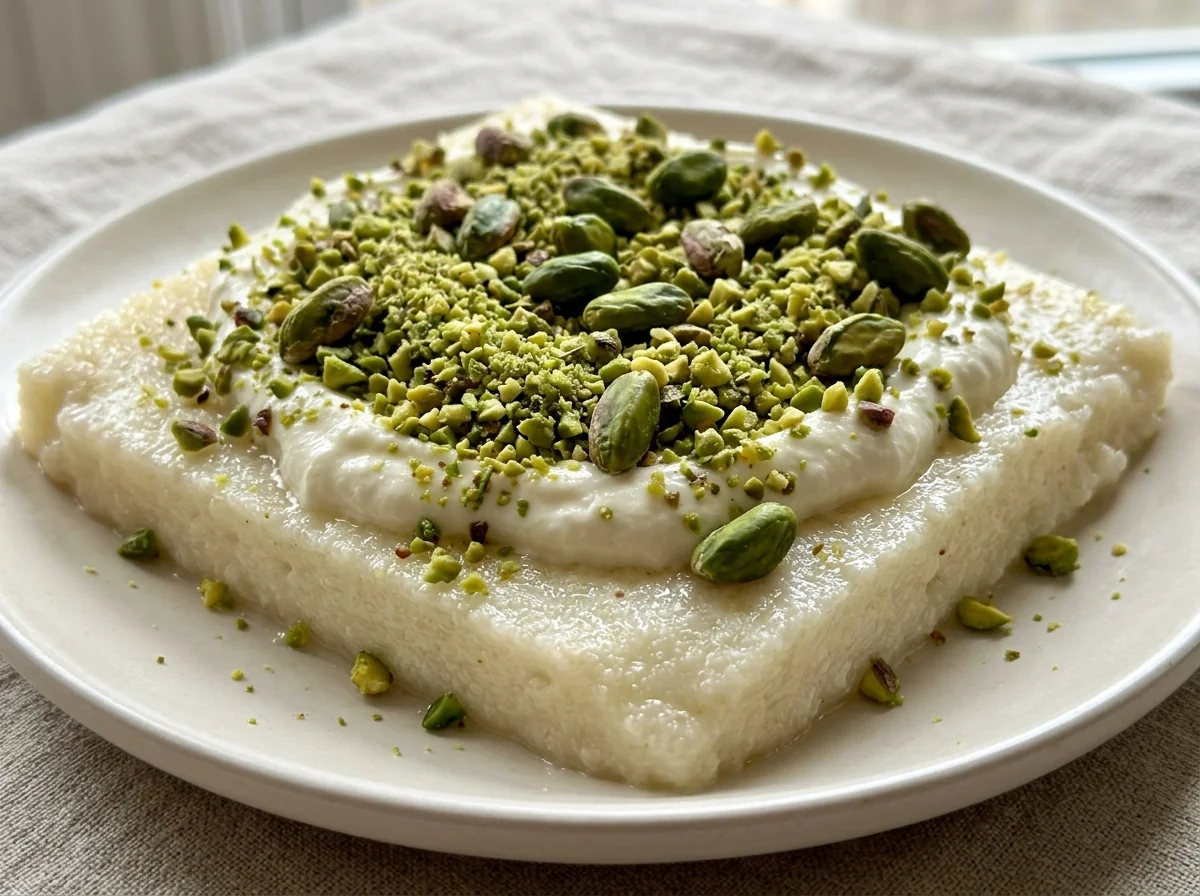
Maghlooba (Semolina Pudding) with Aleppo Pistachio
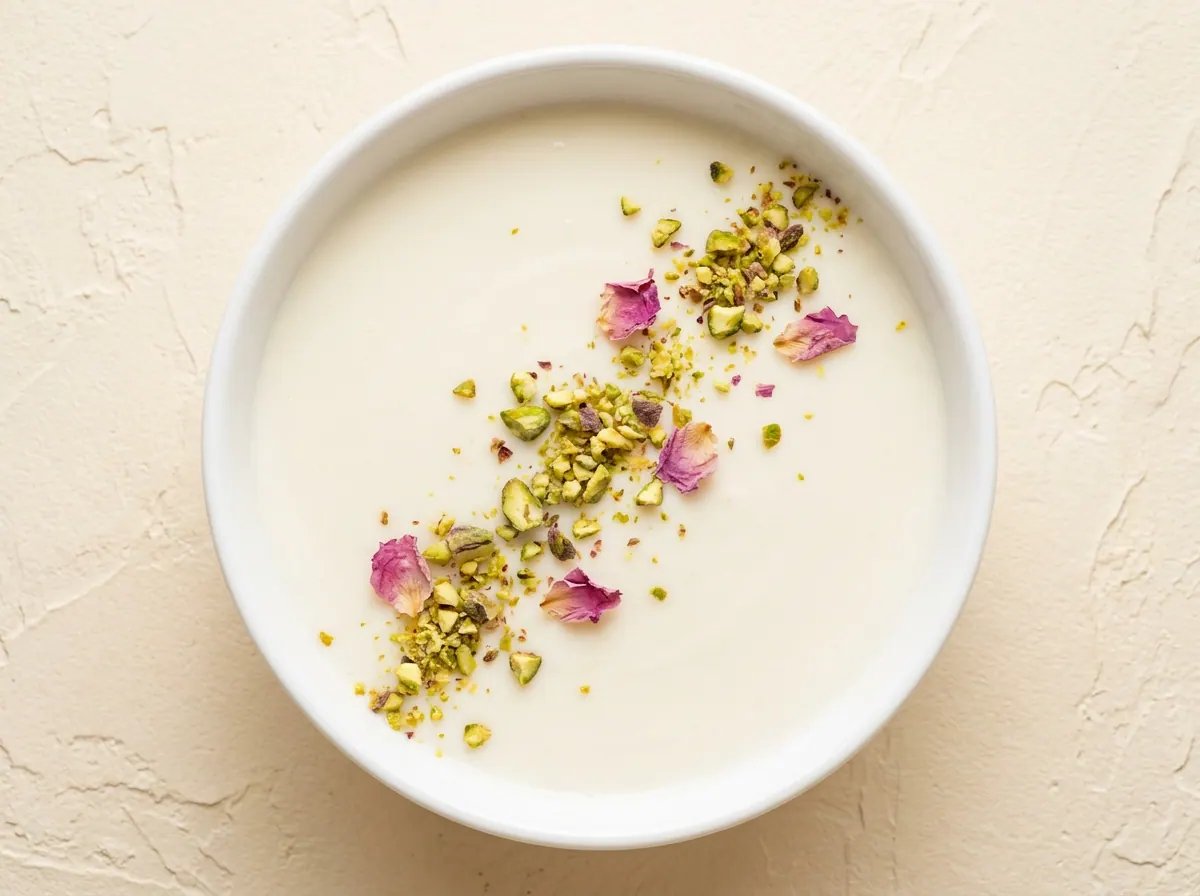
An easy Eastern dessert of roasted semolina with butter, sugar, orange blossom water, and rose water, poured into a dish and garnished with ashta cream and pistachios. Its texture resembles a thick mahalabia, and its distinctive texture comes from the roasted semolina.
Maghlooba is a classic Levantine dessert that travels between Damascus, Aleppo, and Bethlehem under similar names (maghlooba, mallouqa, shu'aibiyyat).
It is distinguished by two decisive steps: toasting the semolina, which gives it a golden color and a nutty flavor, and flavoring with orange blossom water and rose water. It is served in Ramadan and Eid, simpler than basbousa but with a smoother texture.
Preparation Steps
Toast the semolina
In a thick pot over medium heat, stir the semolina constantly with a wooden spoon until it takes a light golden color and its toasted aroma wafts up. This step is essential for giving maghlooba its distinctive flavor.
Cool the semolina
Take the pot off the heat and let the semolina cool for a few minutes. Don't let it cool completely so it doesn't lose the desired heat for cooking.
Add the butter, water, and sugar
Add the butter and a small amount of water to the semolina and stir. Add the sugar, then the rest of the water gradually with continuous stirring. Return the pot to medium heat and continue stirring with a wooden spoon until the semolina absorbs all the water and its consistency becomes like a thick mahalabia.
Flavor and add the pistachios
Take the pot off the heat and add the orange blossom water, rose water, and fine pistachios. Stir until the ingredients are fully combined.
Pour and cool
Pour the maghlooba into a deep serving dish. Cover it with cling film pressed against the surface to prevent a skin from forming, and place it in the refrigerator for at least two hours until set.
Serve
Take the maghlooba out of the refrigerator and distribute the ashta and sliced Aleppo pistachios over its surface. Serve it cold as a dessert from the table or for hospitality.
Blood Sugar Impact
The glycemic index (GI) measures how quickly a food raises blood sugar, while the glycemic load (GL) measures how much a full serving raises it. Together they give the complete picture.
Glycemic Index
GI
57Medium
Low0–55Medium56–69High70+
A low value (≤55) means a gradual rise in blood sugar — the most suitable range for diabetes and insulin resistance.
Glycemic Load
GL
55High
Low0–10Medium11–19High20+
Glycemic load reflects the impact of the full serving. To lower it: take half a serving, or pair the recipe with a source of protein and fiber.
Nutritional Information
Per ServingMakes 4 servings · one serving is about 455 g of raw ingredients
Calories810 kcal40%of Daily Value*
Protein22 g44%of Daily Value*
Carbohydrates102 g37%of Daily Value*
Fat38 g49%of Daily Value*
Fiber6 g21%of Daily Value*
Sodium27 mg1%of Daily Value*
* Percent Daily Values are based on a 2,000-calorie diet per FDA food-label reference values — your daily needs may be higher or lower. Values are derived from the recipe's ingredients via the USDA database.
Troubleshooting
The most common problems when preparing Maghlooba (Semolina Pudding) with Aleppo Pistachio, and how to fix them:
The maghlooba is too soft and does not set
Return it to the heat for 5 minutes while stirring to evaporate additional water. If it is too firm, add warm water gradually.
The semolina is burnt
Lower the heat immediately and remove the pot from it. The bitter taste cannot be compensated for. Start again with fresh semolina and truly medium heat.
Storage and Make-Ahead
Maghlooba in the refrigerator
It keeps for 3 days. Cover it with cling film pressed against the surface to prevent a skin from forming.
Tested Ingredient Substitutions
Original Ingredient
Tested Substitute
Ratio
Flavor Difference
Aleppo pistachio
ground almonds
1:1
A different flavor but the same texture. Pistachios remain the best.
ashta (qishta)
whipping cream or Greek yogurt
1:1
Drain the yogurt overnight in cheesecloth until it becomes thick.
EEINA Nutrition Tip
Constant stirring in the cooking step (3) is the secret to success. Stir vigorously with a wooden spoon from the bottom of the pot upward, as semolina likes to stick to the bottom of the pot. If you notice lumps, mash them with the back of the spoon.
Add This Recipe to Your Plan
The EEINA app saves your favorite recipes, calculates them from their real ingredients, and shows your daily numbers toward your goal. Try it free now.
What is the difference between maghlooba and mahalabia?
Maghlooba relies on dry-roasted semolina before adding water, so it absorbs the water with a slightly grainy texture. Mahalabia starts directly with milk. Maghlooba has a deeper flavor and is lighter.
Why did a skin form on the surface?
Air is the cause. Cover the dish with cling film pressed against the surface before cooling. If a skin forms, remove it with a spoon.
Can it be made without pistachios?
Yes, it is colored with saffron and served with pistachios only for garnish. The base flavor comes from the roasted semolina.
Sources: USDA · University of Sydney · Our methodology · Updated on