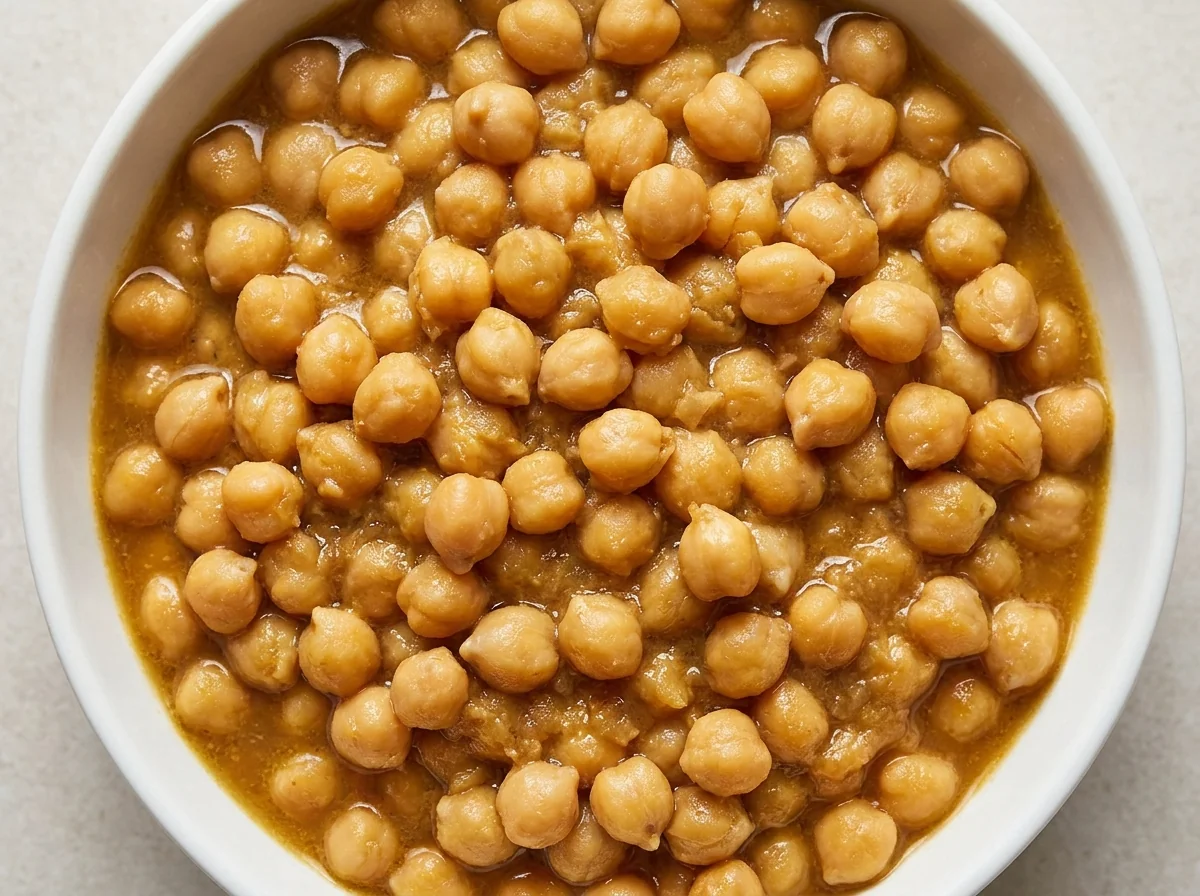
The dried chickpea is cheaper and tastier than the canned one, and we boil it in the pressure cooker so we accomplish in less than an hour what takes hours on the stove, without soaking overnight.
Preparation Steps
Sorting and washing
Sort the chickpeas to remove pebbles and damaged grains and wash them well, because sorting ensures a clean, uniform texture.
Filling
Place the chickpeas in the pot and cover them with water until it rises about three fingers above them, with the salt if desired, as generous covering is essential for even, safe cooking.
Pressure cooking
Close the lid in the sealing position and cook on high pressure for 45 minutes for a firm texture suited to salads, or 50 minutes for a soft texture suited to hummus with tahini, until the legumes are well cooked.
Natural release
Let the pressure release naturally for 10 to 15 minutes before opening the lid, as quick-releasing legumes spits out the liquid and breaks up the skins.
Draining
Drain the chickpeas and keep a little of the cooking water if you want a smoother hummus texture later.
Blood Sugar Impact
The glycemic index (GI) measures how quickly a food raises blood sugar, while the glycemic load (GL) measures how much a full serving raises it. Together they give the complete picture.
Glycemic Index
GI
28Low
Low0–55Medium56–69High70+
A low value (≤55) means a gradual rise in blood sugar — the most suitable range for diabetes and insulin resistance.
Glycemic Load
GL
8Low
Low0–10Medium11–19High20+
Glycemic load reflects the impact of the full serving. To lower it: take half a serving, or pair the recipe with a source of protein and fiber.
Nutritional Information
Per ServingMakes 6 servings · one serving is about 320 g of raw ingredients
Calories243 kcal12%of Daily Value*
Protein13 g26%of Daily Value*
Carbohydrates41 g15%of Daily Value*
Fat4 g5%of Daily Value*
Fiber11 g39%of Daily Value*
Sodium339 mg15%of Daily Value*
Potassium716 mg15%of Daily Value*
Phosphorus235 mg19%of Daily Value*
* Percent Daily Values are based on a 2,000-calorie diet per FDA food-label reference values — your daily needs may be higher or lower. Values are derived from the recipe's ingredients via the USDA database.
Troubleshooting
The most common problems when preparing Pressure-Cooker Chickpeas, and how to fix them:
The chickpeas are still firm
Old chickpeas or hard water prolong cooking; return them to pressure for 10 extra minutes with a natural release.
Liquid spits out when opening
The valve was opened too fast; stick to a full natural release before any quick release.
The skins come off heavily
This is normal with long boiling; remove the floating skins if you want smoother hummus with tahini.
Storage and Make-Ahead
Refrigerator
Drained in an airtight container for up to 4 days; or submerged in their cooking water to stay tender.
Freezer
Drained and dried for up to 3 months; thaw in the fridge and use directly.
Tested Ingredient Substitutions
Original Ingredient
Tested Substitute
Ratio
Flavor Difference
Dried chickpeas
Chickpeas soaked overnight
For a softer texture and shorter time
Reduce the pressure time to about 15 minutes
Plain water
Water with bay leaf
For a light flavor
Remove the leaf after cooking
Salt in the boil
No salt
For those who prefer to adjust salt later
Add the salt at the time of use
How Much Does It Make? Scaling Guide
Ingredient
2 servings
4 servings (base)
8 servings
Dried chickpeas
135 g
400 g
800 g
Water
500 ml
1500 ml
3000 ml
Salt
2 g
5 g
10 g
EEINA Nutrition Tip
Dried legumes foam and expand, so do not fill the pot more than halfway when boiling chickpeas, keep plenty of liquid covering them, and do not use quick release so the cooking water is not spit out.
Add This Recipe to Your Plan
The EEINA app saves your favorite recipes, calculates them from their real ingredients, and shows your daily numbers toward your goal. Try it free now.