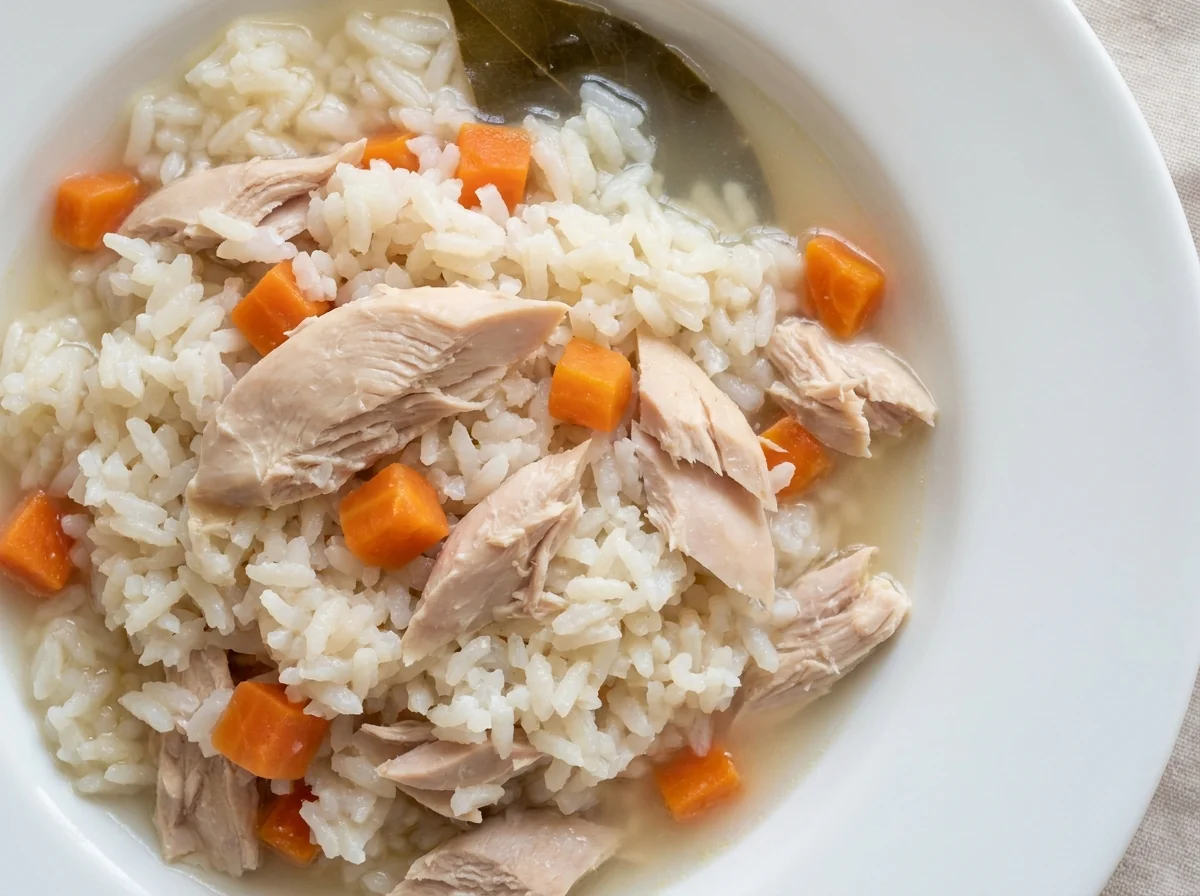
A simple dish we cook when we want a quiet, filling meal: soft rice and lightly boiled chicken with no sharp spices.
Preparation Steps
Boil the chicken
Put the chicken breast in the water with the bay leaf and half the salt, and boil over low heat for 20 minutes until fully cooked. Gentle boiling keeps the meat tender and easy to digest.
Shred the chicken
Remove the chicken, let it cool slightly, then shred it into fine strands by hand or with a fork. Strain the stock and keep it.
Cook the rice
Boil the carrots in the strained stock for five minutes until soft, then add the washed rice and the rest of the salt.
Cook gently
Let the rice come to a boil, then lower the heat, cover it and cook for 15 minutes until it absorbs the stock and cooks soft without drying out.
Fold in the chicken
Add the shredded chicken over the rice and cover for five minutes over very low heat until it warms through and the dish comes together.
Toss and serve
Gently toss the rice with a fork so the grains mingle with the chicken and carrots, and serve it warm with a soft texture that is gentle on the stomach.
Blood Sugar Impact
The glycemic index (GI) measures how quickly a food raises blood sugar, while the glycemic load (GL) measures how much a full serving raises it. Together they give the complete picture.
Glycemic Index
GI
72High
Low0–55Medium56–69High70+
A low value (≤55) means a gradual rise in blood sugar — the most suitable range for diabetes and insulin resistance.
Glycemic Load
GL
59High
Low0–10Medium11–19High20+
Glycemic load reflects the impact of the full serving. To lower it: take half a serving, or pair the recipe with a source of protein and fiber.
Nutritional Information
Per ServingMakes 3 servings · one serving is about 685 g of raw ingredients
Calories540 kcal27%of Daily Value*
Protein38 g76%of Daily Value*
Carbohydrates84 g31%of Daily Value*
Fat4 g5%of Daily Value*
Fiber2 g7%of Daily Value*
Sodium617 mg27%of Daily Value*
Potassium720 mg15%of Daily Value*
Phosphorus416 mg33%of Daily Value*
* Percent Daily Values are based on a 2,000-calorie diet per FDA food-label reference values — your daily needs may be higher or lower. Values are derived from the recipe's ingredients via the USDA database.
Troubleshooting
The most common problems when preparing Gentle Boiled Chicken and Rice for the Stomach, and how to fix them:
The rice is dry
Sprinkle a little hot stock and cover it for five minutes over low heat until it absorbs and softens.
The chicken is dry
Mix it with two spoonfuls of warm stock before folding it into the rice so it regains its tenderness.
The taste is too bland
Add a pinch of salt within the allowed limit or add a bay leaf during cooking, and avoid sharp spices so it stays gentle.
Storage and Make-Ahead
Refrigerator
Keep in an airtight container for up to three days, and reheat with a splash of water or stock to restore its tenderness.
Freezer
Freezes for up to a month in single portions; thaw in the refrigerator, then reheat with a little stock.
Serving
Serve warm with a small plate of boiled vegetables.
Tested Ingredient Substitutions
Original Ingredient
Tested Substitute
Ratio
Flavor Difference
Chicken breast
Boiled turkey breast
Same amount
A similar lean, easy-to-digest protein
White rice
Short-grain Egyptian rice
Same amount
A softer, smoother texture suited to the stomach
Carrots
Peeled, chopped zucchini
Same amount
A gentle-textured vegetable; cook it until fully tender
How Much Does It Make? Scaling Guide
Ingredient
2 servings
4 servings (base)
8 servings
White rice
150 g
300 g
600 g
Chicken breast
200 g
400 g
800 g
Water
600 ml
1200 ml
2400 ml
Salt
2 g
4 g
8 g
EEINA Nutrition Tip
Boiling and shredding the chicken makes the protein easy to chew and digest, well-cooked white rice has a soft, quiet texture, and this is a simple, balanced dish.
Add This Recipe to Your Plan
The EEINA app saves your favorite recipes, calculates them from their real ingredients, and shows your daily numbers toward your goal. Try it free now.
Its simplicity, soft cooking and absence of sharp spices make it a generally quiet choice, but each stomach responds individually, so start with a small amount.
Can it be cooked without carrots?
Yes, the carrot is just a gentle addition; you can leave it out or replace it with zucchini cooked until tender.
How can I raise its nutritional value?
Serve it alongside a small plate of soft boiled vegetables or low-fat yogurt for those who tolerate it; this adds fiber and protein without weighing on the stomach.